
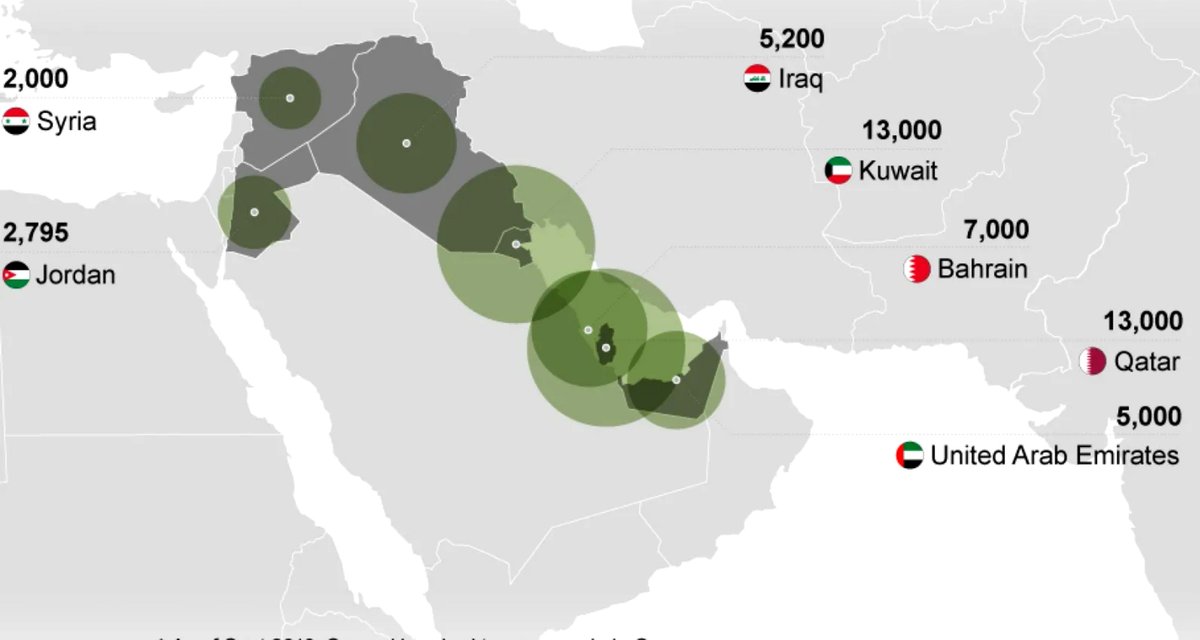
"US has put all its bases in Gulf on high alert, fearing possible Iranian missile strikes.Iran could respond within hours, and the US base in Jordan may not be the only target. Other American military bases across the region could also come under attack. https://t.co/jrnSCSFTR0"
The recent escalation in tensions between the United States and Iran has led to heightened security measures across American military installations in the Gulf region. Reports indicate that all US bases are now on high alert due to fears of imminent Iranian missile strikes. This alarming development comes at a time when diplomatic relations appear strained, and military posturing is on the rise in an already volatile region.
Experts suggest that Iran's strategic military capabilities have advanced, allowing it to potentially respond to perceived threats more swiftly. With US bases in Jordan and other strategic locations in the Gulf under scrutiny, military analysts argue that this could lead to serious implications for regional stability.
While the situation is concerning, it is essential to recognize that diplomatic channels are still open. The international community is assessing the potential consequences of any military action and continues to search for avenues to de-escalate the situation. Furthermore, Iran's recent engagements, which include talks with various regional actors, hint at possible resolutions that might avert military confrontation.
The US's decision to elevate alert levels at its bases has triggered reactions from multiple international players. Countries within the Gulf Cooperation Council (GCC) are closely monitoring the developments, recognizing the potential for direct threats to their national security. Some partners have voiced support for US military readiness, while others advocate for diplomatic solutions to mitigate the rising tensions.
Additionally, reports have indicated that several European nations are urging restraint from both sides, recognizing that military actions could spiral into larger conflicts that would have far-reaching effects, destabilizing the entire region. This measured approach highlights the importance of dialogue and mediation in addressing complex geopolitical dilemmas.
As the situation evolves, it is crucial for all stakeholders involved to prioritize diplomatic engagement over military confrontation. Creating a framework that fosters dialogue may help in reducing the risk of escalation and facilitates mutual understanding. By engaging Iran through constructive discussions, the US and its allies could pave the way for a more peaceful resolution.
In conclusion, while the immediate threat posed by Iranian missile capabilities requires serious attention, the broader outlook can be approached with optimism. Enhanced communication, international support for diplomatic efforts, and the resilience of regional partnerships may lead to a more stable and secure environment in the Gulf region.


No comments yet. Be the first to comment!

Your trusted source for breaking news, in-depth analysis, and comprehensive coverage of today's most important stories.
Get daily updates on breaking news, exclusive interviews, and special features delivered to your inbox.
Have a news tip or want to get in touch with our editorial team? We're here to help.
Plot C3-C Jaypee Wishtown Sector 129 Noida Uttar Pradesh 201304 India