
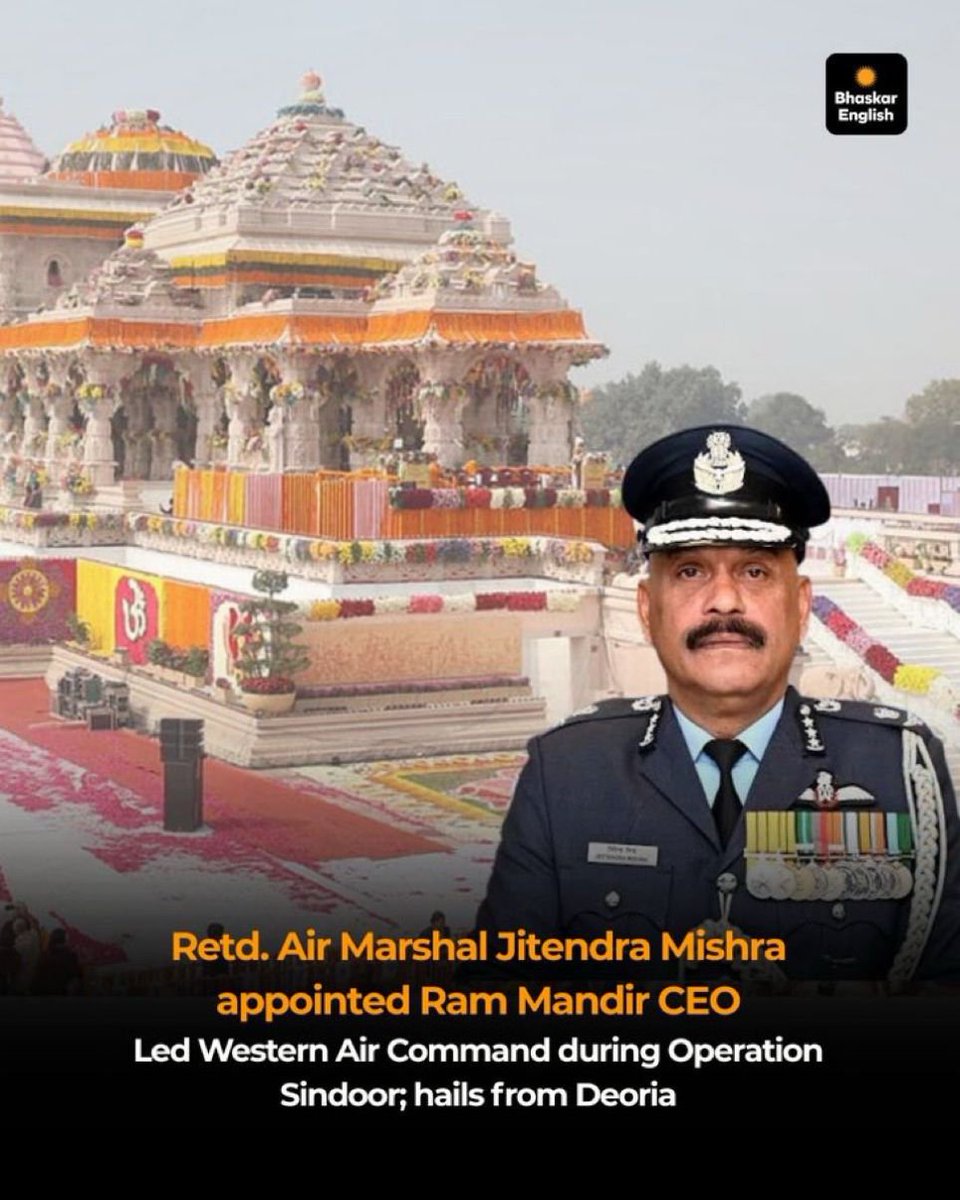
"The Mechanics of SaffronisationSaffronisation operates through the calculated fusion of state power, military pedigree, and religious authorityexemplified by placing a retired Air Marshal at the helm of the Ram Mandir Trustwhere institutional prestige serves as a shield https://t.co/kw9VV5DCSK"
The phenomenon of saffronisation symbolizes the intertwining of state machinery with religious ideologies, particularly in India. This trend is most prominently observed with the appointment of retired military officials to pivotal religious trusts, such as the inclusion of a retired Air Marshal as the head of the Ram Mandir Trust. Such decisions highlight how institutional prestige can be strategically utilized to reinforce religious agendas, offering a faade of legitimacy and respectability.
Saffronisation reflects a broader agenda where the fusion of Hindu nationalism with governmental authority seeks to reshape Indias secular character. The interplay between military credentials and religious leadership illustrates a tactical approach to garnering support and legitimacy from both the state and various religious factions. This phenomenon raises critical discussions on how nationalism can morph into a political vehicle that prioritizes one religion, hence affecting the countrys secular framework. While some view saffronisation as a means to empower Hindu identity, critics express concern over the marginalization of other communities in India, sparking debates over unity and diversity.
The international community has been closely monitoring the implications of saffronisation within India. While some nations appreciate the cultural revival aspects espoused by the Indian government, many Western states advocate for a robust and sustained commitment to secularism and protection of minority rights. Observers point out that India's diplomatic relations may be affected if saffronisation leads to increasing communal tensions. Human rights organizations are particularly vocal, emphasizing the need for balance in Indias approach to governance as they advocate for the preservation of pluralism in a diverse society.
As India continues navigating the complexities associated with saffronisation, the path forward appears multifaceted. Proponents argue that focusing on cultural heritage can forge stronger national unity. However, it is imperative that the Indian government acknowledges the concerns surrounding sectarianism and actively fosters an inclusive environment that honors all communities. The next few years will be telling as India manages to balance its cultural revival with adhering to its constitutional philosophy of secularism, which remains crucial for a harmonious society.


No comments yet. Be the first to comment!

Your trusted source for breaking news, in-depth analysis, and comprehensive coverage of today's most important stories.
Get daily updates on breaking news, exclusive interviews, and special features delivered to your inbox.
Have a news tip or want to get in touch with our editorial team? We're here to help.
Plot C3-C Jaypee Wishtown Sector 129 Noida Uttar Pradesh 201304 India