
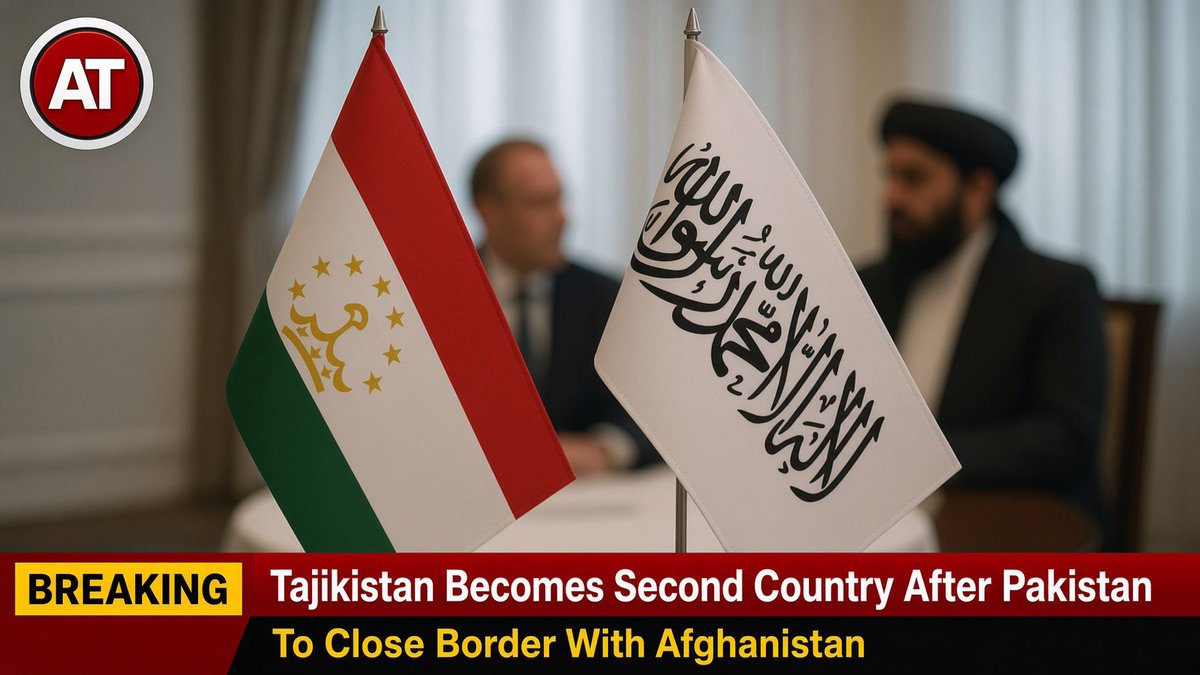
"Tajikistan Becomes Second Country After Pakistan to Close Border With Afghanistan Tajikistan has become the second country after Pakistan to close its border with Afghanistan, amid growing concerns over drug smuggling, terrorism and cross-border security threats linked to the Taliban regime in Afghanistan."
Tajikistan has officially closed its border with Afghanistan, making it the second neighboring country following Pakistan to implement such a measure. This decision comes in the wake of escalating fears regarding the Taliban-led governments potential to foster an environment conducive to drug smuggling, terrorism, and various security threats.
The closure reflects a broader regional concern amongst Central Asian nations regarding border security and safety. Tajikistan shares a lengthy border with Afghanistan, and recent incidents have heightened the anxiety of Tajik officials. By sealing its borders, Tajikistan aims to mitigate the risks associated with unlawful cross-border activities that could destabilize its own national security. The move also serves as a proactive strategy to safeguard against the influx of extremist ideologies that could further complicate regional dynamics.
The international community has expressed mixed reactions to Tajikistan's decision. Some nations have praised the move as a necessary measure to uphold national security, while others view it as an act that may further alienate Afghanistan. The United Nations and various humanitarian organizations emphasize the need for collaboration rather than isolation, suggesting that engagement could lead to more sustainable solutions in addressing security concerns. This nuanced response highlights the delicate balance Tajikistan and its neighbors must strike between ensuring safety and fostering regional cooperation.
As Tajikistan's border remains closed, the implications for regional diplomacy and security architecture become increasingly significant. Future interactions with Afghanistan will require careful navigation, especially as dialogues around international assistance and humanitarian needs grow more urgent. Moreover, if security threats continue to rise, it's crucial for Central Asian countries to develop coordinated strategies that not only enhance border security but also address underlying issues driving conflict and instability in Afghanistan. Both Tajikistan and Pakistan may need to collaborate more actively to jointly tackle these threats while also providing a platform for dialogue that encourages peace-building efforts in the region.

No comments yet. Be the first to comment!

Your trusted source for breaking news, in-depth analysis, and comprehensive coverage of today's most important stories.
Get daily updates on breaking news, exclusive interviews, and special features delivered to your inbox.
Have a news tip or want to get in touch with our editorial team? We're here to help.
Plot C3-C Jaypee Wishtown Sector 129 Noida Uttar Pradesh 201304 India