
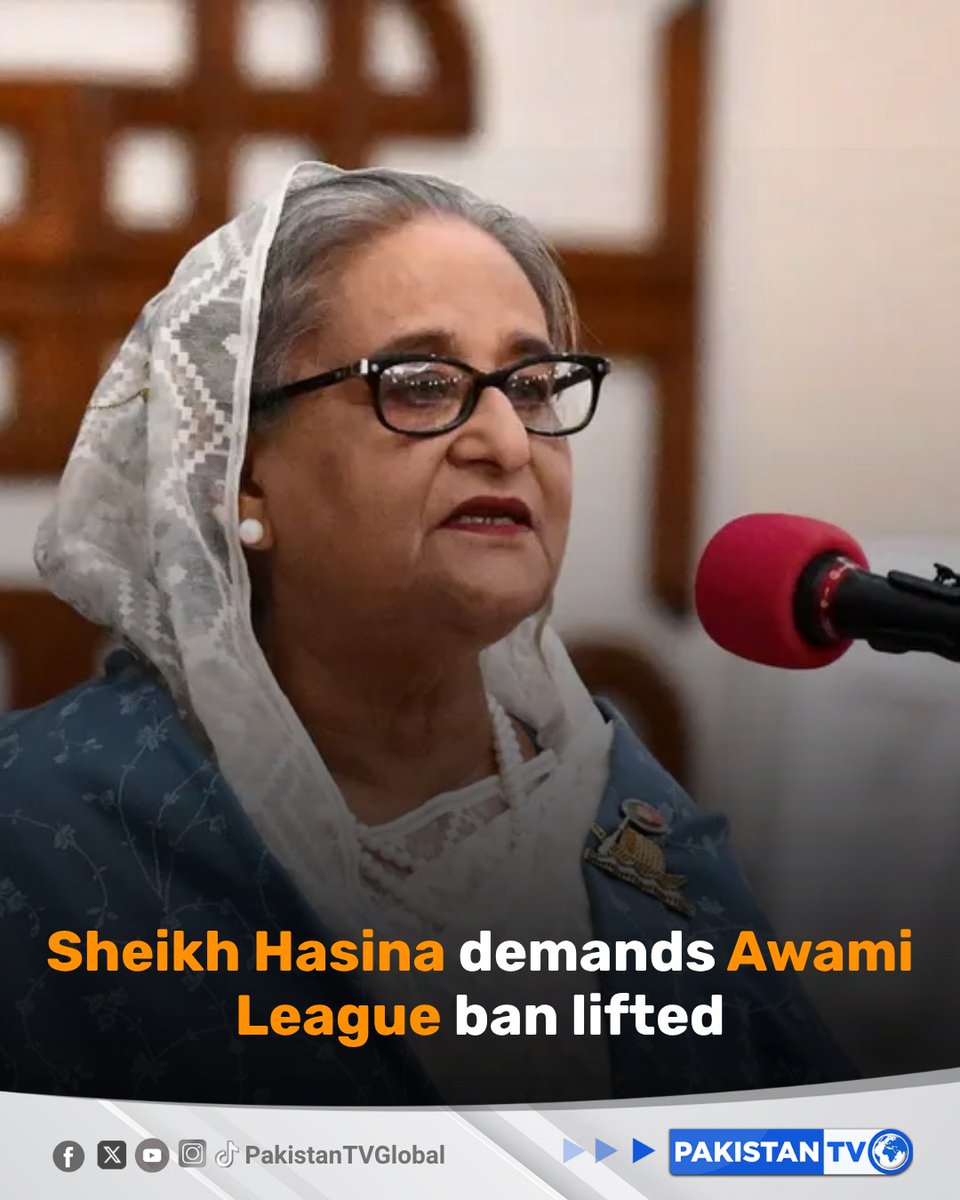
"Bangladesh's former Prime Minister Sheikh Hasina has called for the ban on her Awami League party to be lifted and says she plans to return to Bangladesh in December despite facing legal challenges and the possibility of imprisonment.#SheikhHasina #Bangladesh #AwamiLeague #BangladeshPolitics #PakistanTV"
Sheikh Hasina, the former Prime Minister of Bangladesh and a significant political figure, has recently urged for the ban on her political party, the Awami League, to be lifted. This call comes as she prepares to return to Bangladesh in December, despite facing various legal hurdles and potential imprisonment. Hasina's political journey has been marked by resilience and determination, making her a pivotal character in Bangladesh's modern political landscape.
The Awami League has played a crucial role in shaping Bangladesh's socio-economic development since the country gained independence in 1971. Under Hasina's leadership, Bangladesh has made significant strides in fields such as education, women's empowerment, and economic growth. However, her tenure has also been met with controversy and accusations of authoritarianism, particularly in terms of democratic freedoms and political opposition.
Hasina's decision to return amid ongoing legal challenges illustrates her commitment to her party and its vision for Bangladesh's future. Discussions around the implications of lifting the ban on the Awami League are critical, as they impact not only her political career but also the broader democratic processes within Bangladesh. Supporters argue that lifting the ban would revitalize democratic participation, while opponents raise concerns about the potential for political conflict.
The international community has been closely monitoring developments in Bangladesh, particularly regarding human rights and democratic governance. Various global organizations have called for fair treatment and the protection of political rights as Bangladesh approaches a critical juncture in its political future. As Hasina positions herself for a return, the international response will likely play a significant role in influencing the trajectory of her legal challenges and the political landscape in Bangladesh.
As December approaches, the political tension in Bangladesh is expected to escalate. Will Sheikh Hasinas return reinvigorate the Awami League and provide a new direction for the party? Or will it further polarize political discourse in the country? The outcomes of these developments will be significant, not only for Bangladeshi citizens but also for regional stability and international relations. Observers remain cautious but hopeful that a constructive dialogue can emerge from this political turmoil, potentially leading to a strengthening of democratic institutions in Bangladesh.


No comments yet. Be the first to comment!

Your trusted source for breaking news, in-depth analysis, and comprehensive coverage of today's most important stories.
Get daily updates on breaking news, exclusive interviews, and special features delivered to your inbox.
Have a news tip or want to get in touch with our editorial team? We're here to help.
Plot C3-C Jaypee Wishtown Sector 129 Noida Uttar Pradesh 201304 India