
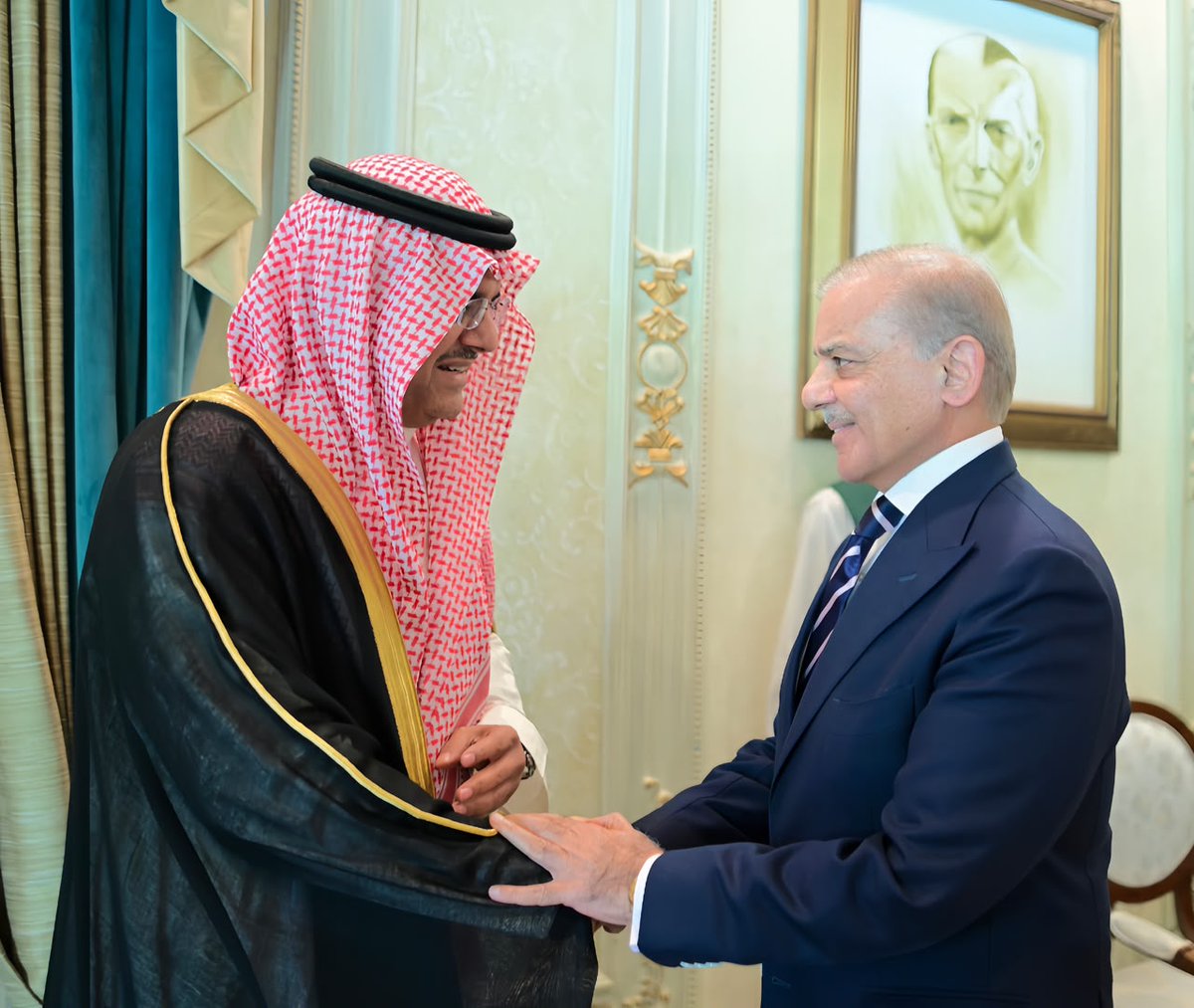
"A high-level Saudi business delegation, led by His Highness Prince Mansour bin Mohammad Al Saud, Chairman of the Saudi-Pak Joint Business Council, called on Prime Minister Muhammad Shehbaz Sharif at the PM House. https://t.co/wNsPjgkrmI"
A significant moment for Pakistan's economic landscape unfolded as a high-level Saudi business delegation, led by His Highness Prince Mansour bin Mohammad Al Saud, Chairman of the Saudi-Pak Joint Business Council, met with Prime Minister Muhammad Shehbaz Sharif at the PM House. This meeting marks an important step in enhancing bilateral relations, focusing on trade, investment, and mutual developmental goals.
The engagement between Saudi Arabia and Pakistan signifies a concerted effort to deepen economic cooperation. With Saudi Arabia being one of Pakistan's key allies, the business delegation's visit showcases the potential for increased collaboration in various sectors. The discussions likely revolved around investment opportunities, particularly in energy, infrastructure, and technology, which can catalyze significant growth for Pakistans economy.
Prime Minister Shehbaz Sharif's government is actively seeking foreign investment to stabilize the economy and create jobs. In this context, Saudi Arabias involvement can help alleviate financial strains and bring in much-needed expertise in key industries. Both nations have a history of supporting each other, and the strengthening of ties now serves as an opportunity for mutual benefit.
The international community is closely following these developments, as they reflect shifting alliances and economic partnerships in South Asia. Other regional players may respond by seeking to enhance their own relations with Pakistan, possibly leading to an influx of global investment. Additionally, countries observing these exchanges between Saudi Arabia and Pakistan may analyze the geopolitical implications, particularly regarding trade routes and energy security in the region.
As Pakistan navigates through economic challenges, the relationship with Saudi Arabia holds promise for a more robust economic future. Upcoming joint initiatives between the two countries could focus on developing economic zones, digital transformation, and renewable energy projects. If executed effectively, these collaborations can pave the way for Pakistan to harness its potential more strategically, ultimately leading to sustainable growth and improved living standards for its citizens.
Pakistan's government must continue to engage with Saudi counterparts to ensure that the discussions translate into actionable plans. Balancing local interests with foreign investment may be key to fostering an environment where both local businesses and international partners thrive.

No comments yet. Be the first to comment!

Your trusted source for breaking news, in-depth analysis, and comprehensive coverage of today's most important stories.
Get daily updates on breaking news, exclusive interviews, and special features delivered to your inbox.
Have a news tip or want to get in touch with our editorial team? We're here to help.
Plot C3-C Jaypee Wishtown Sector 129 Noida Uttar Pradesh 201304 India
