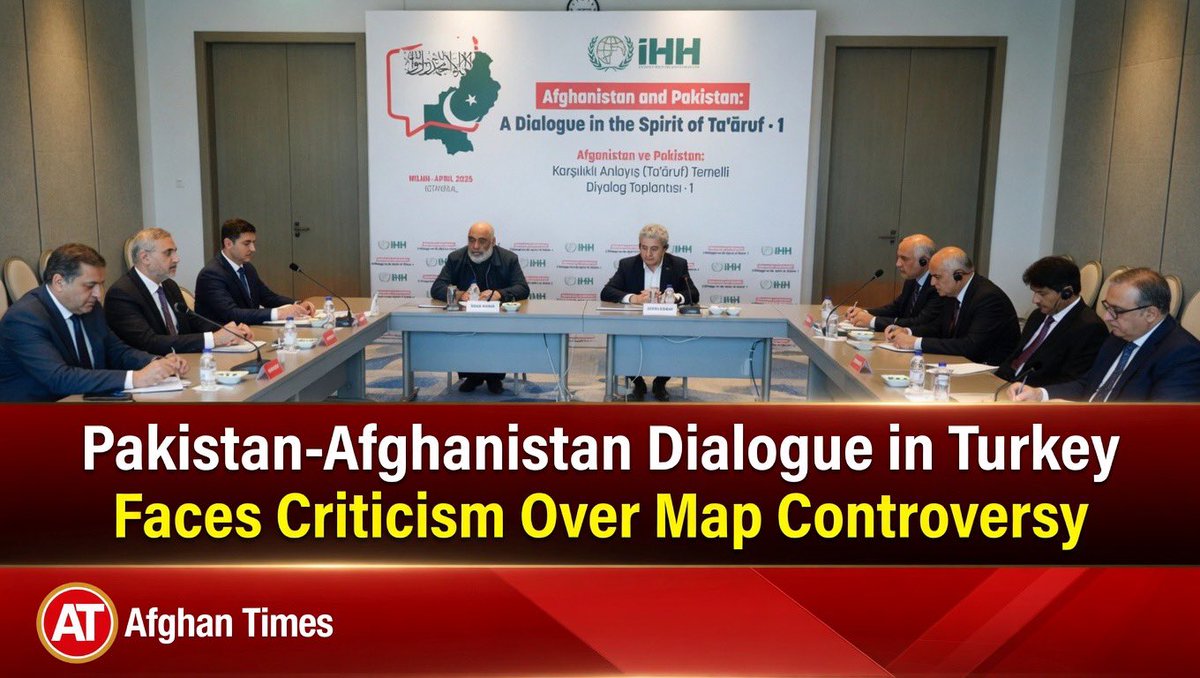
During a recent Pakistan-Afghanistan dialogue held in Turkey, representatives including Mushahid Hussain Syed, Asif Durrani, and Hamid Mir, along with Afghan policy voices, gathered to discuss regional cooperation and bilateral ties. The event highlighted efforts to deepen security and economic links, boost people-to-people contacts, and explore infrastructure projects that could bind the two neighbors. Yet attention quickly shifted to a map displayed at the venue, which Pakistani observers say depicted sensitive areas such as Kashmir, Gilgit-Baltistan, portions of Khyber Pakhtunkhwa, and Balochistan in a way that contradicts Pakistan's official territorial position. Critics on social media argued that such representations carry symbolic weight and could shape future narratives in regional forums, potentially complicating negotiations and eroding trust. Separately, Afghan observers reportedly raised the Wakhan Corridor as a strategic route for regional connectivity and emphasized its role in future trade and geopolitical discussions. The debate illustrates how even technical elements like cartography can become flashpoints in diplomacy, reflecting underlying sovereignty concerns and the challenge of balancing inclusive dialogue with national narratives. Proponents say the dialogue offers a constructive platform to align security and economic interests, demystify misunderstandings, and build trust through sustained engagement. In my view, the controversy should be a wake-up call to ensure visuals in international diplomacy are agreed in advance, neutral where possible, and used to support concrete outcomes such as joint border management, trade agreements, and infrastructure links. If approached transparently, the Wakhan Corridor topic could become a catalyst for broader regional connectivity rather than a zero-sum bargaining point, contributing to stability and growth for both nations.
Source: Statement from @AfghanTimes7
Public Engagement: 1,317 views • 13 likes • 3 shares
Published: May 1, 2026, 4:20 am
Editorial Note: This article is based on publicly available information and official statements. We strives for accuracy and fairness in all reporting.