
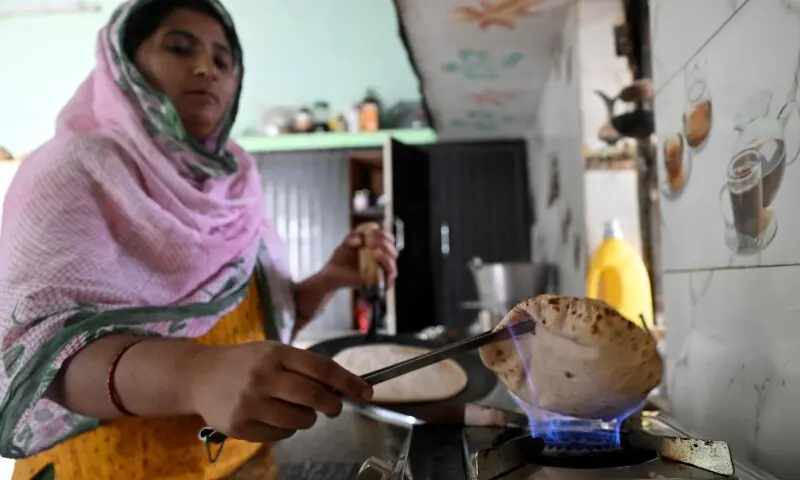
Across much of India, an energy crunch caused by the Iran war has prompted long queues for cooking gas cylinders. That’s not a problem for Gauri Devi.
On a stove with blue flames, she flips a chapati flatbread, burning biogas produced from cow dung — an alternative fuel helping ease pressure on supplies.
However, since the 1980s, India has also promoted biogas as a low-cost rural energy source, subsidising more than five million “digester” units that convert farm waste into methane for cooking, and nitrogen-rich slurry for fertiliser.
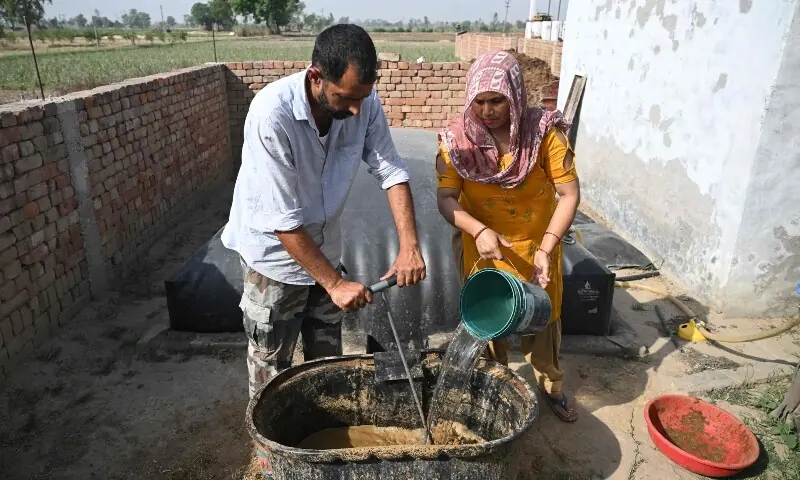
For Gauri, it requires mixing a couple of buckets of dung with water, then pouring the mixture into a car-sized underground tank topped with a storage balloon.
India — the world’s most populous nation and third-largest fossil fuel polluter — has pushed large-scale biogas production to achieve a goal of carbon neutrality by 2070.
The government last year required that biogas account for at least one percent of liquid gas fuelling both vehicles and for domestic use— rising to five per cent by 2028.
Dozens of multi-million dollar production plants are now in the pipeline.
But small-scale rural producers are also being rolled out – units cost around INR25,000-30,000 ($265-$318), often heavily subsidised by the government.
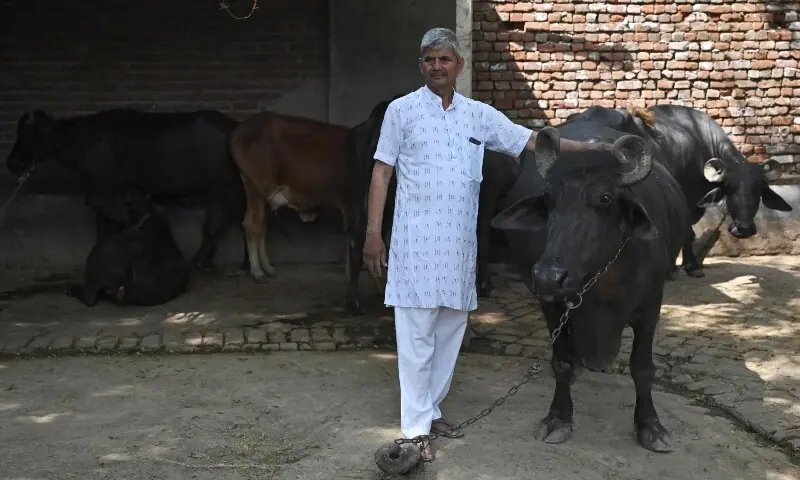
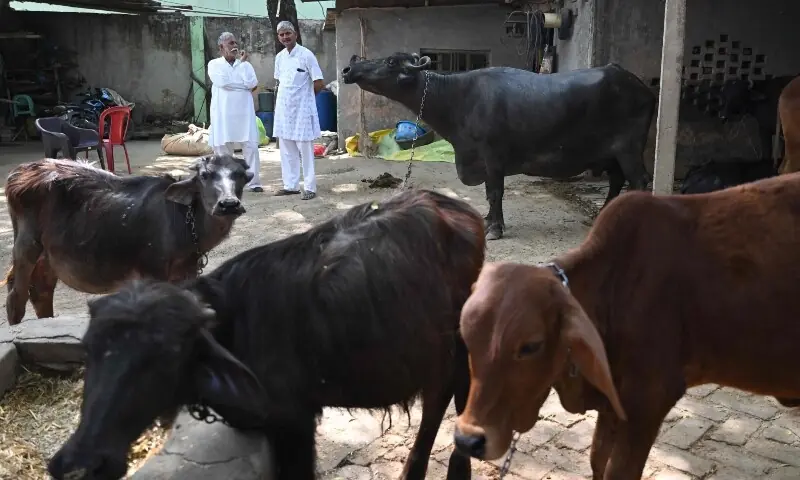
In a Hindu-majority nation where cows are revered and dung and urine are used in everything from floor plastering and fuel to ritual practices, it is easy to win supporters, said Pritam Singh.
He installed his first plant in 2007 and has helped put in 15 more in his village in the past year alone.
“So, unless installation and upkeep are handled through community-based or cooperative enterprises, households will continue to treat biogas as secondary fuel.” And even with government support, there are barriers to uptake, including cost and space.
“We work on other people’s farms the whole day. We don’t have land for it,” said labourer Ramesh Kumar Singh, standing in a line of around 100 queueing for LPG cylinders in the nearby village of Madalpur.

No comments yet. Be the first to comment!

Your trusted source for breaking news, in-depth analysis, and comprehensive coverage of today's most important stories.
Get daily updates on breaking news, exclusive interviews, and special features delivered to your inbox.
Have a news tip or want to get in touch with our editorial team? We're here to help.
Plot C3-C Jaypee Wishtown Sector 129 Noida Uttar Pradesh 201304 India