
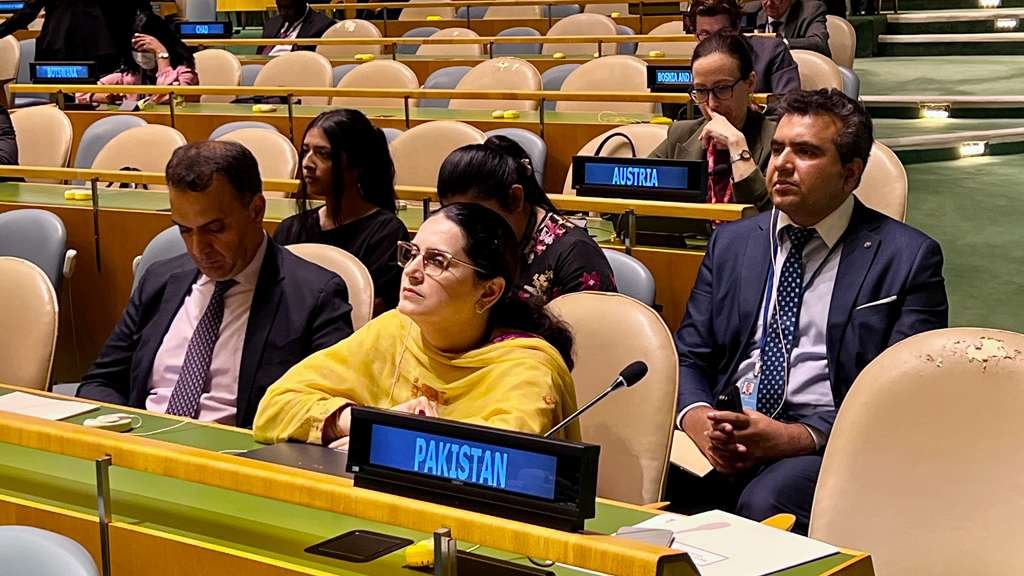
"Proud that this landmark UNGA resolution on Access to Assistive Technology, adopted today, was drafted and negotiated by Counsellor Ms. Saima Saleem, Pakistans first visually impaired career diplomat, who is herself a user of this technology.This is a powerful reminder that when lived experience informs diplomacy, it can help shape global action that transforms lives and expands opportunities for millions of people who might otherwise risk being left behind.Together, we can bring about meaningful change and improve lives."
In a groundbreaking development for inclusivity, the United Nations General Assembly (UNGA) recently adopted a pivotal resolution focused on Access to Assistive Technology. This landmark decision was notably initiated by Counsellor Ms. Saima Saleem, Pakistans first visually impaired career diplomat. Her journey, intertwined with the very technology she advocates for, brings to light the importance of representation and lived experiences in global diplomacy.
The resolution emphasizes the need for access to assistive technology, which plays a crucial role in enabling persons with disabilities to participate fully in society. Ms. Saleems leadership showcases how personal experiences can drive impactful legislative changes. Committed advocates like her reveal the stark challenges faced by millions who rely heavily on such technology for educational and professional opportunities.
This initiative is not just a matter of accessibility; it represents a paradigm shift towards recognizing and valuing the contributions of persons with disabilities in all spheres of life. The global commitment to ensuring that assistive technology is available, affordable, and accessible can revolutionize life for individuals who might otherwise remain marginalized.
The international community has responded positively to this resolution, lauding the collaborative efforts that brought it to fruition. Nations have expressed their support, recognizing that enhancing access to assistive technology is a shared responsibility that transcends borders. Countries are now called to adopt these principles in their national policies and frameworks, ensuring inclusivity in every aspect of life.
Moreover, organizations specializing in disability rights have echoed the sentiments expressed by the UNGA, urging governments to foster environments that promote the utilization of assistive technologies. This synergy between diverse stakeholders epitomizes a united front in addressing the common goal of accessibility.
As the world moves forward under this new resolution, the focus will shift toward implementing effective strategies that facilitate access to assistive technology. This responsibility lies not only with governmental bodies but also with private organizations and NGOs. Constructive collaborations will be pivotal in ensuring that the intent behind the resolution materializes into tangible benefits for individuals worldwide.
Pakistan's leadership in this initiative serves as an inspiring example for other nations. The commitment to fostering an inclusive approach will empower not just individuals with disabilities, but society as a whole. As we look to the future, let us remember that a more accessible world is a more equitable worldone where everyone has the chance to contribute and thrive. Together, we can champion these changes and forge pathways for a brighter, inclusive future.

No comments yet. Be the first to comment!

Your trusted source for breaking news, in-depth analysis, and comprehensive coverage of today's most important stories.
Get daily updates on breaking news, exclusive interviews, and special features delivered to your inbox.
Have a news tip or want to get in touch with our editorial team? We're here to help.
Plot C3-C Jaypee Wishtown Sector 129 Noida Uttar Pradesh 201304 India