
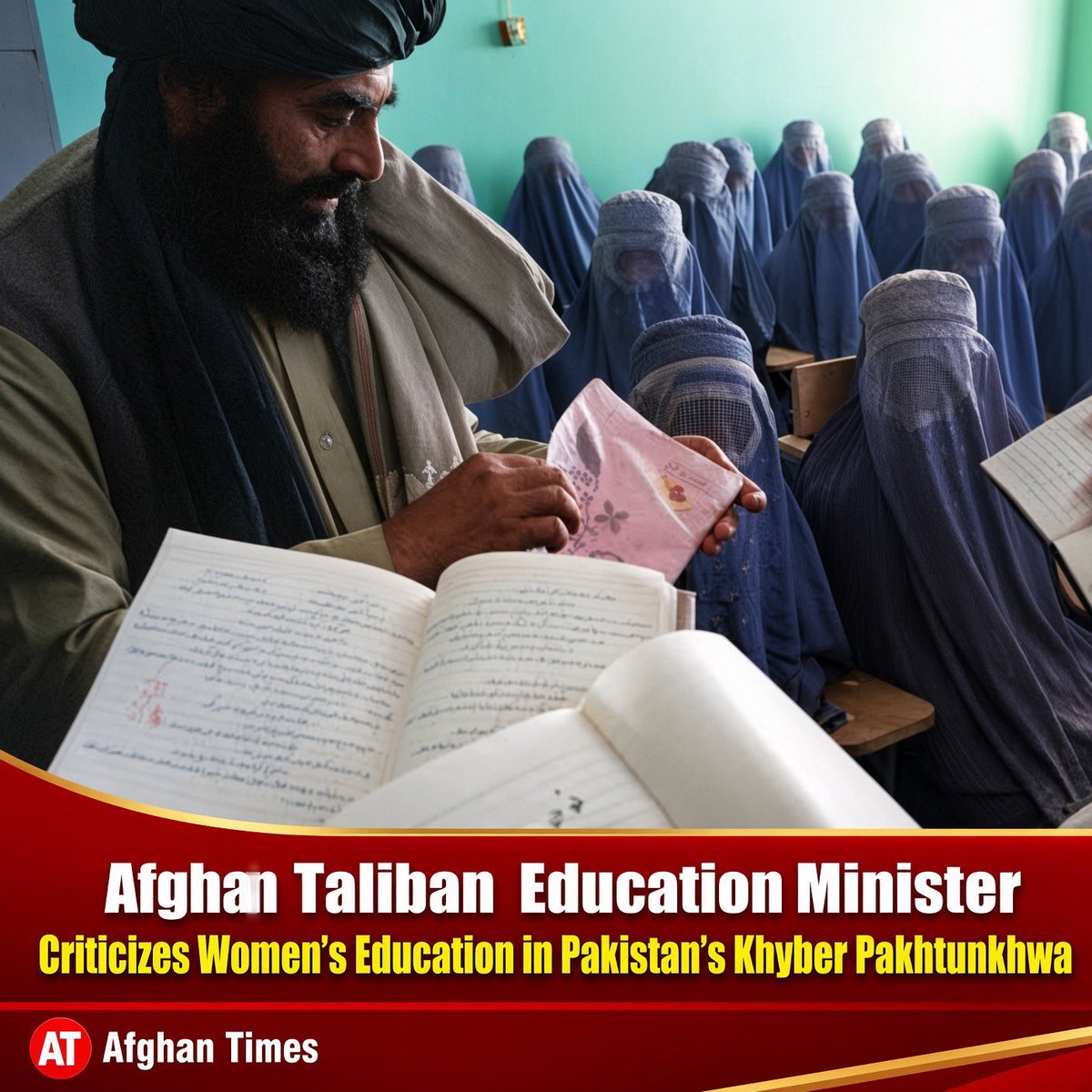
"Afghan Taliban Education Minister Criticizes Womens Education in Pakistans Khyber PakhtunkhwaSpeaking to Afghan Times, the Afghan Talibans Education Minister criticized womens university education in Pakistans Khyber Pakhtunkhwa.He highlighted that women across KPK continue to attend universities and other educational institutions, while claiming that Islam does not permit women to pursue university education.He said women should instead focus on household responsibilities and argued that womens education beyond certain levels should not be allowed.The remarks come as the Taliban continues to prohibit women from attending universities in Afghanistan."
The recent comments made by the Afghan Taliban's Education Minister regarding women's education in Pakistan's Khyber Pakhtunkhwa (KPK) have sparked a significant debate. Despite the challenges faced by women in Afghanistan post-Taliban takeover, the minister has voiced strong opposition to women's university education in KPK, citing religious grounds. He claims that women's primary focus should be on household responsibilities and suggests limiting their educational pursuits.
While the Taliban's stance reflects a strict interpretation of Islamic teachings, KPK has seen a vibrant educational landscape for women, with many attending universities and gaining opportunities that were previously scarce. This has led to an ongoing discussion about the role of education in women's empowerment and societal development. Critics argue that education is a fundamental right and an essential pathway for women to contribute positively to their communities and the economy.
The remarks have drawn international condemnation, highlighting the stark contrast between the educational policies in KPK and the Taliban's restrictive measures in Afghanistan. Several human rights organizations and global leaders advocate for women's rights to education as a basic human right, emphasizing its importance in fostering gender equality and social progress. Additionally, Pakistan's government and educational institutions continue to support women's education, pushing against extremist narratives that seek to limit access to learning.
As the debate continues, the situation necessitates constructive dialogue focused on the empowerment of women through education. It presents an opportunity for KPK to serve as a model for women's rights, showcasing its successful educational initiatives and the benefits that come from investing in women's education. Moving forward, collaborative efforts between Pakistan and the international community can foster an environment where women everywhere, including Afghanistan, can access quality education and equal opportunities.


No comments yet. Be the first to comment!

Your trusted source for breaking news, in-depth analysis, and comprehensive coverage of today's most important stories.
Get daily updates on breaking news, exclusive interviews, and special features delivered to your inbox.
Have a news tip or want to get in touch with our editorial team? We're here to help.
Plot C3-C Jaypee Wishtown Sector 129 Noida Uttar Pradesh 201304 India