
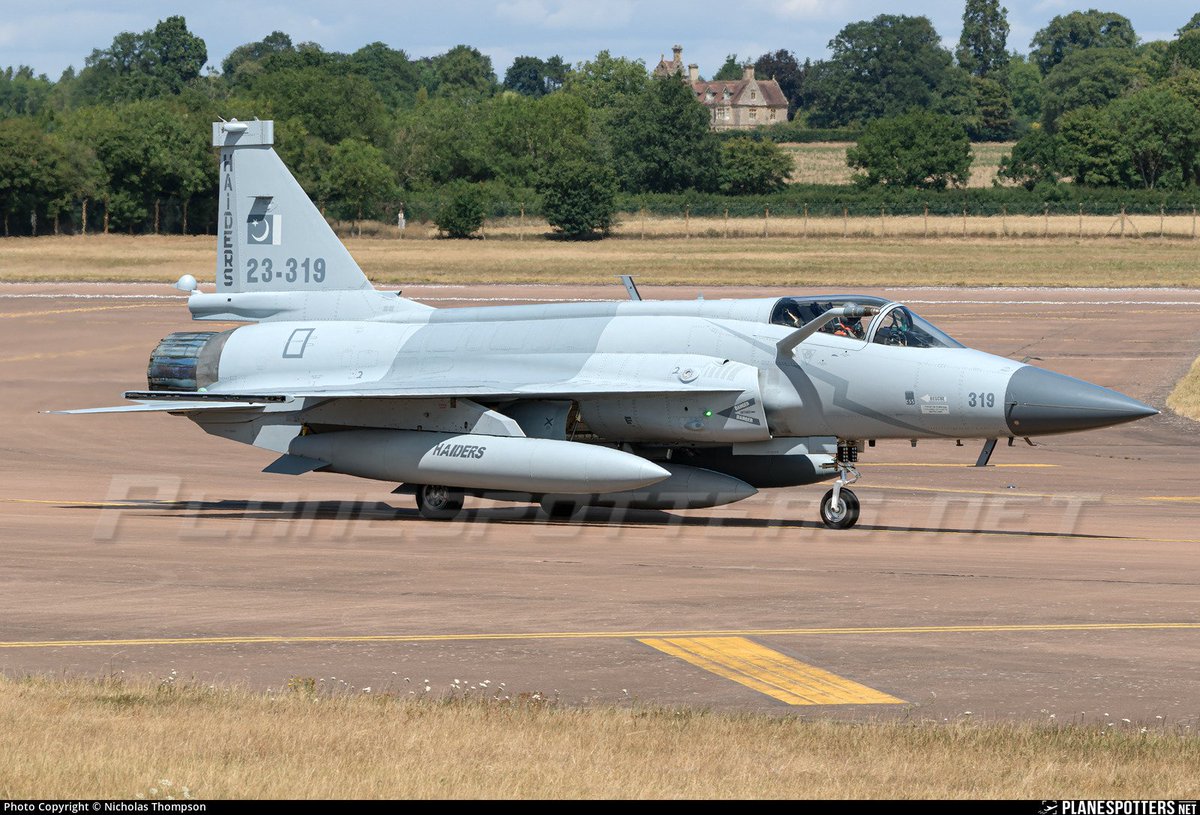
"Well, their Air Chief has visited Pakistan. They're officially interested in JF-17 Thunder Block 3.But here's a thing, you know, China wants its publicity right after they found the success and chance to boost export of J-10C after May 2025. Bangladesh does stand in need of a LCA ... Low cost, easy to maintain and a workhorse ... JF-17 is best in this regard & even they know this!"
In recent diplomatic developments, the Chief of Air Staff of Bangladesh has made an official visit to Pakistan, signaling a growing interest in military cooperation. At the center of this dialogue is the JF-17 Thunder Block 3, an aircraft jointly developed by Pakistan and China. This move comes at a time when Bangladesh is evaluating its defense capabilities and a need for a versatile, cost-effective fighter aircraft.
The interest in the JF-17 Thunder underscores Bangladesh's commitment to enhancing its air force amidst regional dynamics. The JF-17, known for its low cost and ease of maintenance, stands out as an efficient choice for Bangladesh's air force requirements. It is specifically designed to be a workhorse in the sky, providing a balance between performance and affordability. Additionally, this potential acquisition showcases Pakistan's growing military production capabilities, further bolstered through its partnership with China.
Moreover, China's ambitions in the military export market have been increasingly evident, especially with the anticipated success of the J-10C fighter jet post-2025. As neighboring countries assess their defense mechanisms, Bangladesh's pursuit of the JF-17 could potentially enhance regional stability and cooperation within South Asia.
The international community is closely monitoring this development as it reflects Chinas strategic positioning in South Asia. For China, enhancing its export portfolio with the J-10C and supporting its ally Pakistan serves a dual purpose: boosting its military exports while strengthening ties with neighboring nations like Bangladesh. Furthermore, the U.S. and India may view this growing military collaboration with caution, underscoring the geopolitical complexities in the region.
As Bangladesh moves closer to finalizing its defense capabilities, the implications of acquiring the JF-17 could be significant not only for its air force but also for regional military dynamics. Continued collaboration with Pakistan could lead to knowledge transfer and bolster defense ties, which may also ease tensions in the region and foster collaboration on various issues. Bangladesh's decision to explore the JF-17 Thunder Block 3 further illustrates its commitment to enhancing national defense while being strategically aware of its geopolitical environment.


No comments yet. Be the first to comment!

Your trusted source for breaking news, in-depth analysis, and comprehensive coverage of today's most important stories.
Get daily updates on breaking news, exclusive interviews, and special features delivered to your inbox.
Have a news tip or want to get in touch with our editorial team? We're here to help.
Plot C3-C Jaypee Wishtown Sector 129 Noida Uttar Pradesh 201304 India