
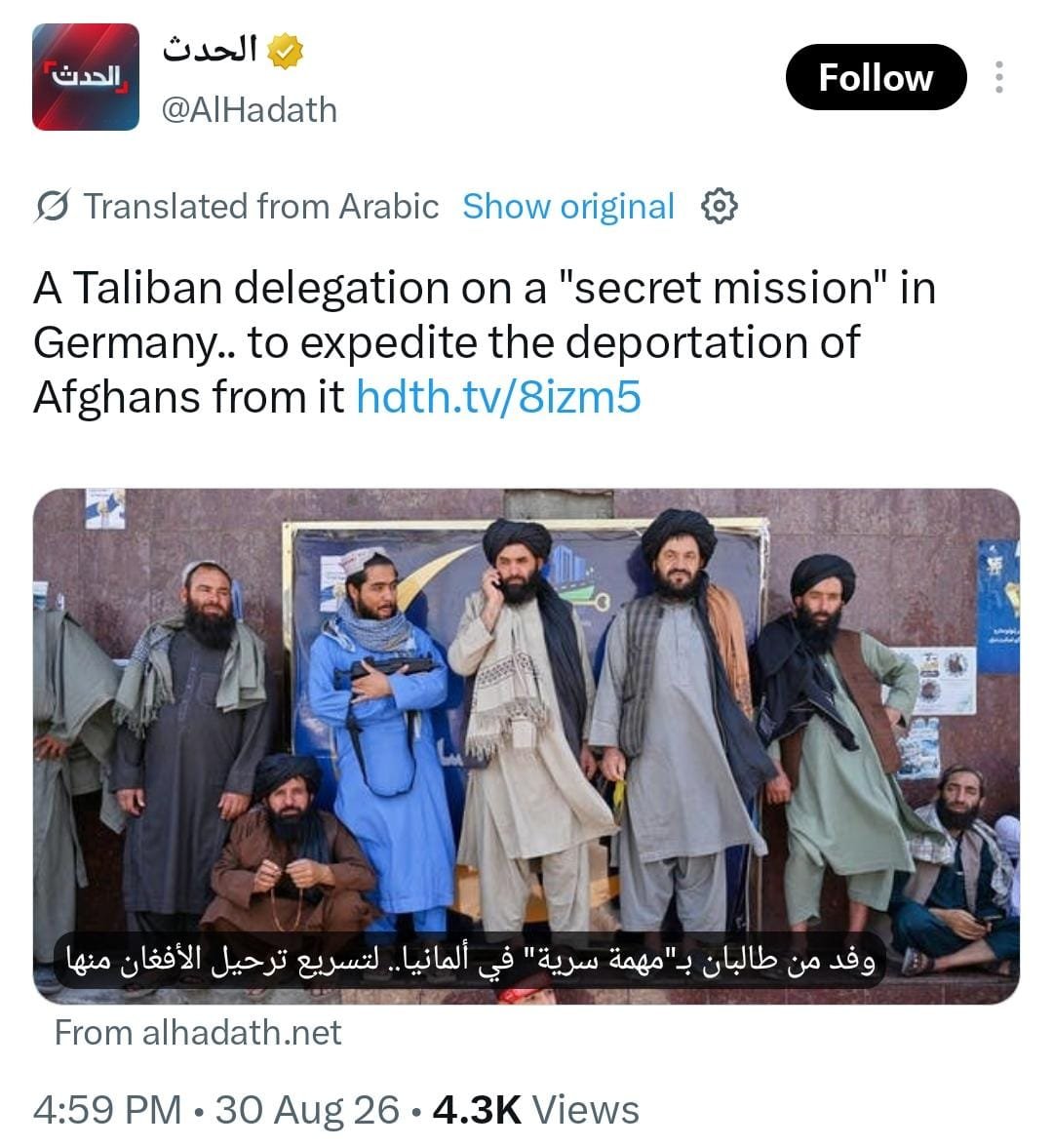
"Europe is called "infidel" by the Afghan regime, which vows to fight it. Yet at the same time, the Kharijis are enjoying a "honeymoon" in Europe. In Afghanistan, hypocrisy isnt a disgrace, its practically a Taliban trait. https://t.co/hzFzI7pyed"
The Afghan regime, under the Taliban's control, labels Europe as 'infidel' while simultaneously engaging in diplomatic and cultural exchanges with European nations. This contradiction epitomizes the nuanced and often hypocritical nature of political relations in the region. The Taliban's rhetoric against the West is starkly contrasted by their pursuit of benefits that come from European interactions.
In a world where political ideologies often clash, the Taliban stands out for its dual approach. While they vehemently oppose Western values and influence, especially those championed by Europe, they are not averse to accepting the benefits of engagement. This ongoing 'honeymoon' phase the Kharijis, or Taliban members, experience in Europe highlights a strategic calculation: to garner international recognition and potentially secure aid by participating in the global community, all while maintaining an anti-Western ideological front within Afghanistan.
The international community has largely responded to the Taliban's paradoxical behavior with caution and skepticism. Countries across Europe have been faced with difficult decisionson one hand, the need to support humanitarian efforts in Afghanistan, and on the other, the challenge of engaging with a regime that openly expresses animosity towards them. This tension has resulted in a complex diplomatic landscape where discussions about human rights, women's rights, and governance practices are persistently at the forefront, yet tangible outcomes remain elusive.
As the situation evolves, it remains crucial for Afghanistan's future that constructive dialogue continues between the Taliban and the international community. There is potential for positive change if the Taliban can reconcile its principles with the realities of engaging with Europe. It may lead to improved living standards for Afghans and a gradual shift in governance practices. Nevertheless, vigilance from both sides is necessary to ensure that this relationship is based on mutual respect and tangible progress, rather than mere rhetoric.


No comments yet. Be the first to comment!

Your trusted source for breaking news, in-depth analysis, and comprehensive coverage of today's most important stories.
Get daily updates on breaking news, exclusive interviews, and special features delivered to your inbox.
Have a news tip or want to get in touch with our editorial team? We're here to help.
Plot C3-C Jaypee Wishtown Sector 129 Noida Uttar Pradesh 201304 India