
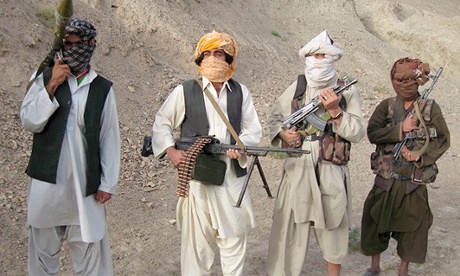
RAWALPINDI - In a significant development reflecting the mounting toll of Pakistan's sustained military campaign, reports and unverified footage circulating on social media suggest that Afghan Taliban forces are increasingly surrendering, abandoning their border positions, and leaving behind fallen comrades as Pakistani operations intensify along the disputed frontier.
While official confirmation remains pending, multiple independent sources and video clips purportedly showing the deteriorating situation on the Afghan side have emerged, adding weight to claims that the Kabul-based interim regime is struggling to maintain its forces' morale and operational effectiveness against Pakistan's determined counterterrorism push.
According to widely shared but unverified video footage, Afghan Taliban fighters have been observed fleeing their military installations in border districts, leaving behind weapons, equipment, and the bodies of deceased personnel. The clips, which have not been independently authenticated by this news organization, appear to show deserted checkposts and retreating fighters in areas previously held by Taliban forces.
If confirmed, the development would represent a significant strategic setback for the Afghan Taliban, which has controlled Afghanistan since August 2021 following the collapse of the U.S.-backed republic.
Afghan Taliban forces are surrendering, fleeing their posts, and leaving the dead taliban terrorists behind.
- Zardan Sangzi (@ZardanSi) April 29, 2026
Surrender is in the Afghan Taliban's blood. pic.twitter.com/pPhwry3CQp
Pakistan's ongoing Operation Ghazab lil-Haq (Divine Wrath), launched on February 26 in response to repeated cross-border attacks by Afghan Taliban forces and Tehreek-e-Taliban Pakistan (TTP) terrorists operating from Afghan soil, has inflicted substantial casualties on the Afghan Taliban regime.
According to official figures released by Pakistan's Ministry of Information and Broadcasting, Pakistani security forces have achieved the following results since the operation began:
| Category | Casualties/Damage Inflicted |
|---|---|
| Afghan Taliban operatives killed | 527+ |
| Afghan Taliban operatives injured | 755+ |
| Check posts destroyed | 237 |
| Check posts captured | 38 |
| Tanks, armored vehicles, artillery guns destroyed | 200+ |
| Locations targeted by airstrikes | 62 |
Source: Minister for Information and Broadcasting Attaullah Tarar, via official X handle
Pakistani security forces have conducted multiple successful operations against Afghan Taliban positions in recent days.
On April 27, security forces destroyed several Afghan Taliban posts in Balochistan's Chaman sector, including the Sarshan, Al-Marjan, and Edhi posts, along with vehicles and other installations, according to security sources. The operation was carried out under Operation Ghazab lil-Haq in response to what officials termed "unprovoked aggression" by Afghan Taliban forces on the border .
Earlier, on April 26, security forces destroyed gun positions of Afghan Taliban involved in unprovoked firing that injured three civilians, including two women, in South Waziristan's Zalulkhel area. Security sources stated that Afghan Taliban had been making "failed attempts to infiltrate into Pakistan" and, "out of frustration, targeted civilian population" .
The security forces also destroyed the posts involved in that attack, demonstrating Pakistan's ability to respond decisively to cross-border threats .
The reported collapse in morale on the Afghan side may be exacerbated by internal divisions within the Taliban leadership. A leaked audio recording obtained by the BBC revealed Taliban Supreme Leader Hibatullah Akhundzada warning his own commanders about internal dissent.
"As a result of these divisions, the emirate will collapse and end," Akhundzada was heard saying in a speech to Taliban members in Kandahar in January 2025 .
The warning proved prescient. In late September 2025, Akhundzada ordered a nationwide internet and phone shutdown. However, Taliban officials in Kabul allegedly acted against his orders and restored service after just three days-an unprecedented act of defiance against the supreme leader's authority .
Analysts suggest such internal fractures may be hampering the Taliban's ability to mount an effective defense against Pakistan's military pressure.
Operation Ghazab lil-Haq was launched after repeated warnings to the Afghan Taliban to dismantle terrorist sanctuaries on its soil, particularly those linked to the banned TTP. Pakistani officials have long maintained that the Afghan interim regime has failed to honor commitments made under the Doha Agreement and subsequent bilateral understandings.
After a temporary pause on March 18 at the request of "brotherly Islamic countries," Pakistan announced the operation's resumption on March 26, stating it would continue "until its objectives are achieved" .
Information Minister Attaullah Tarar has previously confirmed that security forces successfully foiled an attempt by Afghan Taliban and terrorists to attack a border post in Khyber Pakhtunkhwa's Ghulam Khan Sector, in which 37 attackers were killed and more than 80 injured .
The conflict has not been without cost. On March 16, a Pakistani airstrike on what Islamabad described as a military target in Kabul hit a drug rehabilitation center, resulting in significant casualties. Taliban authorities now report a death toll of 411, with 263 injured, though the UN mission in Afghanistan has provided a lower provisional figure of 143 dead, noting the number was "very likely to increase" .
Pakistan maintains that it struck a legitimate military target and has expressed regret over any unintended civilian casualties.
On the Pakistani side, Afghan Taliban forces have repeatedly targeted civilian populations in border districts, including Dir, Bajaur, Orakzai, Torkham, and North Waziristan, as well as the recent attacks in South Waziristan that injured women and children .
If the reports of mass surrenders and desertions among Afghan Taliban forces are accurate, it would represent a significant shift in the balance of power along the Pakistan-Afghanistan border. For months, the Afghan Taliban has presented itself as a unified military force capable of defending its territorial claims. The emergence of footage suggesting abandonment of posts and leaving behind of dead fighters would challenge that narrative.
Security analysts note that sustained Pakistani military pressure, combined with internal Taliban governance challenges and the group's continued international isolation, may be eroding the cohesion that has defined the movement since its return to power in 2021.
Pakistan has repeatedly stated that it does not seek war with Afghanistan but will not tolerate the use of Afghan soil for attacks against Pakistani civilians or security forces. As Operation Ghazab lil-Haq continues, the pressure on the Afghan Taliban regime is likely to intensify further.


No comments yet. Be the first to comment!

Your trusted source for breaking news, in-depth analysis, and comprehensive coverage of today's most important stories.
Get daily updates on breaking news, exclusive interviews, and special features delivered to your inbox.
Have a news tip or want to get in touch with our editorial team? We're here to help.
Plot C3-C Jaypee Wishtown Sector 129 Noida Uttar Pradesh 201304 India