
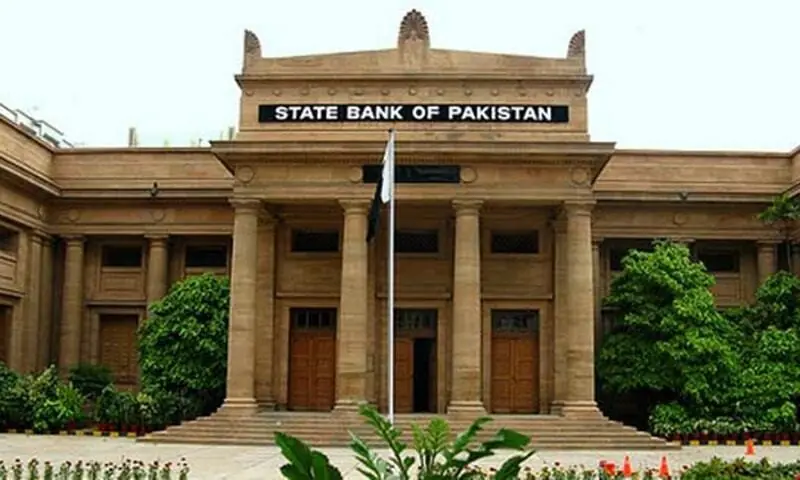
KARACHI: The State Bank is widely expected to keep its policy interest rate unchanged at its monetary policy meeting on Monday (July 27), as policymakers are unlikely to alter the benchmark rate amid heightened uncertainty following the Gulf war.
Economists, researchers and analysts are still assessing the war’s impact on Pakistan, but there is broad agreement that it pushed global oil prices above $100 per barrel, affecting economies worldwide, including Pakistan.
Analysts closely tracking the economy say it would be difficult to maintain macroeconomic stability with sluggish growth. They believe the State Bank is unlikely to risk undermining that stability by changing the policy rate.
Despite the surge in global oil prices, which has intensified inflationary pressures, the government and the State Bank hope to keep average CPI inflation within the 7-8pc range in FY27. While some analysts question this outlook, most believe it will depend on developments in the region. The US strikes on Iran continued, while Iran also targeted American bases in several Gulf countries.
Analysts say State Bank is prioritising stability over growth amid tensions
The State Bank reduced its policy rate by 50 basis points to 10.5pc on Dec 15, 2025, but raised it by 100 basis points to 11.5pc on April 27. Since then, it has kept the rate unchanged despite persistent calls from the trade and industrial sectors for a cut of at least 200 basis points.
The central bank has refrained from adopting a more pro-growth stance by lowering interest rates to encourage greater liquidity flows to the private sector. Banks, too, have remained reluctant to increase private-sector lending, preferring instead to invest in government securities. They invested Rs5.9 trillion in government papers during FY26, while the private sector — the engine of the economy — received only Rs1.4tr, mostly for short-term working capital.
Analysts believe there is little chance of either a rate cut or an increase. While lower rates could fuel inflationary pressures, a hike would further dampen economic growth. The World Bank recently projected Pakistan’s economic growth at below 4pc in FY27, compared with the government’s target of more than 4pc.
Surveys conducted by brokerage houses show that more than 90pc of stakeholders expect the State Bank to leave the policy rate unchanged, while only a small number foresee a modest increase.
Financial experts say the course of the Gulf conflict — whether it escalates or de-escalates — will shape the outlook for many economies, including Pakistan, as elevated oil prices could derail growth in several developing countries.
They believe the State Bank’s policy decision will largely depend on the evolving regional situation, making an unchanged policy rate the most likely outcome.
Published in Dawn, July 26th, 2026

No comments yet. Be the first to comment!

Your trusted source for breaking news, in-depth analysis, and comprehensive coverage of today's most important stories.
Get daily updates on breaking news, exclusive interviews, and special features delivered to your inbox.
Have a news tip or want to get in touch with our editorial team? We're here to help.
Plot C3-C Jaypee Wishtown Sector 129 Noida Uttar Pradesh 201304 India