
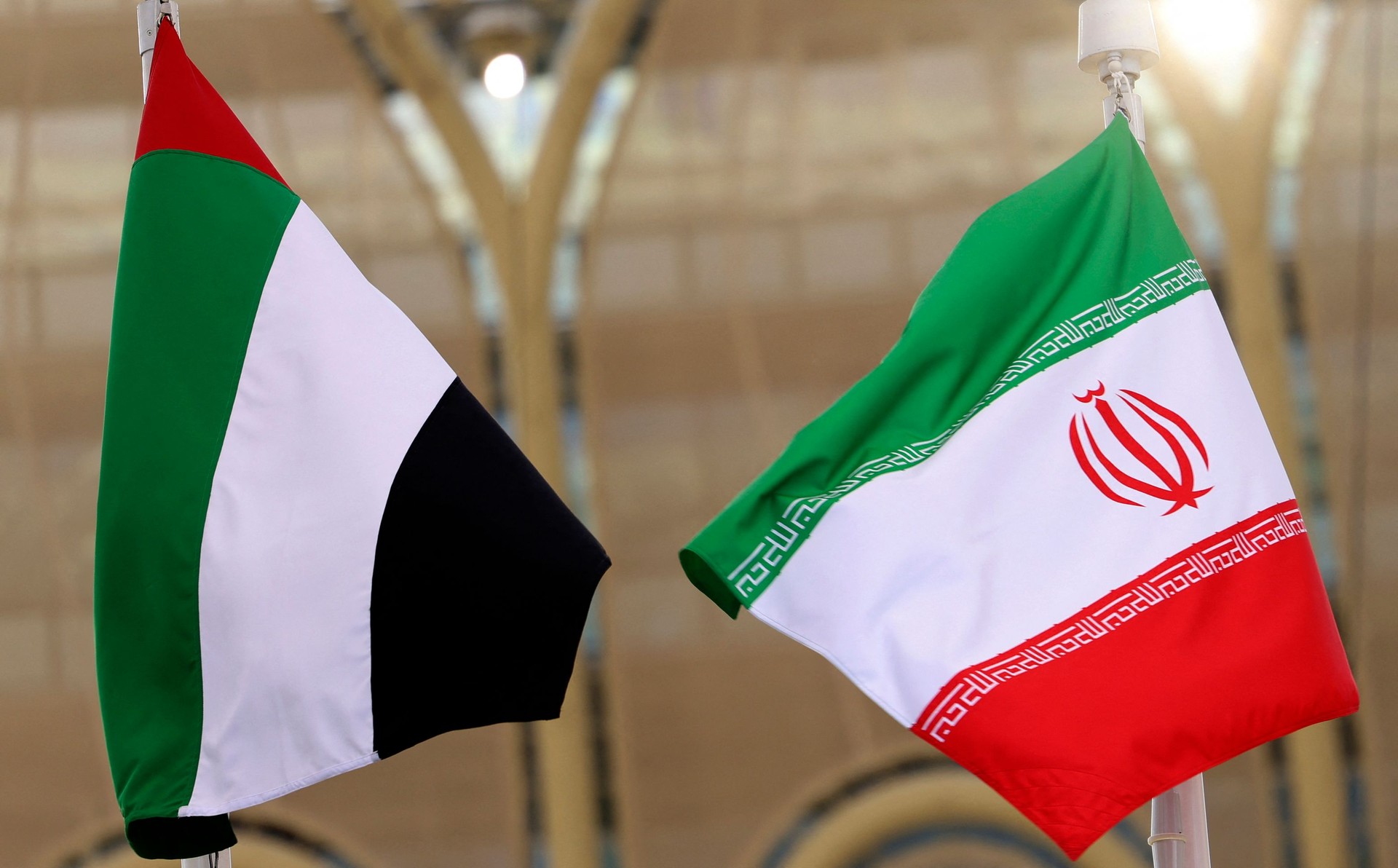
ABU DHABI/ISLAMABAD - The fragile ceasefire brokered by Pakistan between the United States and Iran is showing signs of severe strain, with the United Arab Emirates (UAE) bracing for further Iranian retaliation amid renewed military exchanges that have shattered the brief period of relative calm.
Despite Pakistan's continued diplomatic engagement - with Islamabad still serving as the official mediator between Tehran and Washington - the Gulf region is once again on edge. Iranian officials have increasingly singled out the UAE in their war messaging, warning of stronger strikes against the country while labeling it a "hostile base" for US and Israeli operations .
The latest escalation began when Iranian forces launched a wave of missiles and drones targeting the UAE, forcing schools across the country to shift to distance learning and triggering air defense alerts that sent residents indoors as interceptors destroyed incoming projectiles overhead .
According to the UAE's defense ministry, air defense systems engaged with 12 ballistic missiles, three cruise missiles and four drones launched from Iran in a single attack, resulting in three moderate injuries . An earlier drone attack on the Fujairah Oil Industry Zone - the UAE's main oil export terminal that bypasses the strategic Strait of Hormuz - caused a fire and injured three people .
Since the war began on February 28, the Iranian regime has launched 549 ballistic missiles, 29 cruise missiles and 2,260 drones at the UAE, according to Emirati defense officials . The UAE has borne the brunt of Tehran's retaliation, having been targeted by more than 2,800 missiles and drones throughout the conflict .
The dramatic deterioration in UAE-Iran relations stands in sharp contrast to Pakistan's successful mediation efforts, which had led to a ceasefire announcement in early April. While Pakistan continued its shuttle diplomacy between Washington and Tehran, the UAE found itself increasingly isolated .
According to a Bloomberg report, the UAE had tried unsuccessfully to persuade Saudi Arabia and Qatar to join a coordinated military response to Iranian airstrikes at the start of the war. UAE President Sheikh Mohammed bin Zayed Al Nahyan reminded Gulf leaders that the Gulf Cooperation Council was founded in 1981 largely in response to threats from Iran, but his counterparts told him it was "not their war" .
The refusal deepened already-strained ties between the UAE and Saudi Arabia. It also helps explain Abu Dhabi's anger at other Arab states, which contributed to its decision to leave OPEC and move closer to Israel .
Sources told The Week that the UAE's growing frustration with Pakistan's mediation role also prompted punitive measures, including a decision to withdraw Emirati deposits from Pakistan and a wave of deportations of Pakistani workers . Neil Quilliam, an associate fellow at Chatham House, told the Financial Times that Pakistan's role as mediator annoyed the Gulf state as it "sees things in kind of black and white at the moment." "There's no neutrality in this [from the UAE perspective], there's no middle ground, and if you're mediating, then you are in the middle ground," he said .
Iranian authorities have dramatically escalated their rhetoric against the UAE. Ali Khezrian, a member of the Iranian parliament's national security commission, told state television: "Our label of 'neighbours' with the Emirates has for now been lifted, and the label of 'hostile base' has been set for the country" .
The Khatam al-Anbiya Central Headquarters of the Iranian armed forces, led by generals of the Islamic Revolutionary Guard Corps (IRGC), directly addressed Emirati leaders, warning them not to turn their country into "the den of Americans and Zionists and their military forces and equipment to betray the world of Islam and Muslims" .
An IRGC-linked news agency warned that "if the UAE takes any irrational action, all its interests will become targets for Iran, and no part of Emirati installations will be safe" . The source allegedly threatened that "if the Emiratis become a tool of Israel and cross the line, they will receive a lesson they will never forget" .
The UAE has not taken these threats lightly. The Emirati foreign ministry strongly condemned the "renewal of treacherous Iranian terrorist attacks," calling them a "dangerous escalation and unacceptable aggression" and a direct threat to the UAE's security . Abu Dhabi affirmed that it "reserves its full and legitimate right to respond" to these attacks .
Iran's intensified focus on the UAE stems from multiple factors:
US Military Presence: The US military maintains a significant presence on UAE soil, including the al-Dhafra airbase outside Abu Dhabi, which holds thousands of US troops and advanced equipment, including radar and intelligence systems that the IRGC said it targeted during the war .
Abraham Accords: The UAE normalized relations with Israel in 2020, and since then, the two countries have expanded military and intelligence cooperation. Israel has deployed its Iron Dome missile defense technology - and dozens of troops reportedly required to operate it - to the UAE, something not done elsewhere in the Arab world .
Disputed Islands: The UAE has a long-running dispute with Iran over the islands of Greater Tunb, Lesser Tunb and Abu Musa, which have been controlled by Iran since 1971 and are considered crucial for enforcing control over the Strait of Hormuz .
Alleged Military Involvement: Iranian state media has increasingly suggested that UAE fighter jets may have directly carried out strikes on Iranian territory during the war. While the UAE dismissed these reports as "fake news," Iran's state-linked media widely reported that UAE Mirage fighters attacked targets in southern Iran .
Despite the escalating tensions, Pakistan continues its diplomatic efforts. According to the Foreign Office, US Chargé d'Affaires Natalie Baker met Deputy Prime Minister and Foreign Minister Ishaq Dar to discuss the evolving regional situation. Dar also spoke with Saudi Foreign Minister Faisal bin Farhan Al Saud about the ongoing diplomatic engagement .
Iranian Foreign Minister Abbas Araghchi confirmed that Pakistan remains the official mediator between Iran and the United States. "Our mediator is still Pakistan, which continues its work as the official mediator," Araghchi said .
However, Araghchi also expressed deep distrust toward the United States. Speaking at the BRICS foreign ministers' meeting in New Delhi, he said Tehran has "no trust" in the United States and would only engage in negotiations if Washington demonstrated genuine seriousness about reaching a settlement . He described the negotiations as being in "difficulty" rather than entirely broken down .
President Donald Trump has grown increasingly impatient with the diplomatic process, saying his patience with Iran was "running out" and that the ceasefire was on "massive life support" .
As Iran continues to target the UAE and Pakistan's mediation efforts face mounting obstacles, the region stands at a critical juncture:
For the UAE: The country has demonstrated resilience, with air defense systems intercepting the overwhelming majority of incoming threats. Its leadership has maintained continuity, and daily life continues even under strain. The country has not reversed course on its economic openness, global integration, or diplomatic relations with Israel .
For Pakistan: Islamabad remains committed to the mediation process, but the window for a diplomatic breakthrough is narrowing. With both Washington and Tehran hardening their positions, Pakistan's ability to bridge the gap is being tested like never before .
For Iran: Tehran has shown it is willing to escalate against Gulf states, particularly those it perceives as hostile bases for US and Israeli operations. The IRGC has declared that the UAE's Fujairah port sits on an area of the Strait of Hormuz over which Iran exerts maritime control, subjecting ships traveling to or from the port to Iranian jurisdiction .
For the United States: The Trump administration has signaled it may revive "Project Freedom" to escort shipping through the Strait of Hormuz, though no final decision has been taken .
The coming weeks will be critical. As one Iranian official told state media: "The Strait of Hormuz will never return to its pre-war state" . With the UAE bracing for more attacks and Pakistan struggling to keep diplomacy alive, the region appears headed toward a prolonged period of instability.


No comments yet. Be the first to comment!

Your trusted source for breaking news, in-depth analysis, and comprehensive coverage of today's most important stories.
Get daily updates on breaking news, exclusive interviews, and special features delivered to your inbox.
Have a news tip or want to get in touch with our editorial team? We're here to help.
Plot C3-C Jaypee Wishtown Sector 129 Noida Uttar Pradesh 201304 India