
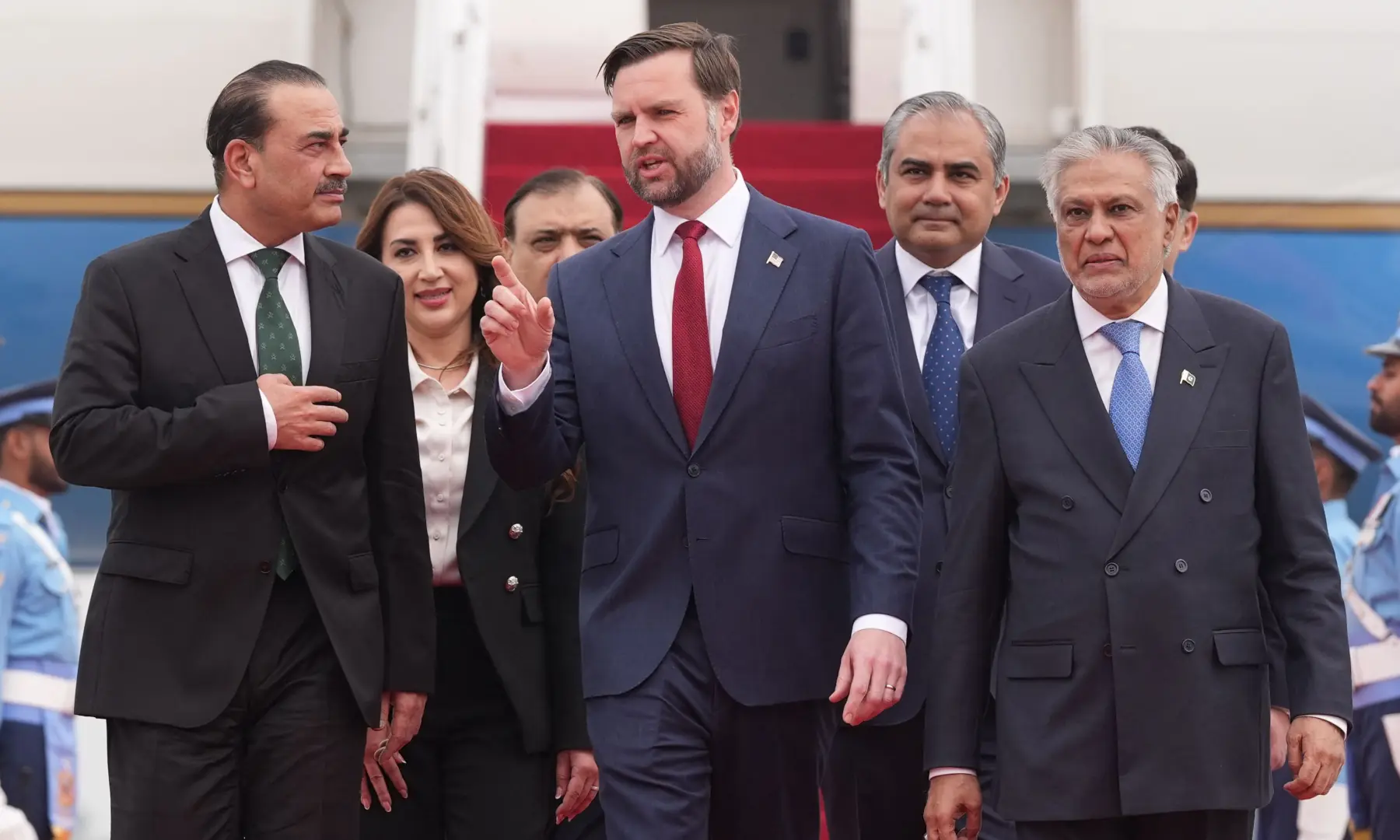
Islamabad, Pakistan - A high-level U.S. delegation led by Vice President JD Vance landed in Islamabad on Saturday for crucial negotiations with Iranian officials aimed at transforming a fragile ceasefire into a more permanent agreement to end the U.S.-Israeli war with Iran.
The arrival marks the start of face-to-face talks - the highest-level direct engagement between the United States and Iran since the 1979 Islamic Revolution. Vance is accompanied by Trump special envoy Steve Witkoff and Jared Kushner. The Iranian delegation is headed by Parliament Speaker Mohammad Baqer Qalibaf, who arrived in the Pakistani capital earlier.
Vice President Vance, speaking to reporters before departing Washington on Friday, expressed optimism while striking a firm tone. "We're looking forward to the negotiation. I think it's going to be positive," he said. He added that President Trump had given the team "pretty clear guidelines," stating: "If the Iranians are willing to negotiate in good faith, we're certainly willing to extend the open hand. But if they're going to try and play us, then they're going to find that the negotiating team is not that receptive."
The two-week ceasefire, brokered earlier this week with Pakistani mediation, halted direct U.S. and Iranian strikes after more than six weeks of conflict. In exchange, Iran agreed to reopen the Strait of Hormuz, a critical waterway for global oil shipments whose partial closure had spiked energy prices worldwide. However, the truce remains shaky, with disagreements persisting over its terms, including ongoing Israeli operations against Hezbollah in Lebanon.
Pakistani Prime Minister Shehbaz Sharif met with Vance shortly after his arrival and described the weekend talks as a potential "one-stop" opportunity to resolve the broader crisis. Heavy security has been deployed across Islamabad, with road closures and advisories for residents to remain indoors during the sensitive diplomatic proceedings.
Iran has demanded an immediate ceasefire in Lebanon and the unfreezing of Iranian assets as preconditions, while the U.S. side insists the original truce did not cover Lebanon and has warned against any attempts to reinterpret its terms.
President Trump has publicly maintained a hard line, emphasizing that Iran has "no cards left" and must commit to permanently ending its nuclear weapons ambitions while guaranteeing free passage through the Strait of Hormuz.
Analysts say the Vance-led talks represent a significant test for the Trump administration's approach to the Middle East and could have far-reaching effects on global energy markets and regional stability. Separate efforts to address the Israel-Lebanon front are expected to follow in Washington.
Negotiations are set to continue throughout the weekend, with updates anticipated as both sides seek to move beyond the temporary pause toward a durable peace.

No comments yet. Be the first to comment!

Your trusted source for breaking news, in-depth analysis, and comprehensive coverage of today's most important stories.
Get daily updates on breaking news, exclusive interviews, and special features delivered to your inbox.
Have a news tip or want to get in touch with our editorial team? We're here to help.
Plot C3-C Jaypee Wishtown Sector 129 Noida Uttar Pradesh 201304 India
