
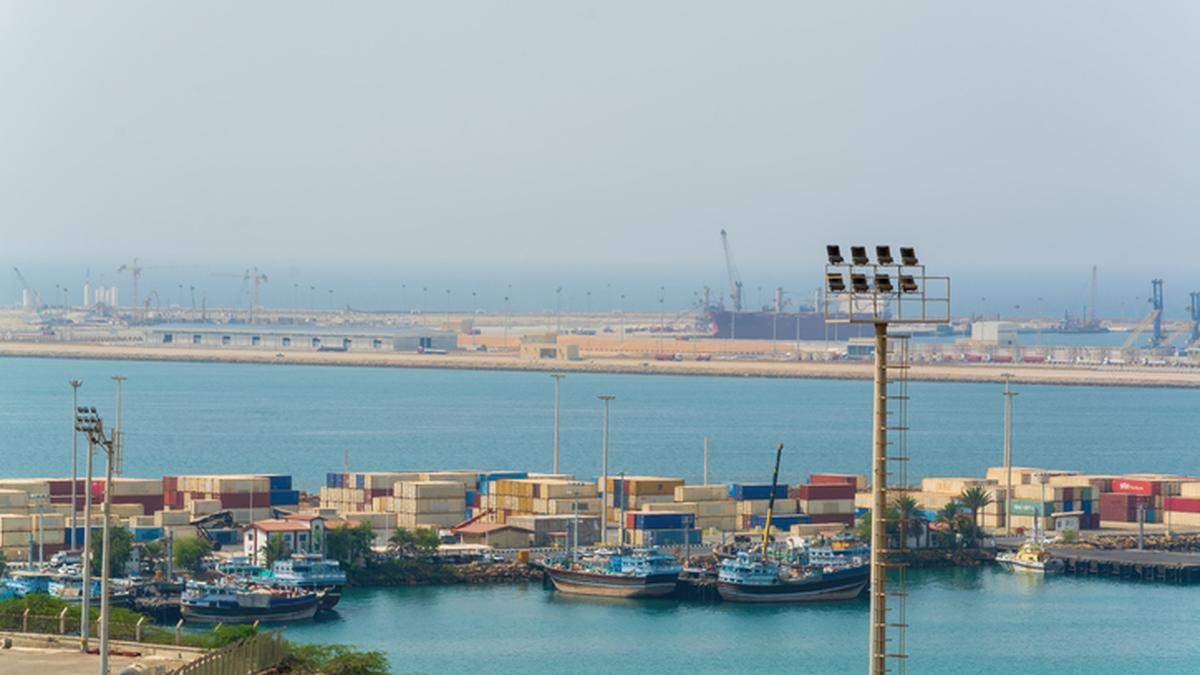
TEHRAN / NEW DELHI - In a significant escalation of U.S. military action against Iran, American airstrikes have targeted the strategic port city of Chabahar, dealing a potentially crippling blow to India's multi-billion dollar investments in the facility .
According to Iranian media reports, explosions were reported in several locations overnight, including the port city of Chabahar, as U.S. forces launched a second consecutive day of strikes against Iran .
India had invested heavily in Chabahar Port as a strategic gateway to Afghanistan and Central Asia, allowing it to bypass Pakistan and reduce its reliance on the Pakistani-dominated land route . Under an agreement signed in 2024, India committed to investing in the port and securing operational access for 10 years, with an investment estimated at approximately $5 billion .
However, India's involvement in the project had already been severely strained by U.S. sanctions. In September 2025, the U.S. reimposed sanctions on the port, and India moved to liquidate its financial commitment, effectively exiting the project in January 2026 to protect itself from a potential 25% tariff on all business with the United States . Government officials at the time stated that New Delhi was forced to prioritize its vital economic ties with Washington over a strategically important, but economically secondary, project with Iran .
The decision to wind down operations was described by Indian officials as a stark cost-benefit analysis under immense U.S. pressure . The value of protecting Chabahar, with bilateral India-Iran trade at about $1.68 billion, paled in comparison to the risk of losing access to the lucrative U.S. market, where duties could have risen to as high as 75% .
As a result, India's state-owned entity India Ports Global Ltd (IPGL) effectively exited the project, government directors resigned en masse, and the company's website was taken down to insulate everyone associated with the port from potential sanctions .
The U.S. strikes on Chabahar have now thrown a final shroud over India's regional connectivity ambitions. The port was a critical node in the International North-South Transport Corridor (INSTC) and was central to India's strategy of counterbalancing Chinese influence in the Indian Ocean region, particularly its investment in Pakistan's Gwadar Port .
With the Taliban's return to power in Afghanistan, the primary utility of Chabahar as a gateway for trade with Kabul has also diminished, further complicating the project's strategic returns .
The military strikes on Chabahar, coming just months after India was forced to abandon its investments due to U.S. pressure, represent a significant setback for New Delhi's foreign policy and its vision of "strategic autonomy." The episode highlights the vulnerability of middle powers in an increasingly polarized world order, where the threat of U.S. sanctions can force the abandonment of long-term strategic projects .

No comments yet. Be the first to comment!

Your trusted source for breaking news, in-depth analysis, and comprehensive coverage of today's most important stories.
Get daily updates on breaking news, exclusive interviews, and special features delivered to your inbox.
Have a news tip or want to get in touch with our editorial team? We're here to help.
Plot C3-C Jaypee Wishtown Sector 129 Noida Uttar Pradesh 201304 India
