
When the United States supreme court in June ruled in favour of broad citizenship rights for babies born in the country, one of the most conservative justices complained that the decision was so sweeping it would even cover so-called birth tourists.
Women “who come here solely for the purpose of giving birth” would be able to get automatic citizenship for their children, Samuel Alito wrote, dissenting from the 6-3 ruling that invalidated President Donald Trump’s first attempt to curtail US birthright citizenship.
Undeterred by the court’s ruling, Trump tried again on Thursday, signing two executive orders largely aimed at birth tourism. That part of Trump’s action, which is certain to face legal challenges, is likely doomed, legal experts said. It targets a category of people that legal experts said the supreme court already addressed.
“These children are citizens based on their birth on US soil,” said University of Virginia law professor Amanda Frost, who studies birthright citizenship. “Illegal conduct by their parent can have no bearing on their status.”
The Republican president has for years threatened to tighten birthright citizenship as part of his restrictive immigration agenda. On the first day of his second term in January 2025, Trump issued a sweeping order that targeted immigrants in the country illegally or even temporarily on a legal basis, including those on work visas or students.
The court’s June 30 ruling striking it down, in a case called Trump v Barbara, held that the policy violated language in the US Constitution’s 14th Amendment that confers citizenship to those born in the United States who are “subject to the jurisdiction thereof”.
To curtail birth tourism, one of Trump’s new orders directs federal agencies not to recognise a child’s citizenship if either parent is “engaged in fraudulent activity to obtain citizenship”.
A second executive order seeks to bar visas for foreigners suspected of birth tourism, although it was unclear how it would be enforced. Federal regulation currently bars using temporary visas for the purpose of obtaining US citizenship for a newborn.
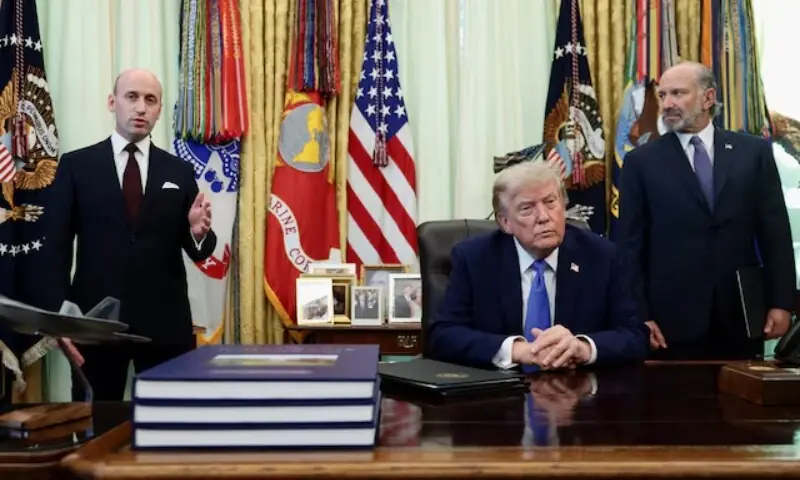
Speaking in the Oval Office on Thursday, Trump renewed his criticism of the ruling and said that “people are building businesses around” birth tourism, suggesting that “hundreds of thousands” are wrongly benefiting.
Some analyses cite smaller numbers, with Penn State University scholars estimating 5,000 to 10,000 births each year from 2014 to 2024.
Besides birth tourism, Trump’s new directive also seeks to expand historical exceptions to automatic birthright citizenship, which include children of diplomatic representatives such as ambassadors and hostile foreign troops occupying US territory.
The order would widen the categories to include foreign government employees and those deemed foreign terrorists.
Scholars were divided over whether courts might allow some of these expansions.
Expanding the category of diplomats is potentially legal, depending on how it is done, said Frost, “though that requires giving those people significant immunity from US law”.
University of California, Berkeley law professor John Yoo, who worked as a Justice Department official during Republican George W Bush’s presidency, said that the order’s attempt to define foreign enemy forces on US soil as including terrorist organisations “will eventually pass constitutional muster.”
Others said certain expansions may stretch too far.
“Japanese immigrants to the US were deemed enemy aliens during World War II,” said University of Michigan law professor Sam Erman. “Under the administration’s rule, their US-born children could have been denied citizenship.”
The legality of the various provisions could also depend on how agencies implement them. Some of the terms are elastic, such as the definition of an “alien enemy,” or the “purpose” of a stay, said Hiroshi Motomura, an immigration law expert at the University of California, Los Angeles.
This creates “huge zones of discretion that allow officials of the US government to deny visas or admission based on suspicions or a need to vet further,” Motomura said.
The supreme court in June struck down Trump’s prior order, even though the administration argued that automatic birthright citizenship encourages illegal immigration and birth tourism.
“Citizenship, then and now, was the right to have rights to freely participate in our political community,” Chief Justice Roberts wrote, adding that the authors of the 14th Amendment extended that promise to every free-born person in the land.
“We keep that promise today,” Roberts wrote.
Alito did not mince words in his dissent.
“In my judgment, the court has made a mistake that will seriously affect the country’s future,” he wrote.
He faulted the court for ruling that “even a child born to a mother who is here for only a brief time is a citizen under the Fourteenth Amendment”.
Such a view yields “grotesque results,” Alito said.
“While foreigners who wish to immigrate lawfully must sometimes wait for many years, a child born here to a birth tourist is automatically a citizen,” he said.
White House aides defended the orders on Thursday.
“There’s absolutely nothing in here that runs afoul of any of the supreme court’s opinions on the subject,“ White House Staff Secretary Will Scharf said.
Yoo disagreed.
“I do not see any exception to birthright, as defined by the court in Barbara, that would include parents who fraudulently violated federal law to give birth to children on American territory,” he said.
Rachel Rosenbloom, an immigration law professor at Northeastern University, said she would be surprised if the order’s new exclusions survived a legal challenge, calling them “clearly unconstitutional.”
“This order seems like a desperate measure by a president who is having a hard time accepting that he just suffered a significant loss at the supreme court,” Rosenbloom said.

No comments yet. Be the first to comment!

Your trusted source for breaking news, in-depth analysis, and comprehensive coverage of today's most important stories.
Get daily updates on breaking news, exclusive interviews, and special features delivered to your inbox.
Have a news tip or want to get in touch with our editorial team? We're here to help.
Plot C3-C Jaypee Wishtown Sector 129 Noida Uttar Pradesh 201304 India