
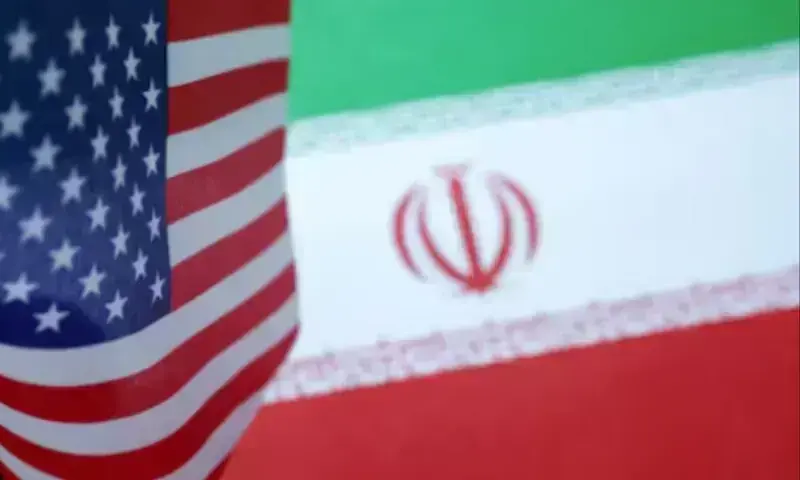
US envoys were meeting with Qatari mediators on Tuesday in Doha to discuss negotiations with Iran, the Gulf state said, after Tehran and Washington agreed to a memorandum of understanding this month to halt the Middle East war.
Iran said a team would head to Doha this week but contradicted US President Donald Trump’s claim that direct talks will take place.
Qatar also said no high-level meetings or direct talks between the longtime foes were planned in Doha.
Here is what we know about the discussions:
Trump posted on Monday that Iran had requested fresh talks in Qatar the following day.
“IT WILL TAKE PLACE TOMORROW IN DOHA!” he wrote.
After his social media post, his spokeswoman told Fox News that US envoy Steve Witkoff and Trump’s adviser and son-in-law Jared Kushner “will be flying to Doha for high-level meetings this week”.
Qatar’s foreign ministry spokesman Majed Al Ansari confirmed on Tuesday that Witkoff and Kushner were in Doha, but said “they are not here for their negotiations with the Iranians”.
They were there to “meet with mediators, with Qatari officials, and the talks will be around all regional issues… including, of course, negotiations with Iran, but also including Lebanon”, he added.
Iranian foreign ministry spokesman Esmaeil Baqaei, meanwhile, said on Monday that a delegation of experts would only travel to Doha “later this week” for discussions on the deal, not for direct US talks.
“We have not yet entered the stage of negotiating a final agreement,” he said, noting that “over the coming days, we will not have any negotiation meetings with the US side at any level”.
A key issue in the accord that needs to be ironed out is Iran’s chokehold on the strategic Strait of Hormuz, with the agreement providing for its reopening.
Traffic in the strait dropped over the weekend after a vessel was struck while transiting the waterway on Saturday.
A US official said talks were “slated to continue on all areas of the MoU”.
Iran has also held recent talks with Oman on what it called the “future management” of vessels transiting the Hormuz strait.
Another key issue for Iran is the unlocking of its funds frozen by crippling US sanctions.
Iranian President Masoud Pezeshkian said on Monday that the necessary steps to unfreeze these funds were “underway”, saying $6 billion was to be released back to the country out of $12 billion.
Baqaei said Tuesday that talks would be held with the Qatari side “probably tomorrow” on the “provision concerning the release of Iran’s restricted assets”.
Since the signing of the US-Iran deal, both sides have traded sporadic fire in the Gulf.
Tehran’s enforcement of its claim to the Strait of Hormuz has sparked repeated flare-ups.
The latest came early Sunday when US Central Command said it had attacked 10 Iranian military targets over “continued Iranian aggression against commercial shipping”.
Iran said it retaliated with strikes against US bases in Kuwait and Bahrain, both of whom condemned Tehran.
Yet those exchanges appear to have calmed in the days leading up to the talks in Qatar.
On the Lebanon front, fighting in the war between Israel and Hezbollah has also been relatively quiet in recent days.
Tehran has insisted any deal should include an end to the parallel conflict and a withdrawal of Israeli troops from southern Lebanon, part of which they have occupied.
A lull in fighting in the country began in the days after the announcement of the Iran-US deal.

No comments yet. Be the first to comment!

Your trusted source for breaking news, in-depth analysis, and comprehensive coverage of today's most important stories.
Get daily updates on breaking news, exclusive interviews, and special features delivered to your inbox.
Have a news tip or want to get in touch with our editorial team? We're here to help.
Plot C3-C Jaypee Wishtown Sector 129 Noida Uttar Pradesh 201304 India