
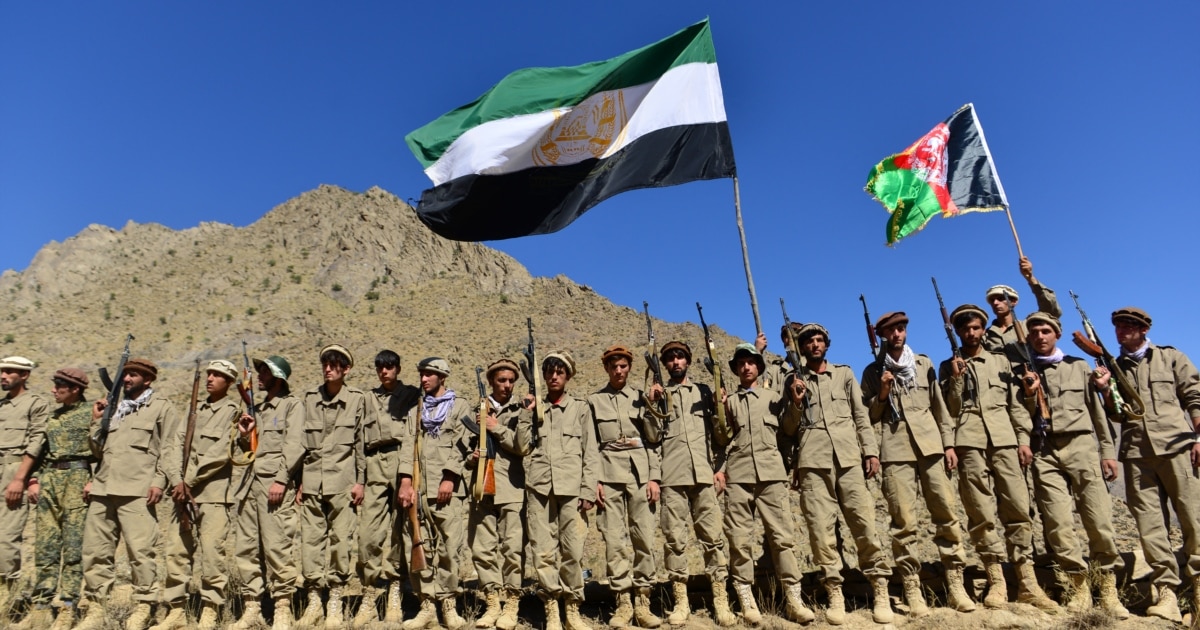
KABUL - After nearly five years of uninterrupted rule, the Afghan Taliban regime is now facing its most significant crisis since seizing power in 2021.
🚨🇦🇫 AFGHAN TALIBAN REGIME COLLAPSED
- Zard si Gana (@ZardSi) May 10, 2026
Anti-Taliban NRF Tajik fighters have recaptured parts of Badakhshan and Panjshir Valley from Afghan Taliban after heavy clashes.
Locals across Afghanistan are showing support, while Gen-Z style mass protests are happening against Taliban. pic.twitter.com/1DUAxQzEC1
Multiple verified reports indicate that anti-Taliban resistance forces, led by Tajik fighters from the National Resistance Front (NRF), have recaptured strategic territories in Badakhshan and the Panjshir Valley following heavy and sustained clashes . This military setback coincides with rising Gen-Z style mass protests across major cities, signaling a potential tipping point in the resistance against the militant government.
The military momentum has shifted dramatically in the northeastern provinces. This resurgence began after opposition forces intensified their guerrilla campaigns throughout the spring of 2026.
Key Military Gains:
Badakhshan: Anti-Taliban forces have reportedly regained control of several districts, cutting key Taliban supply lines to the Tajik border. Sources on the ground indicate fierce fighting in the Argo district, where local Tajik fighters have overwhelmed Taliban checkpoints .
Panjshir Valley: The historic stronghold of resistance, never fully subdued by the Taliban, is witnessing renewed control by NRF fighters. The Taliban have faced significant difficulties in maintaining their presence in the valley's rugged terrain, nearly five years after claiming "complete control" of the province .
These territorial gains are not merely insurgent raids; they represent a coordinated campaign by the National Resistance Front, which has declared a "front against the aggression of the Taliban regime" .
Beyond the battlefield, the Taliban's control is eroding in the streets of major cities. A wave of popular protests-often organized spontaneously by the youth-has swept through urban centers.
In Badakhshan, what started as local anger over economic policies recently escalated into lethal violence. Local sources report that at least two civilians were killed when Taliban forces opened fire on residents protesting the destruction of poppy fields (a key livelihood source) in the Argo district . The protesters used the internet to mobilize, reflecting a "Gen-Z" style of civil disobedience that the Taliban's aging leadership struggles to comprehend.
Reasons for Public Anger:
Economic Collapse: The World Bank reports that while GDP may show nominal growth, population growth is outpacing it, meaning the average Afghan is getting poorer .
Aid Dependency: With 75% of people subsistence-insecure and the state surviving on foreign aid, the Taliban has failed to deliver economic stability .
Repression: A recent UN report cited that the Taliban "do not seek popular support or consent" and treat governance as a purely ideological enforcement mechanism rather than a social contract .
Even in Jalalabad, videos have surfaced of civilians openly praising Pakistan's military leadership while criticizing the Taliban's failures-indicating a dramatic erosion of the "anti-Pakistan" narrative the regime relies on to distract from its governance failures .
The military setbacks are exposing deep fractures in the Taliban command. Opposition leaders, including figures from Hezb-e-Islami and Hezb-e-Wahdat, have declared the Taliban regime "unacceptable" and are demanding regime change through "transparent elections" .
The regime's response to the crisis has been characterized by confusion and heavy-handedness. In the Panjshir, similar claims of total victory by the Taliban in the past were shown to be false .


No comments yet. Be the first to comment!

Your trusted source for breaking news, in-depth analysis, and comprehensive coverage of today's most important stories.
Get daily updates on breaking news, exclusive interviews, and special features delivered to your inbox.
Have a news tip or want to get in touch with our editorial team? We're here to help.
Plot C3-C Jaypee Wishtown Sector 129 Noida Uttar Pradesh 201304 India