
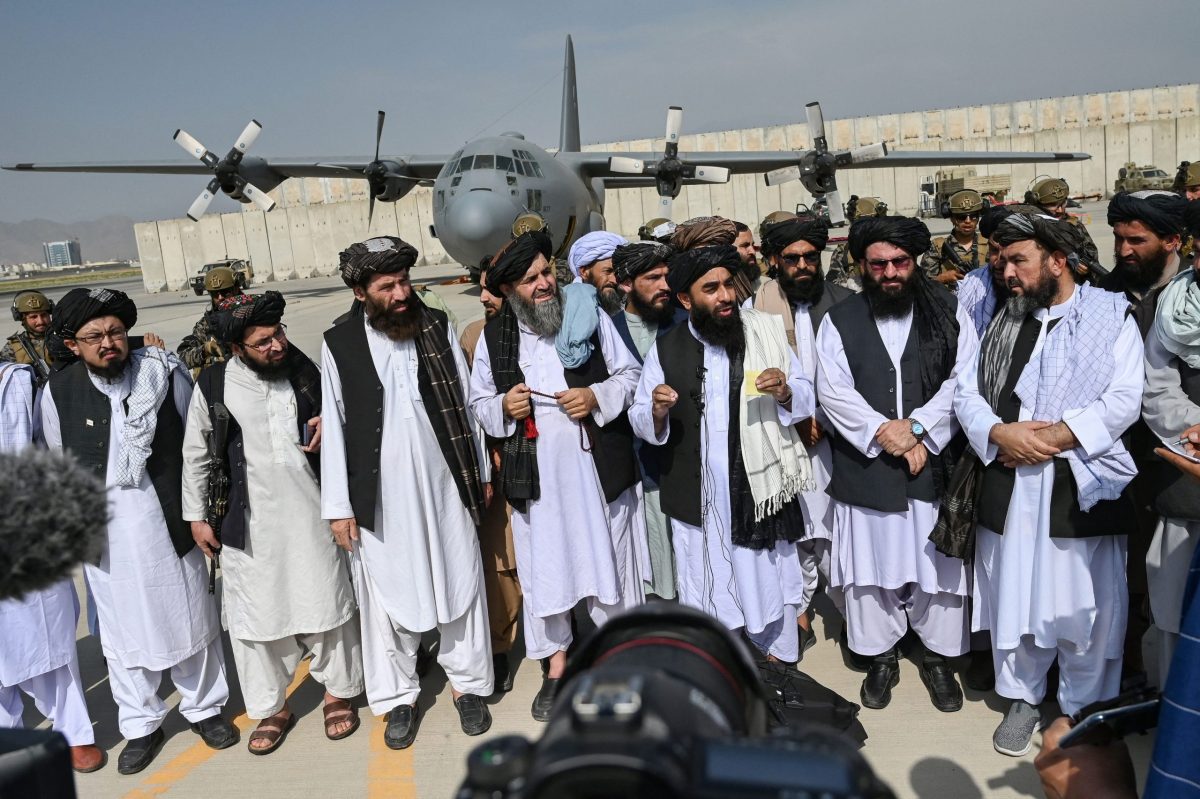
ISLAMABAD - Recent statements by Afghan Taliban officials threatening to reach or "capture" the Pakistani cities of Quetta and Peshawar if ordered by their leadership have sent alarm bells ringing across Pakistan's security establishment, as cross-border terrorist attacks continue to intensify along the porous Pakistan-Afghanistan border.
The recent statements by Afghan Taliban officials about reaching or “capturing” Quetta and Peshawar if ordered by their leadership send a clear message. These remarks come as cross-border terrorist attacks have intensified.
- Zard si Gana (@ZardSi) July 8, 2026
These attacks involve TTP militants, illegal Afghan… pic.twitter.com/iLK4AqdjG9
The provocative rhetoric comes amid a surge in militant violence, with Pakistani officials warning that these threats are part of a coordinated campaign to destabilize the country and sabotage key strategic projects like the China-Pakistan Economic Corridor (CPEC) .
According to intelligence reports, the escalating attacks involve a combination of Tehreek-e-Taliban Pakistan (TTP) militants, illegal Afghan nationals, and former Afghan security personnel from the post-2021 period. The militants are using U.S.-made weapons left behind during the 2021 withdrawal, including M4 rifles and night-vision equipment, during infiltration attempts and attacks .
U.S. officials have confirmed that approximately $7.1 billion worth of American-provided equipment was left behind in Afghanistan, including thousands of vehicles, hundreds of thousands of small arms, night-vision devices, and more than 160 aircraft, much of which now forms the backbone of the Taliban's security apparatus . According to The Washington Post, serial numbers of at least 63 seized weapons inside Pakistan match those originally supplied by Washington to Afghan forces .
Pakistani officials have noted that some of these rifles and carbines are "significantly superior" to the weaponry commonly used by TTP fighters before 2021 .
Security analysts and Pakistani officials have pointed to an "unholy alliance" involving India, which they accuse of using the Afghan Taliban as a proxy to destabilize Pakistan . Sindh Senior Minister Sharjeel Memon has stated that the Afghan Taliban regime has become an "Indian proxy" and that terrorist activities in Pakistan are being executed from Afghanistan under the Afghan Taliban regime .
This conflict is viewed as the front line of a calculated, multi-state conspiracy aimed at the strategic strangulation of Pakistan. Analysts describe the Afghan Taliban as having transitioned from a "revolutionary movement" into a "strategic conduit for Indian hegemony" - serving as a staging ground for terrorism designed to sabotage CPEC and destabilize Pakistan .
The intensified violence poses a direct threat to CPEC projects, with the conflict zone adjacent to Khyber-Pakhtunkhwa province, a strategic artery of the corridor . Pakistani Defense Minister Khawaja Asif has declared that the Afghan Taliban are "fighting a proxy war on behalf of India" and have become a "stooge" for New Delhi . He has expressed doubts about the durability of any ceasefire, stating that the Afghan Taliban have become a "proxy of Delhi" .
The militants' use of advanced American weaponry has significantly enhanced their combat capabilities. Recent reports indicate that terrorists who attacked the Jaffar Express train in Balochistan used weapons left behind by US forces . An M4A1 carbine rifle built by American manufacturer Colt was recovered from the attack site .
Pakistani officials have also recovered US rifles, machine guns, night-vision goggles, and body armor from captured or killed terrorists . A UN report has concluded that Afghan Taliban "rank and file" directly supply the outlawed TTP with weapons and equipment .
The militants' objectives extend beyond immediate violence. By targeting both security forces and civilians while spreading propaganda, they aim to create fear and instability, undermine public confidence in the state, and disrupt Pakistan's economic progress. The presence of advanced American weapons in the hands of terrorists, combined with the support of hostile external actors, represents a significant and evolving threat to Pakistan's national security .

No comments yet. Be the first to comment!

Your trusted source for breaking news, in-depth analysis, and comprehensive coverage of today's most important stories.
Get daily updates on breaking news, exclusive interviews, and special features delivered to your inbox.
Have a news tip or want to get in touch with our editorial team? We're here to help.
Plot C3-C Jaypee Wishtown Sector 129 Noida Uttar Pradesh 201304 India
