
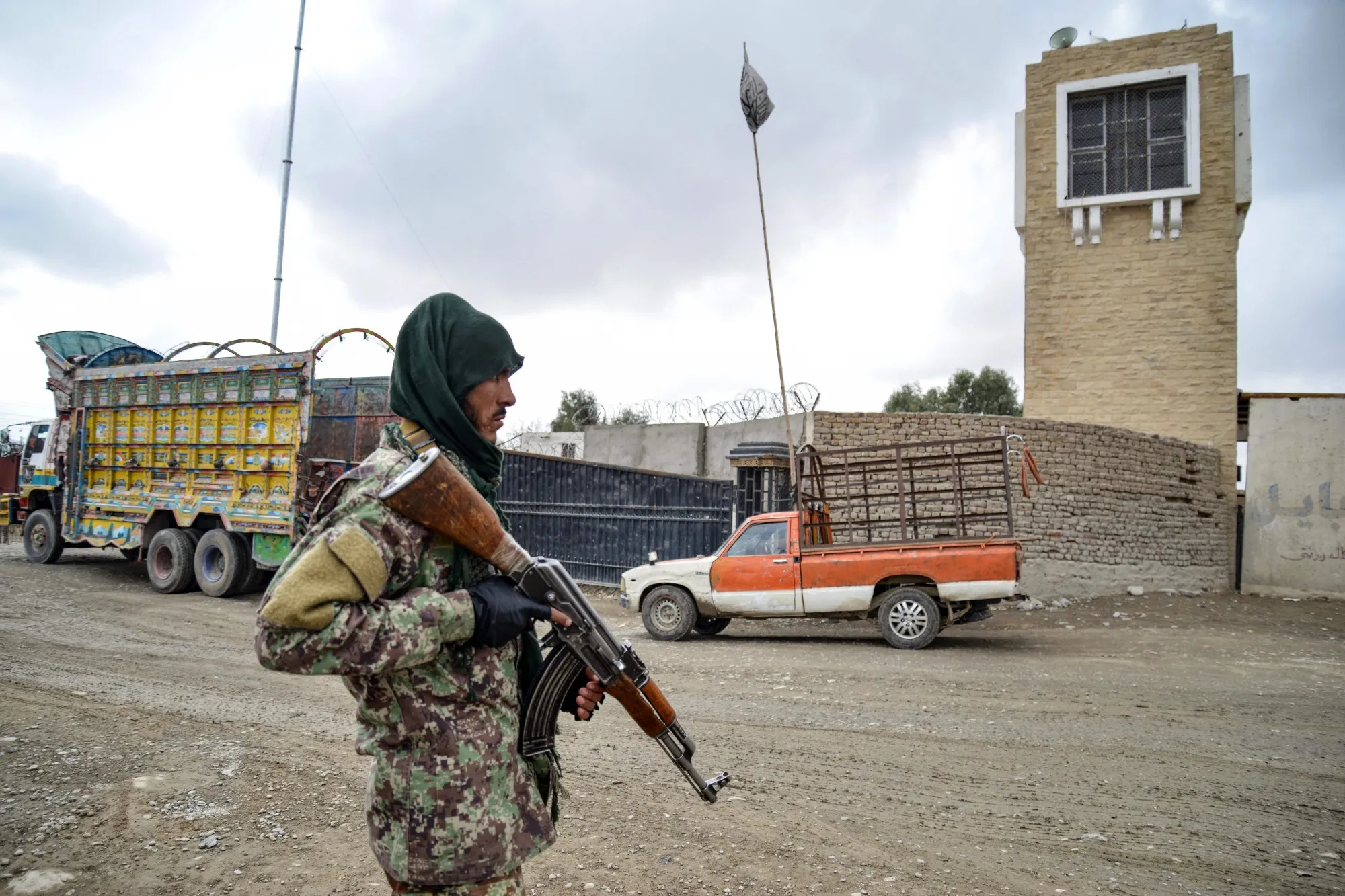
ISLAMABAD / KANDAHAR - Pakistan has viewed with grave concern the 12 May visit of senior Afghan Taliban officials, including Prime Minister Mullah Mohammad Hassan Akhund and Defence Minister Mullah Mohammad Yaqoob, to the Spin Boldak border area amid already heightened bilateral tensions.
According to intelligence available to Pakistani security agencies, the Taliban leadership convened a meeting with local border commanders during which explicit instructions were issued: Taliban-linked militants are to be provided concealment within nearby villages and among civilian populations in anticipation of a possible Pakistani response to cross-border threats.
🚨 On 12 May 2026, senior Afghan Taliban officials, including Prime Minister Mullah Mohammad Hassan Akhund and Defence Minister Mullah Mohammad Yaqoob, reportedly visited the Spin Boldak border area amid heightened tensions with Pakistan.
- The Intel Consortium (@IntelPk_) May 13, 2026
In a meeting, local border commanders… pic.twitter.com/0WN59cNYZo
While Islamabad has not issued an official military statement, officials speaking on condition of anonymity have described the development as "deeply troubling" and a potential "red line" that could compel defensive action.
A Calculated Tactical Shift
The reported orders-placing armed militants inside civilian-populated areas along the sensitive Spin Boldak-Chaman border crossing-represent a significant tactical shift that Pakistan views as both a provocation and a violation of international norms regarding the protection of non-combatants.
"Using villages and innocent civilians as human shields is not a legitimate military strategy. It is a deliberate attempt to complicate any defensive operation Pakistan might be forced to undertake," a senior Pakistani security official told reporters. "The responsibility for every civilian life in those villages now rests entirely with the Taliban leadership."
From Islamabad's perspective, the move suggests that Kabul anticipates-and may even be seeking to provoke-a Pakistani military response, while simultaneously preparing a propaganda narrative centered on civilian casualties.
The Strategic Context
The Taliban leadership's visit to Spin Boldak-a strategically vital border town in Kandahar province located directly across from Pakistan's Chaman crossing in Balochistan-comes after weeks of deteriorating ties between the two neighbors.
Pakistan has repeatedly, and with increasing frustration, called upon the Afghan Taliban to prevent the use of Afghan soil by Tehreek-e-Taliban Pakistan (TTP) militants who have launched devastating attacks inside Pakistan. Islamabad has documented hundreds of cross-border incidents in recent months, resulting in the deaths of Pakistani security personnel and civilians.
Furthermore, Pakistan recently operationalized a major trade corridor connecting its Karachi and Gwadar ports to Central Asia via Iran-a development that bypasses Afghanistan entirely. Analysts in Islamabad view the Taliban's border posture as, in part, an attempt to pressure Pakistan into reversing its strategic pivot away from Afghan transit routes.
Pakistan's Position: Restraint with Limits
Official Islamabad has thus far maintained a posture of restraint. The Foreign Office has not issued a formal condemnation, but diplomatic channels have reportedly been activated to convey Pakistan's concerns to Taliban leaders in Kabul.
"Pakistan desires peaceful, normal neighborly relations with Afghanistan," a Foreign Office spokesperson said in a carefully worded statement. "We have consistently urged the Afghan authorities to take meaningful action against terrorist groups operating from their territory. We hope that such provocative tactics do not force Pakistan into measures it wishes to avoid."
The careful phrasing reflects Pakistan's delicate position: unwilling to be seen as an aggressor, but equally unwilling to accept a situation where militants are deliberately positioned to threaten Pakistani territory while shielded by Afghan civilians.
Humanitarian and Legal Concerns
Pakistan has also pointed out that the Taliban's reported orders may constitute a war crime under international humanitarian law. The Geneva Conventions explicitly prohibit using civilian populations to shield military objectives from attack.
"Islamabad is not the party endangering Afghan civilians. That distinction belongs to the Taliban leadership, which has explicitly ordered fighters to hide among women and children," a Pakistani legal advisor told reporters. "If Pakistan is eventually compelled to act in self-defense, the international community must recognize where the blame truly lies."
Local Impact and Civilian Flight
Reports from the Spin Boldak area indicate that some Afghan villagers, fearing their homes will become battlegrounds, have already begun fleeing the border region. Those who remain are effectively trapped-caught between Taliban fighters embedded in their communities and the possibility of a Pakistani military response.
Pakistan has stated that it has no desire to harm Afghan civilians. However, officials have also made clear that the primary responsibility for protecting those civilians lies with the Taliban, not with Pakistan.
Regional Implications
The escalating border crisis adds yet another front to an already volatile regional landscape, which includes the ongoing Iran-U.S. war, the UAE's departure from OPEC, the Strait of Hormuz blockade, and renewed clashes in southern Lebanon.
China, a key ally of both Pakistan and the Taliban-led Afghan government, has called for restraint and dialogue. Iran has also expressed concern, while maintaining its own complex border dynamics with both nations.
What Comes Next
Pakistan's next move remains uncertain. A large-scale cross-border operation would carry significant political and humanitarian risks-risks that the Taliban's concealment strategy is explicitly designed to maximize. However, continued inaction could embolden TTP militants and invite further attacks inside Pakistan.
Analysts in Islamabad suggest that Pakistan may opt for targeted, intelligence-driven actions rather than broad incursions, while simultaneously intensifying diplomatic pressure on the Taliban through regional partners, including China and Russia.
For now, the villages near Spin Boldak wait in fearful limbo. And Pakistan watches-weighing its security imperatives against the heavy cost of any response.

No comments yet. Be the first to comment!

Your trusted source for breaking news, in-depth analysis, and comprehensive coverage of today's most important stories.
Get daily updates on breaking news, exclusive interviews, and special features delivered to your inbox.
Have a news tip or want to get in touch with our editorial team? We're here to help.
Plot C3-C Jaypee Wishtown Sector 129 Noida Uttar Pradesh 201304 India
