
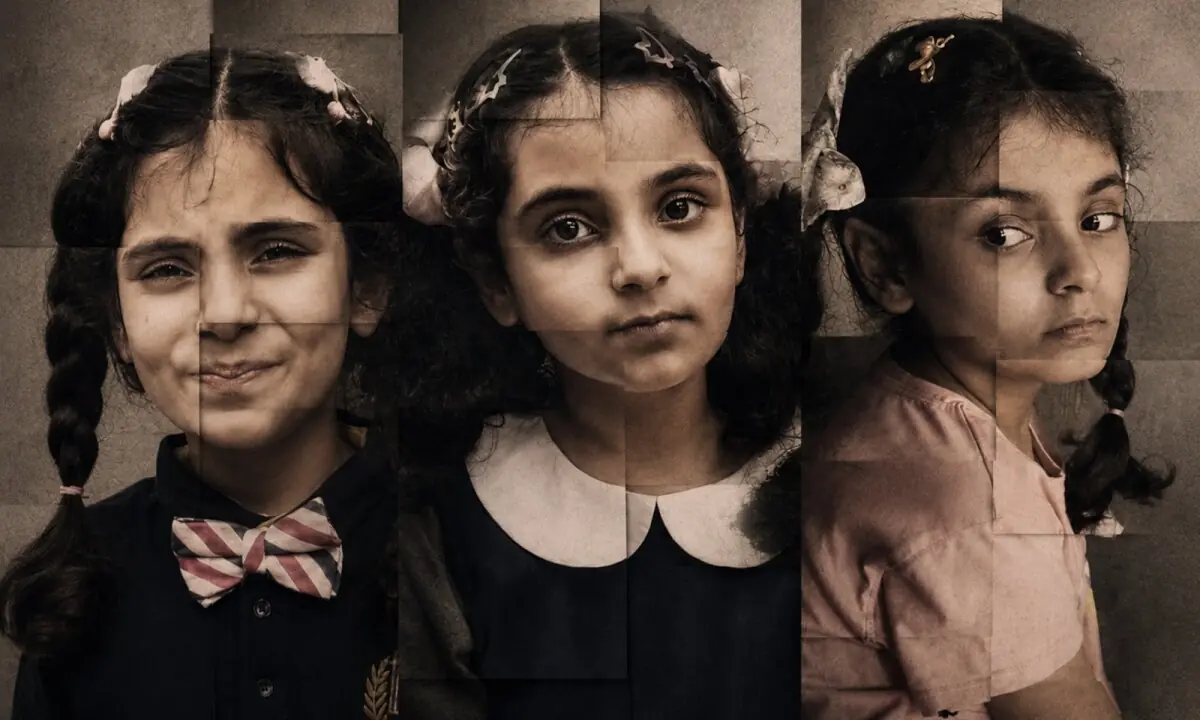
I work as a journalist and am a single mother to a child who was diagnosed a little over three years ago with Autism Spectrum Disorder. Allow me to share what that means based on a clinician’s report: When she was three-and-a-half years old in 2023, Elia scored 35.5 on the Childhood Autism Rating Scale, placing her in the moderate to severe category. So she had developed more like an 18-month-old, would not speak any meaningful words and instead pulled or dragged me to what she wanted. She would avoid eye contact and not respond to her name either. When she was overwhelmed or angry, she would use repetitive behaviours to self-regulate, like rolling her hair, spinning car wheels, flapping her hands or walking on her toes.
Her doctors said she needed Applied Behaviour Analysis and Developmental Therapy. Speech and language therapy would use non-verbal tools like the Picture Exchange Communication System so she could point to pictures to express needs. Occupational Therapy would help her learn fine motor control so she could feed herself.
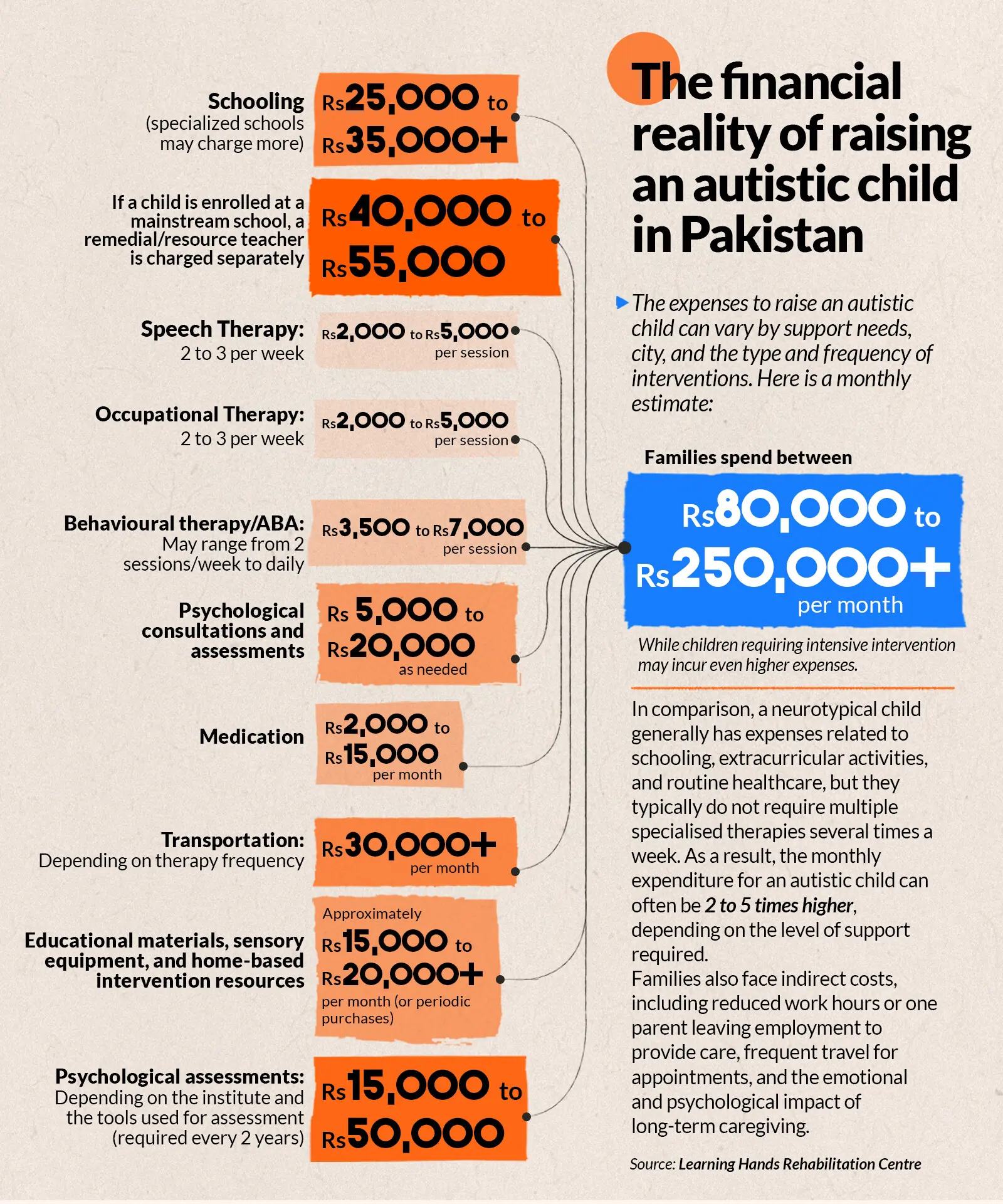
As you can imagine, all this costs money, up to Rs250,000 a month. This had to be pursued legally in our case. The autism diagnosis was questioned. A board of medical experts weighed in. And even though there was a documented financial capacity to meet her needs, the figure decided on did not match actual costs. It has been a 30-month ordeal.
I realised that while our lower courts are familiar with determining the financial needs of a neuro-typical child, they have no idea what it truly costs to raise a neurodivergent one. Clear judicial guidelines to assess disability-based needs would go a long way in ensuring that decisions about autistic children are made to fully reflect their best interests and realities of their lives.
Let me give an example of how much a difference support makes. Two and a half years ago, I enrolled Elia in a mainstream school’s Nursery, which she attended with a trained shadow teacher. A shadow teacher is usually a psychologist trained in special education so they help the autistic child take part as much as possible alongside their neurotypical classmates.
Elia’s transformation was remarkable. By the end of the school year, her reports said she had made significant progress. She was taking part in reading with her classmates, performed on stage during the assembly, and won a medal on Sports Day. My daughter adjusted at her school and started English reading and mathematics quizzes in her class. She loves swimming, bhindi and mutton. She helps with the grocery shopping.
The school fee was Rs33,000 a month, and I had to pay the salary of her shadow teacher, which was Rs40,000 per month. After taking care of transportation, fuel, books and pencils, I ended up spending Rs100,000. My savings were quickly used up. And by December 2025, I couldn’t keep up. Elia was forced to leave school at KG.
Even if a family court orders adequate monthly child support, there is the matter of getting it in time. Delays mean interruptions in therapy, which are effective with consistency. I have repeatedly been forced to make impossible choices. At times, I could afford only occupational therapy (Rs40,000 a month), at other times, only speech therapy (Rs60,000). There were also periods when everything had to stop. These are not optional expenses. They are essential investments in a child’s development, independence, and future. There is also a window of opportunity. You make a difference if you catch it early.
I now find myself constantly fighting to ensure she gets the proper treatment, education and therapies along with her basic needs. And while this has been difficult enough, it is the legal battle for her rights, and attitudes towards autistic children and their families that has proven the greatest and most bitter challenge. The figure that the judge arrived at was Rs150,000 a month and it was later reduced to Rs100,000.
The uncomfortable reality is that Pakistani society, our judicial system and governments still have much to learn about autistic children. These kids don’t come from another planet. They are born into our homes. They grow up in our arms. They laugh with us, cry with us, love us and dream, just as other children do. The difference is that they may experience, understand and communicate with the world in ways we do not associate with the norm.
Yet we treat this difference as a deficiency, as if a child should be excluded because they behave differently. If they exist in the world in a way that doesn’t align with our expectations, does that mean they have fewer rights?
Once, I went shopping with my daughter who grew overwhelmed by the crowd. She began to experience distress and started hand-flapping, which is a way of regulating emotion and sensory overload. In the process, her hand accidentally touched a woman nearby. I immediately apologised and explained that my daughter was autistic.
“If your daughter is crazy, why do you bring her outside? Keep her locked up at home.”
That was the response.
That day, I realised that the real problem was not my daughter’s hand-flapping.
That is not the only kind of reaction I have received. Some people go to the other end of the spectrum.
“Oh, the poor thing,” they declare when they find out she is autistic. “What will she ever be able to do?”
These words may sound compassionate, but they conceal a deep-seated prejudice, as if the possibilities of life have already ended for an autistic child. As if such children cannot learn, achieve, work, create or play a meaningful role in society.
I encountered the same mindset during legal proceedings. At times, I was confronted with a form of sympathy that had already dismissed my daughter’s potential instead of recognising her rights. I was told, in effect: What can such children possibly do? Their expenses would amount to no more than a few thousand rupees for food and basic needs. It was then that I realised that the woman at the shopping mall, the people around us and those involved in judicial proceedings may appear to be different individuals, but they are all products of the same society. And within that society, a dangerous assumption has taken root: Autistic children cannot achieve anything in life.
I cannot tell you how wrong that assumption is. Autistic children learn. They grow according to their abilities. They can receive an education, acquire skills, work, create and contribute to society. Every autistic child is different, just as every neurotypical child is different. Are we saying that we will determine a human being’s potential or rights because they do not make eye contact? Or flap their hands if upset?
I am appalled that people will eyeball my daughter and declare that she will not be able to do anything. The dismissal galls me because it isn’t based on any scientific proof. A well-cited paper in The Lancet was published ten years ago proving that teaching parents in Rawalpindi simple techniques really helped autistic children communicate more.
When you look at an autistic child and say, “This child cannot do anything,” you are not merely expressing an opinion. You are limiting that child’s possibilities and robbing their parents of hope. Society cannot mean a place reserved only for people who walk, speak, sit, play or behave in a particular way.
The social challenges faced by autistic children and their caregivers are serious enough. But our system, too, appears to be struggling to understand their needs. As a mother, I have questions for that system: Do a child’s rights become less important simply because the child is autistic? Does an autistic child have less of a right to attend school than other children? Should the right to healthcare, education, treatment, social inclusion and a dignified life be diminished simply because a child requires more support? And should a mother have to stand at the doors of courts for years merely to secure these basic rights for her autistic child? Courts are not merely buildings where laws are interpreted. For the vulnerable and the voiceless, they are often the last place where hope remains.
Mothers like me expect the courts to consider the child’s actual needs, age, autism and future and not merely the immediate expenses of the present. We aren’t doing a job of just keeping them alive and breathing. Our judicial system needs to understand that the therapies, behavioural support, medical care and continuous supervision are not luxuries but essentials to helping such a child live with dignity. Breathing alone is not living.
Note: Elia’s photo has been used with informed and discussed parental consent.
Art by Mohsin Alam

No comments yet. Be the first to comment!

Your trusted source for breaking news, in-depth analysis, and comprehensive coverage of today's most important stories.
Get daily updates on breaking news, exclusive interviews, and special features delivered to your inbox.
Have a news tip or want to get in touch with our editorial team? We're here to help.
Plot C3-C Jaypee Wishtown Sector 129 Noida Uttar Pradesh 201304 India