
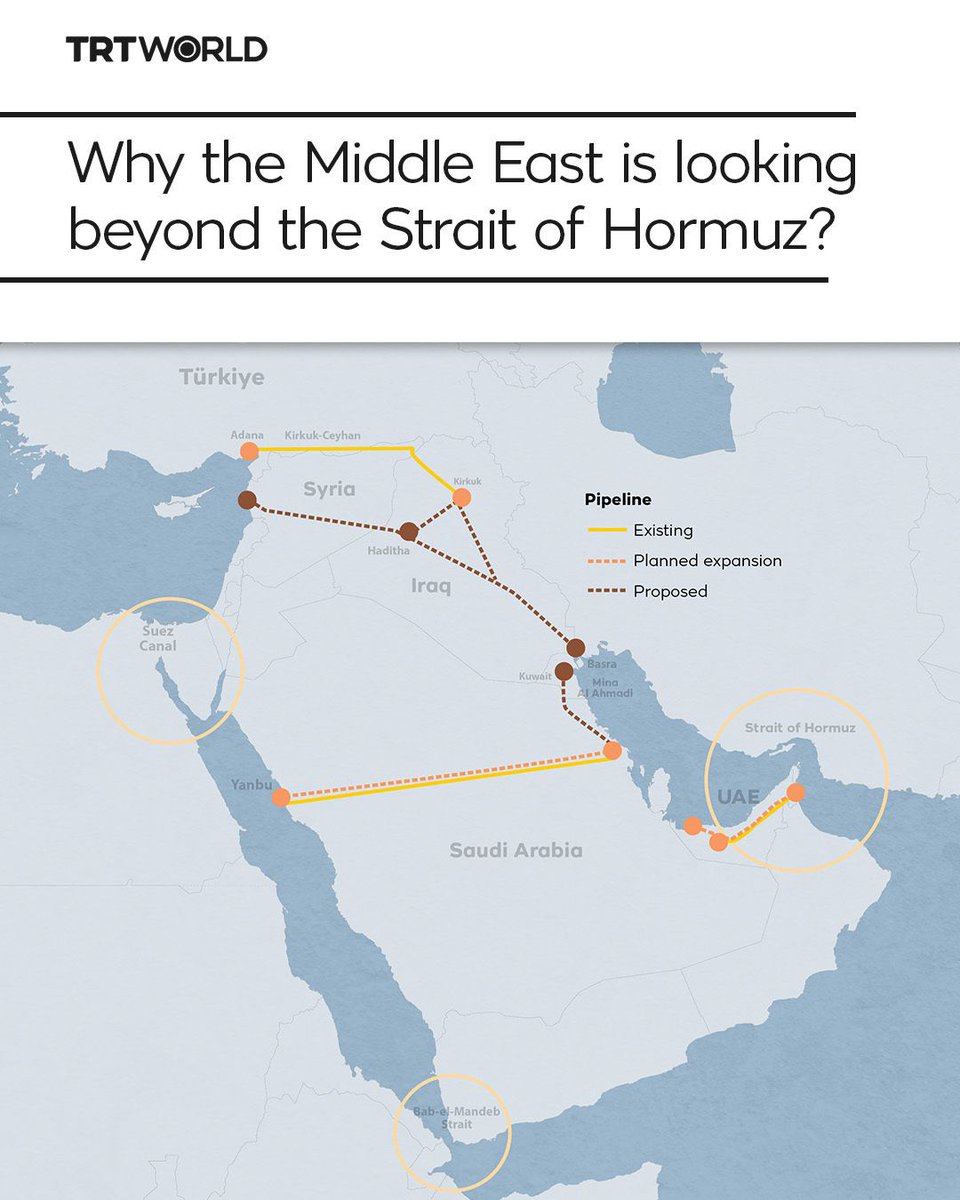
"As tensions persist around the Strait of Hormuz, countries across the Middle East are investing in alternative pipelines and overland corridors in a bid to reduce dependence on one of the world's most strategic waterways https://t.co/xDxYCASsvC https://t.co/BDQwy5kUKr"
The Strait of Hormuz remains one of the world's most critical maritime chokepoints, with nearly 20% of global oil trade passing through it. As geopolitical tensions escalate in the region, particularly between Iran and the United States, the vulnerability of this narrow waterway has prompted several countries in the Middle East to explore alternative routes for oil transport. These initiatives aim to ensure energy security and economic stability, reducing reliance on this pivotal maritime corridor.
Countries like Iraq, Saudi Arabia, and the United Arab Emirates are investing heavily in overland pipelines and collaborations with neighboring nations. For instance, Iraq is ramping up efforts to develop its pipeline infrastructure toward Turkey, while Saudi Arabia is expanding its East-West pipeline that bypasses the Strait of Hormuz. These infrastructural enhancements not only promise to bolster national energy security but also foster regional collaboration in energy supply. Furthermore, these projects reflect a proactive approach to mitigating risks associated with maritime shipping routes.
As nations pivot away from the Strait of Hormuz, international stakeholders have shown keen interest in these developments. Major global powers, including the United States and European Union, have underscored the importance of energy diversification in enhancing stability in the region. Investors from various countries are also looking at opportunities in pipeline construction and maintenance, demonstrating a burgeoning economy around new infrastructure projects. This concerted effort could potentially lead to a more balanced geopolitical landscape, with nations less vulnerable to tensions at Hormuz.
As these alternative routes take shape, the Middle East might experience a shift towards greater energy independence and reduced geopolitical risk. This transformation could ultimately foster peace and stability in a region often characterized by volatility. Notably, sourcing oil via land routes or from different trade partners presents a promising future where cooperation supersedes conflict. But for these ambitions to materialize, sustained investment and collaborative dialogue among regional players will be essential. In this new era, balancing energy security with geopolitical dynamics may determine the region's path to stability and prosperity.


No comments yet. Be the first to comment!

Your trusted source for breaking news, in-depth analysis, and comprehensive coverage of today's most important stories.
Get daily updates on breaking news, exclusive interviews, and special features delivered to your inbox.
Have a news tip or want to get in touch with our editorial team? We're here to help.
Plot C3-C Jaypee Wishtown Sector 129 Noida Uttar Pradesh 201304 India