
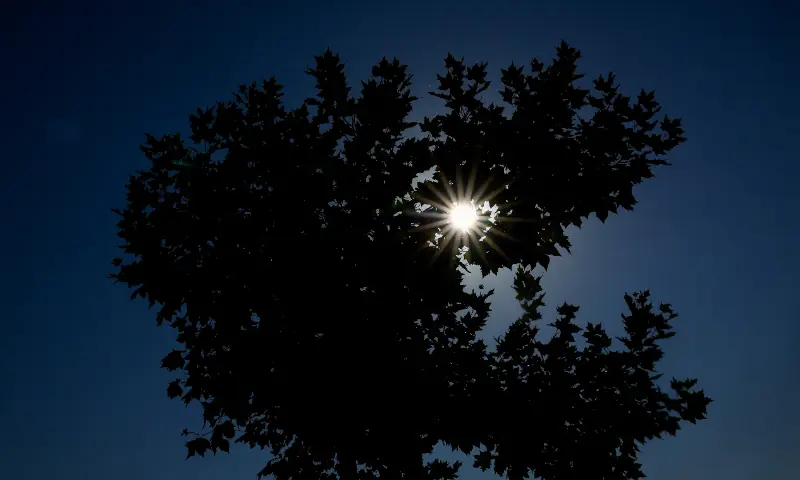
Millions of people gathered in Iceland and northern Spain to witness Europe’s first total solar eclipse in 27 years on Wednesday, with Spanish officials warning people to avoid areas where a heatwave has raised the risk of wildfires.
Authorities were expecting up to 6 million visitors in mostly rural areas within the eclipse’s path across the north of Spain and the Balearic Islands, said Juan Cruz, Spain’s Secretary of State for Science.
“I hope that tonight will see the emergence of a wonderful generation of astrophysicists,” he said. “It’s such a special moment.” The eclipse will be quickly followed by the sunset in Spain, making the event particularly alluring.
The uncanny sensation when day briefly turns into twilight and some animals fall quiet as the moon passes directly between Earth and the Sun was often treated as an omen in the past, a cosmic struggle or a sign of divine power.
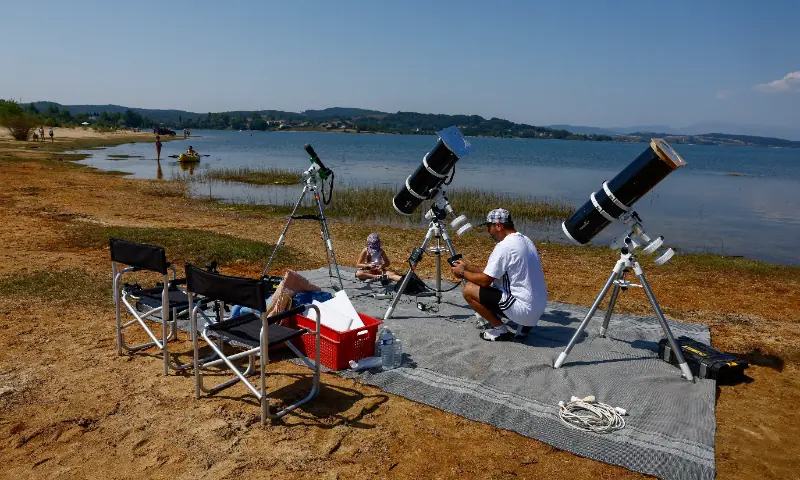
Now, Spain sees it as a chance to showcase seldom-visited regions and draw tourists away from its overcrowded beach resorts, while also rolling out a massive police operation and public safety campaign to prevent them from causing wildfires.
Interior Minister Fernando Grande-Marlaska told reporters 25,000 police officers had been assigned to guarantee security around the eclipse observation while nearly 100 planes and helicopters were also being deployed.
He called on citizens to follow the eclipse from the hundreds of observation points set up by authorities and abide by the restrictions set up around some parks. “Let’s not forget that the wildfire risk is very high; it’s extreme due to high temperatures,” he said.
Lola Guerreiro spent the night in the mountains near Arco de las Salinas in eastern Spain, home to Galactica Europe’s largest educational astronomy centre as well as the Javalambre observatory, after making the long drive from Extremadura to view the eclipse.
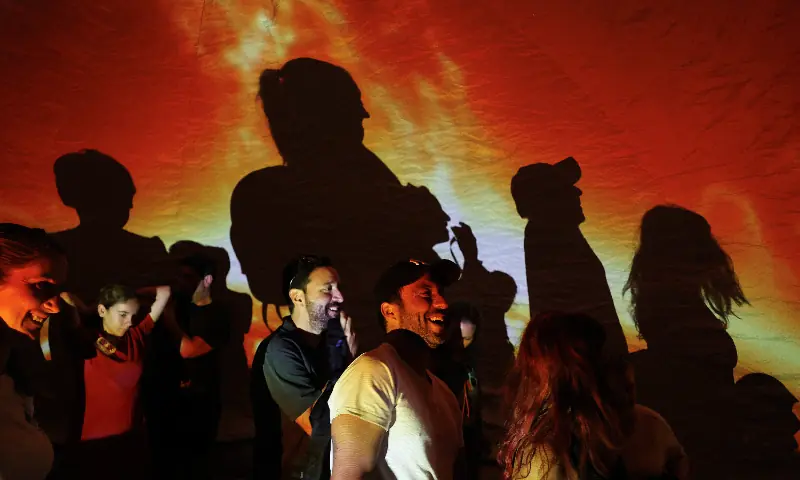
“Watching a total solar eclipse has been a dream of mine for many, many years, and I didn’t want to miss the chance to experience it, even though it meant a seven-hour journey,” she said.
Sergio, a 60-year-old Italian, had made the trek in a camping van with his family to Arija in northern Spain.
“I do feel a little emotional. Yes, because I know I won’t have another chance in my life to see an eclipse, a phenomenon like this,” he said.
The Iberian Peninsula last saw a total solar eclipse in 1912. It is set to experience another one on August 2, 2027, and an annular eclipse in January 2028, completing the so-called “Iberian Eclipse Trio.”
In Iceland’s capital Reykjavik, glasses to allow people to look at the phenomenon without damaging their eyes have been sold out for days as the Nordic country of roughly 400,000 people expects to welcome up to 80,000 visitors.
A narrow path of totality will reach Iceland’s westernmost coast at about 5:44pm (1744 GMT), before the moon’s shadow races east.

Totality will last up to 2 minutes and 13 seconds in the far west, though most cities will see shorter periods of darkness. Authorities have warned of heavy traffic and urged viewers to arrive early.
Singer Bjork was due to perform a DJ set at an eclipse-themed event south of Reykjavik.
US space agency Nasa plans to fly a high-altitude WB-57 aircraft from Iceland to follow the moon’s shadow, and Nasa-funded teams will launch balloons to study how the sudden darkness and cooling affect the lower atmosphere.
“This is a once-in-a-lifetime experience,” said Karen Williams, 51, who was visiting from Britain. “I love the outdoors, and so I wanted to come and see the eclipse and just experience it.”
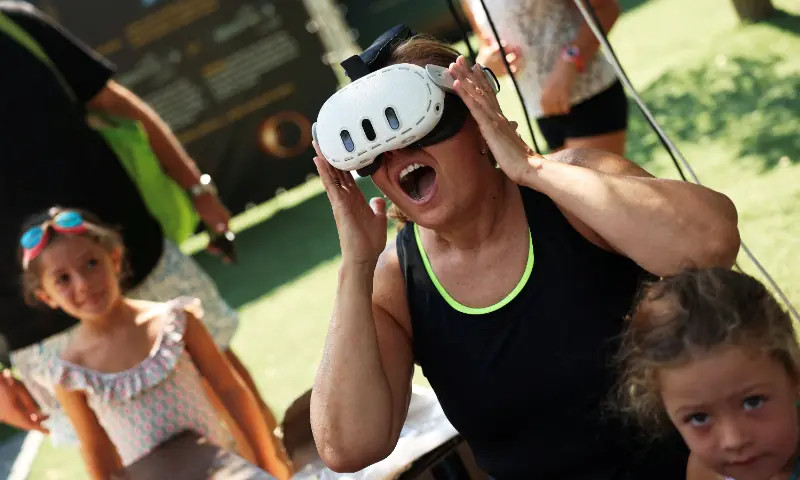
“Although I do hear, probably in the UK where I’ve come from… they’re going to get a better view of it than us here tonight.” Skies over Iceland were overcast on Wednesday with the Icelandic Met office predicting clouds and rain for much of the path of the eclipse, adding that the best chances of breaks in the solid cover were expected in the northwest of the country.
Aside from casual observers, the event also draws “eclipse chasers”, enthusiasts who crisscross the globe to be in the path of totality whenever an eclipse occurs.
Gordon Telepun, a retired plastic surgeon and amateur astronomer from the US who has photographed six total eclipses, said he would watch from the island of Mallorca because Spain checked all the boxes for eclipse chasers.

No comments yet. Be the first to comment!

Your trusted source for breaking news, in-depth analysis, and comprehensive coverage of today's most important stories.
Get daily updates on breaking news, exclusive interviews, and special features delivered to your inbox.
Have a news tip or want to get in touch with our editorial team? We're here to help.
Plot C3-C Jaypee Wishtown Sector 129 Noida Uttar Pradesh 201304 India