
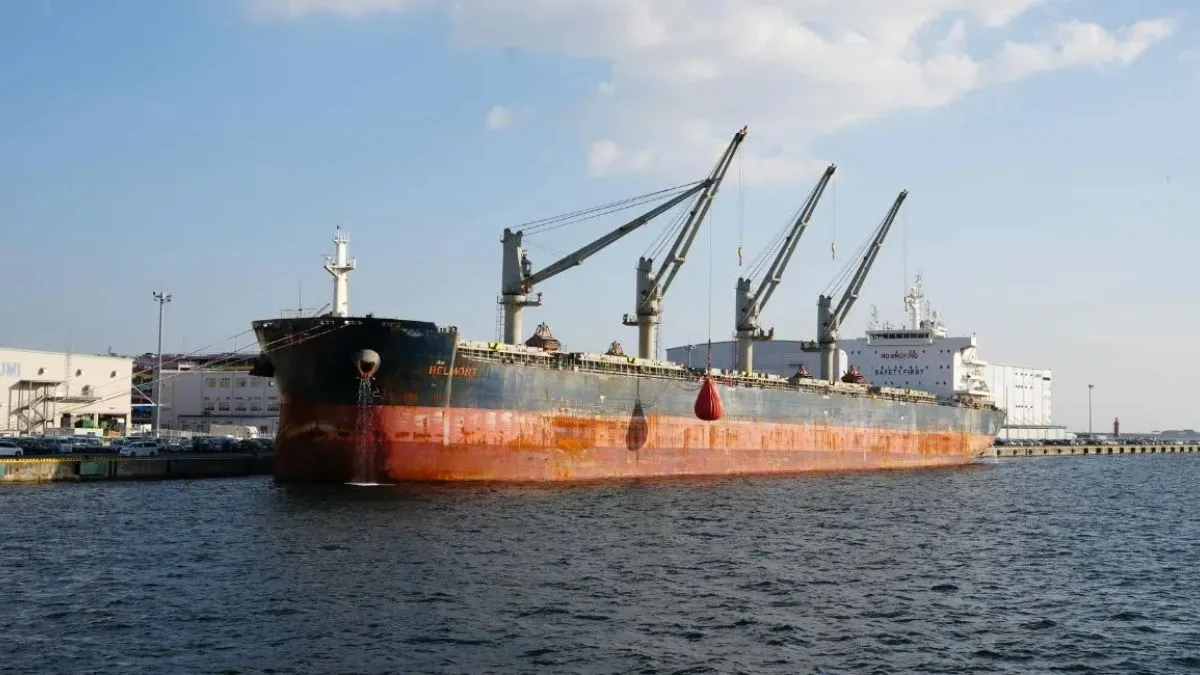
DUBAI / NEW DELHI - Chilling audio has emerged of the Indian oil tanker Sanmar Herald desperately pleading with Iranian naval forces to cease fire, as tensions in the Strait of Hormuz escalate into direct maritime confrontation.
The audio recording, which has been verified by multiple maritime security sources, captures a frantic radio exchange in which crew members aboard the Indian-flagged vessel beg Iranian warships to stop shooting at the tanker. The exact date and location of the incident remain unclear, but the recording surfaced hours after Israel's UN envoy accused Pakistan, China, and France of a "secret Hormuz deal" with Iran for safe passage through the strait.
Breaking News:
- South Asia Index (@SouthAsiaIndex) April 18, 2026
Audio of the Indian oil tanker Sanmar Herald pleading with the Iranian Naval forces to stop shooting at it.
◾ Earlier today, Iranian NAVY opened fire at the Indian oil tanker when it was trying to cross the Strait of Hormuz. pic.twitter.com/6LGuPf8qsA
The Audio Transcript (Excerpt)
[Sound of gunfire or impacts audible in background]
Sanmar Herald (calling on emergency channel): "Iranian naval forces, Iranian naval forces, this is Sanmar Herald, Sanmar Herald. We are a civilian oil tanker. Please stop shooting. I repeat, please stop shooting. We are not hostile. We are not military. Over."
Iranian Naval Forces (response, partial capture): "...ordered to intercept... violation of exclusion zone..."
Sanmar Herald: "We are not violating. We are Indian vessel. We are requesting safe passage. Please stop shooting at us. We have civilians on board. Over."
[Recording becomes fragmented before ending]
What We Know About the Sanmar Herald
The Sanmar Herald is an Indian-flagged medium-range oil tanker. According to maritime tracking databases, the vessel has previously operated routes between the Persian Gulf and Indian ports, including Mundra and Mumbai. Its current status and the condition of its crew remain unknown.
Indian maritime authorities have not officially confirmed the authenticity of the audio nor commented on any ongoing incident involving the vessel. However, sources within India's Directorate General of Shipping told reporters that they are "urgently investigating" the matter.
Iran's Position
Iran has not yet issued a formal response regarding the Sanmar Herald incident. However, Tehran has repeatedly warned that it reserves the right to intercept and inspect any vessel entering or exiting the Persian Gulf without proper authorization, particularly amid the ongoing Iran-U.S. war and the effective blockade of the Strait of Hormuz.
Earlier this month, Iran explicitly stated that vessels from India, China, Russia, Iraq, Pakistan, and Sri Lanka would be permitted to transit. The Sanmar Herald incident-if confirmed-would represent a dramatic departure from that pledge.
India's Dilemma
The emerging audio places New Delhi in an extraordinarily difficult position. India has historically maintained a delicate balancing act between the United States and Iran, preserving trade and diplomatic ties with both. However, the apparent targeting of an Indian civilian vessel by Iranian forces would likely force a sharp reassessment.
Officially, India's Ministry of External Affairs has yet to issue a statement. Unofficially, diplomatic sources indicate that New Delhi has "urgently" reached out to Iranian officials through back-channels in Tehran and Islamabad.
Global Reaction
The release of the audio-coming just as regional tensions are at their highest point in decades-has sent shockwaves through global shipping and energy markets. Maritime security firms have issued urgent advisories for all vessels transiting the Gulf region, regardless of flag.
The United States, which remains in active conflict with Iran, has not commented directly on the Sanmar Herald incident but reiterated its commitment to "freedom of navigation" in international waters.
What Comes Next
If confirmed to be authentic, the audio would represent one of the most direct and dangerous Iranian actions against a non-belligerent nation's civilian vessel since the current conflict began. India's response-whether diplomatic, military, or both-could reshape the geopolitical landscape of the region.
For now, the fate of the Sanmar Herald and its crew remains unconfirmed. Families of Indian sailors are anxiously awaiting official word from New Delhi.

No comments yet. Be the first to comment!

Your trusted source for breaking news, in-depth analysis, and comprehensive coverage of today's most important stories.
Get daily updates on breaking news, exclusive interviews, and special features delivered to your inbox.
Have a news tip or want to get in touch with our editorial team? We're here to help.
Plot C3-C Jaypee Wishtown Sector 129 Noida Uttar Pradesh 201304 India
