
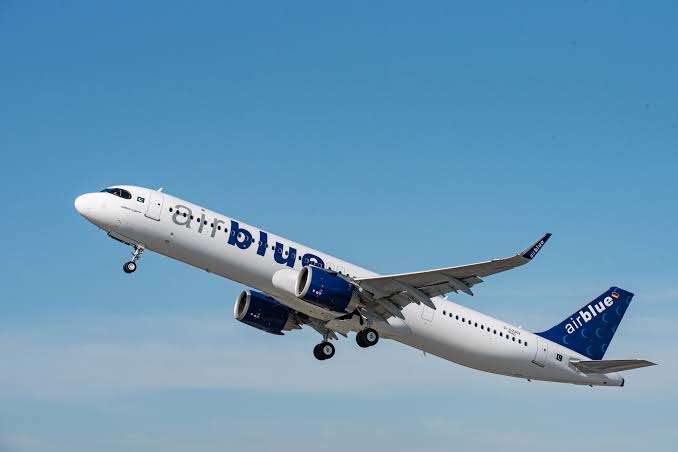
"Beyond the Clouds ... air bluePakistan's oldest private airline is establishing an EASA standard MRO hangar + flight training centre at Islamabad airport to provide all weather protection for aircraft, technical personnel, maintenance equipment & train 200 pilots, 500 cabin crew per year through full flight simulators.It will support in-house engineering operations for Airbus A320 family aircrafts and would save foreign exchange + down time in Trkiye along withtraining.Airblue was co-founded in 2004 by ex P.M shahid khaqan abbasi and operates 12 Airbus A320/A321 jets to 22 destinations. It carried 1 million domestic and 1.5M international passengers last year !Now they are expanding fleet by addition of 3 NEO series and eyeing for resuming european routes by adding long range variants after one decade.What do u think, how it will help in rejuvenating Pakistan's civil aviation sector & building up of local ecosystem is good for a private airline or not "
Airblue, Pakistan's oldest private airline, is set to revolutionize the aviation landscape with the establishment of a European Union Aviation Safety Agency (EASA) standard Maintenance, Repair, and Overhaul (MRO) hangar and flight training center at Islamabad Airport. Co-founded in 2004 by former Prime Minister Shahid Khaqan Abbasi, Airblue swiftly gained recognition, operating a fleet of 12 Airbus A320/A321 aircraft and serving 22 destinations. The airline saw a significant boost in its operations, carrying 1 million domestic and 1.5 million international passengers last year.
The new MRO facility represents a substantial investment in enhancing Pakistan's aviation infrastructure. By providing all-weather protection for aircraft and support for in-house engineering operations, Airblue is poised to improve technical efficiency and reduce downtime. The training center aims to equip 200 pilots and 500 cabin crew annually using advanced full-flight simulators, fostering local talent and reducing reliance on foreign training resources. Furthermore, the acquisition of three new NEO series aircraft indicates Airblue's commitment to modernizing its fleet, while plans to resume European routes signal a strategic expansion into lucrative international markets.
The international aviation community is likely to view Airblue's developments as a positive trend for Pakistan's civil aviation sector. Aligning operations with EASA standards demonstrates a commitment to safety and reliability, fostering confidence from international partners and customers alike. This move could also set a precedent for other private airlines in the region to follow suit, enhancing the overall reputation of Pakistan's aviation market. Additionally, as the global aviation industry evolves post-pandemic, Airblue's proactive approach to expansion could serve as a model for sustainable growth in emerging markets.
As Airblue embarks on this ambitious journey, the potential benefits for Pakistan's civil aviation sector and local ecosystem are substantial. With an expanded fleet and enhanced training capabilities, the airline is well-positioned to stimulate economic growth and create jobs. The establishment of the MRO facility and training center could serve as a catalyst for further investments in aviation-related education and infrastructure, significantly contributing to the nation's self-sufficiency in civil aviation. In conclusion, Airblue's strategic initiatives not only reinforce its position as a key player in the industry but also pave the way for a revitalized aviation sector in Pakistan, fostering innovation and excellence.

No comments yet. Be the first to comment!

Your trusted source for breaking news, in-depth analysis, and comprehensive coverage of today's most important stories.
Get daily updates on breaking news, exclusive interviews, and special features delivered to your inbox.
Have a news tip or want to get in touch with our editorial team? We're here to help.
Plot C3-C Jaypee Wishtown Sector 129 Noida Uttar Pradesh 201304 India
