📰 News Analysis & Summary
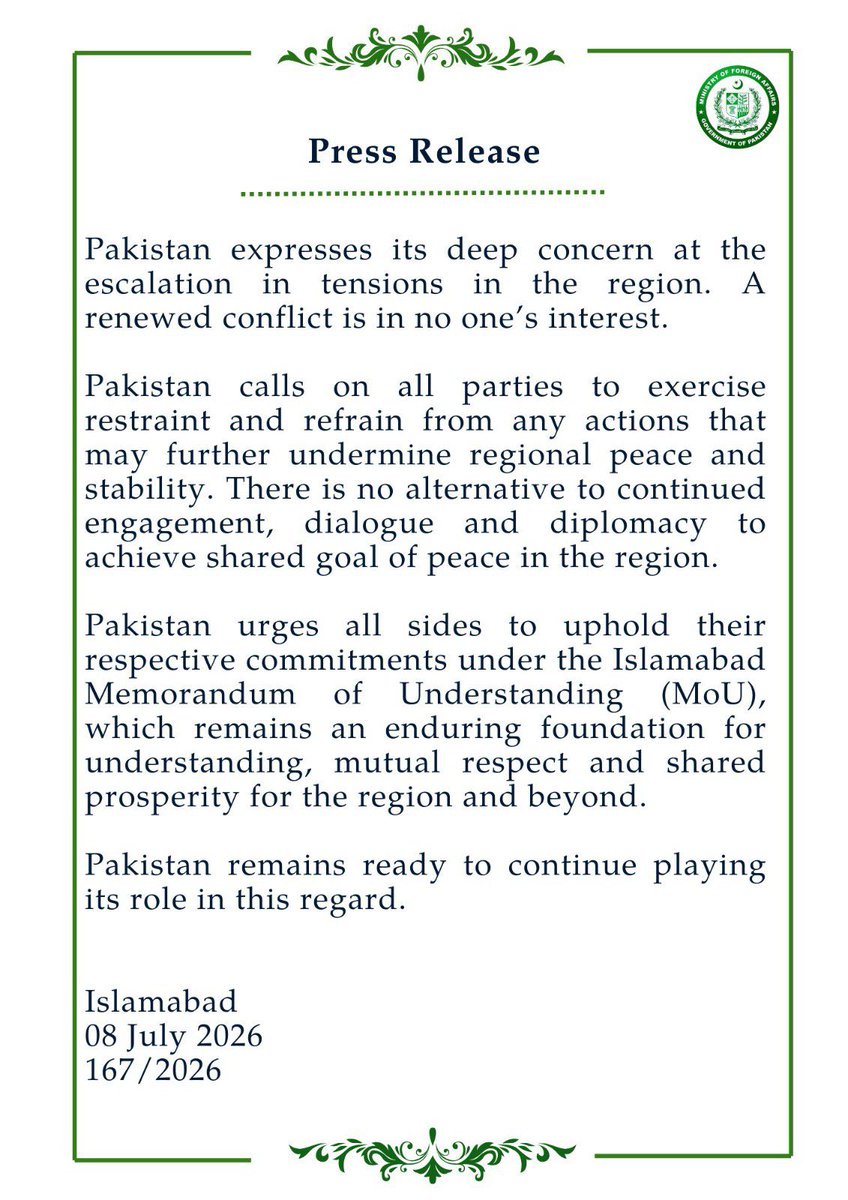
In a strongly worded statement issued on July 8, 2026, Pakistan expressed profound concern over the rising tensions between Iran and the United States, warning that renewed conflict would serve no one's interests. The statement, released by the Inter-Services Public Relations (ISPR), called on all parties to exercise maximum restraint and refrain from any actions that could further destabilize an already fragile region. Pakistan emphasized that there is no alternative to continued engagement, dialogue, and diplomacy to achieve the shared goal of peace. The country urged all sides to uphold their commitments under the Islamabad Memorandum of Understanding (MoU), which Pakistan described as an enduring foundation for mutual respect, understanding, and shared prosperity. Pakistan reiterated its readiness to play a constructive role in de-escalating the situation. In my opinion, this statement reflects Pakistan's strategic balancing act: it seeks to maintain good relations with both Iran and the US while positioning itself as a responsible regional mediator. However, the effectiveness of such calls hinges on whether the major powers are willing to listen. Without concrete follow-up actions, these diplomatic appeals risk becoming hollow rhetoric. The Islamabad MoU remains a potentially viable framework, but its success depends on genuine political will from all signatories.
Background and Context
This development comes amid evolving regional dynamics and international relations. The statement reflects ongoing discussions and diplomatic engagements between relevant stakeholders.
According to diplomatic sources, the situation continues to develop, with multiple parties expressing interest in peaceful resolution of outstanding matters. Regional stability remains a priority for all involved parties.
Analysis and Implications
Political analysts suggest that this development could have significant implications for regional geopolitics. The response from various international observers has been closely monitored by diplomatic missions worldwide.
Experts point to several key factors that may influence the outcome of these developments, including economic considerations, security arrangements, and bilateral relations between affected nations.
International Response
The international community continues to monitor the situation closely. Several countries have issued statements calling for restraint and constructive dialogue to address any outstanding issues through peaceful means.
Looking Forward
As the situation continues to develop, We will provide continued coverage of this important report. Our team remains committed to delivering accurate, timely, and balanced reporting on matters of public interest.