
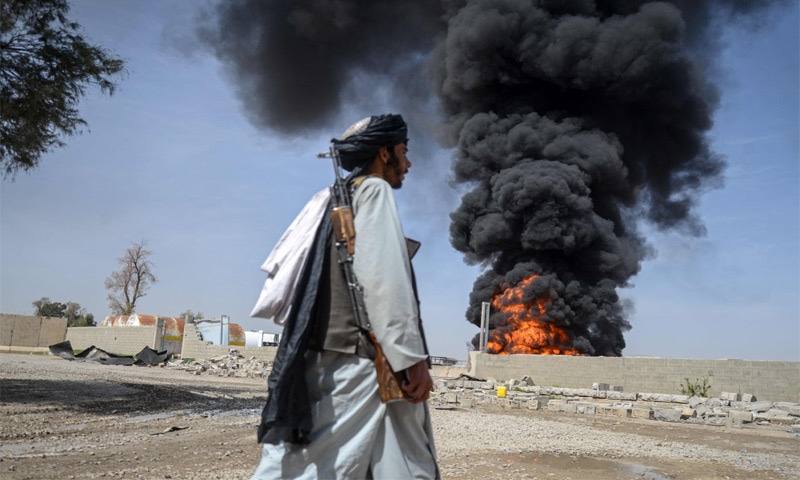
RAWALPINDI - During the peak of the Pakistan-Afghanistan conflict, Pakistan's armed forces conducted massive airstrikes on terrorist camps and Taliban infrastructure in Kandahar, Afghanistan, under Operation Ghazab-ul-Haq, inflicting heavy losses on militant networks .
Footage of MASSIVE Pakistani airstrikes on terrorist camps in Kandahar, Afghanistan, during the Pak-Afghan War!
- Zard si Gana (@ZardSi) September 7, 2026
At the time, senior leaders of TTP, BLA, TTA, Al-Qaeda, JUA, and other terrorist groups had suddenly disappeared, hiding in unknown locations and underground bunkers. pic.twitter.com/SNDoeOsr6z
The strikes, carried out during the night between March 12-15, 2026, targeted the Tarawo terrorist training camp, a key technical support infrastructure, and an oil storage site at Kandahar Airfield, along with its associated logistics infrastructure .
At the time of these devastating strikes, senior leaders of multiple terrorist groups-including the Tehreek-e-Taliban Pakistan (TTP), Balochistan Liberation Army (BLA), TTA, Al-Qaeda, and Jaish-ul-Adl (JUA)-had suddenly disappeared, reportedly hiding in unknown locations and underground bunkers to avoid being targeted .
According to ground intelligence reports, a key headquarters of TTP, TTA, Al-Qaeda, and ISIS-K was targeted, dealing a serious blow to their command structure . There were also reports that TTP commander Nur Wali Mehsud was seriously injured in the strikes .
By March 15, 2026, Operation Ghazab-ul-Haq had achieved significant results against terrorist infrastructure:
663 militants killed and more than 887 injured
249 posts destroyed and 44 positions captured by Pakistani forces
224 tanks, armored vehicles, and artillery pieces destroyed
70 terrorist and support infrastructure sites across Afghanistan targeted by airstrikes
Headquarters of Afghan Taliban's 313 Corps in Kabul destroyed, along with ammunition depots
In Kandahar, the airstrikes specifically targeted the Tarawo terrorist training camp, which was being used by Fitna al-Khawarij militants for operational planning and logistical support . The strikes destroyed technical support infrastructure and equipment storage facilities used by militants for maintaining logistics, communication tools, and operational equipment .
Following the massive airstrikes, senior leaders of terrorist groups went into deep hiding. Reports indicated that the strikes had forced the militant leadership to abandon their positions and disperse to unknown locations, severely disrupting their operational capabilities .
The operation marked a significant escalation in Pakistan's efforts to dismantle cross-border terrorist networks and demonstrated both the precision and reach of Pakistan's air and ground forces .
Security officials confirmed that the targeted facilities played an important role in supporting militant planning and operations. The destruction of these facilities disrupted networks that had been coordinating cross-border attacks against Pakistan .
Authorities have pledged continued vigilance and further actions against terrorist networks threatening Pakistan, while closely monitoring developments along the border and inside Afghanistan . The operation remains ongoing until all objectives are achieved .

No comments yet. Be the first to comment!

Your trusted source for breaking news, in-depth analysis, and comprehensive coverage of today's most important stories.
Get daily updates on breaking news, exclusive interviews, and special features delivered to your inbox.
Have a news tip or want to get in touch with our editorial team? We're here to help.
Plot C3-C Jaypee Wishtown Sector 129 Noida Uttar Pradesh 201304 India
