📰 News Analysis & Summary
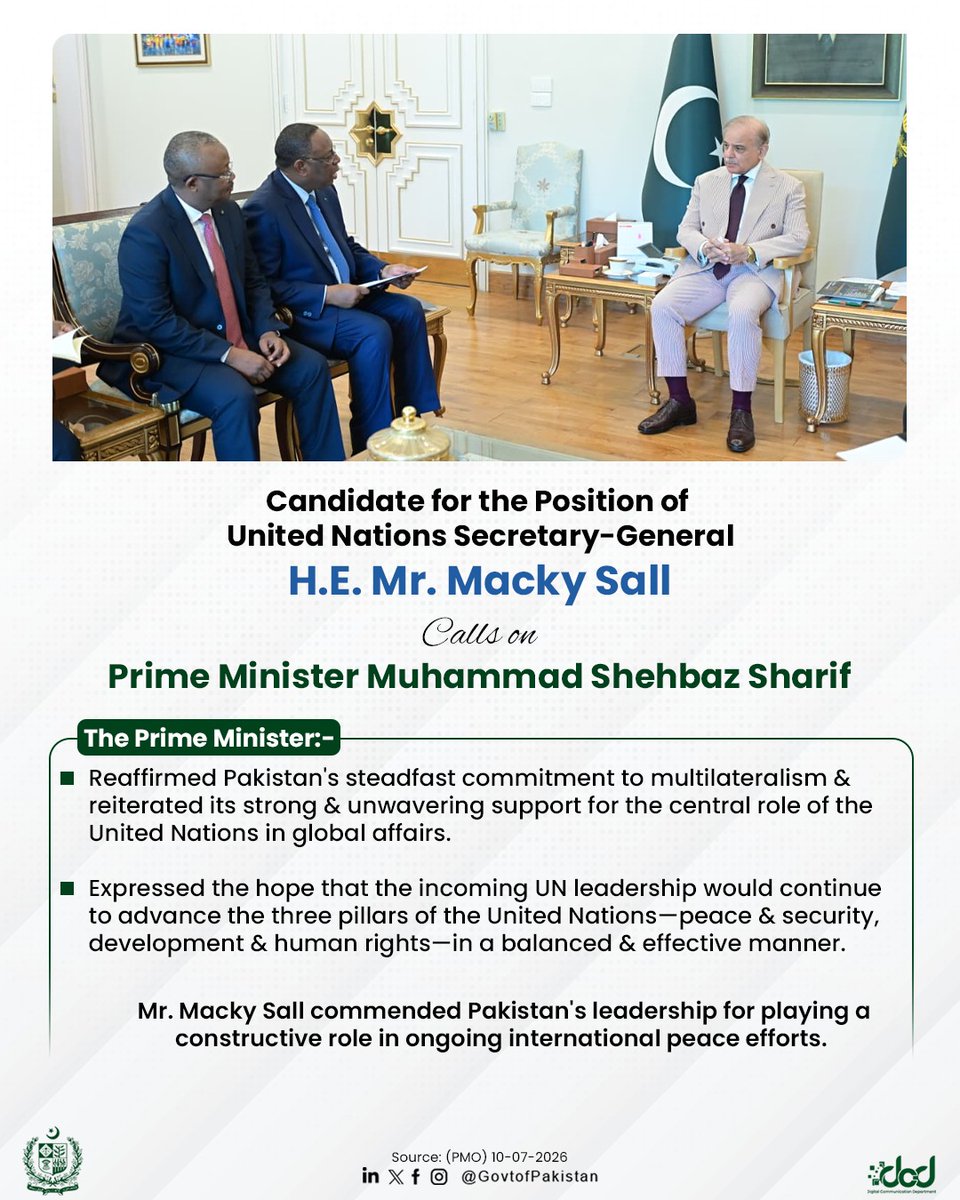
In a pivotal diplomatic engagement, H.E. Mr. Macky Sall, a candidate for the position of Secretary-General of the United Nations, held a meeting with Prime Minister Muhammad Shehbaz Sharif. The Prime Minister warmly welcomed Mr. Sall and used the occasion to unequivocally reaffirm Pakistan's steadfast dedication to multilateralism and its unwavering support for the United Nations as the cornerstone of global governance. Emphasizing Pakistan's commitment to the principles and purposes of the UN Charter, the Prime Minister stressed the importance of faithfully implementing UN Security Council resolutions and upholding international law and treaties as the bedrock for global peace, security, and prosperity. This meeting carries significant symbolic weight, showcasing Pakistan's desire to remain an active and responsible player in shaping the future of the UN. In my opinion, while such diplomatic reaffirmations are vital for reinforcing global norms, they must be consistently backed by concrete actions, particularly on unresolved issues like the Kashmir dispute, where decades-old UN resolutions remain unimplemented. Mr. Sall's candidacy itself represents a potential shift in UN leadership, and Pakistan's early engagement signals its intent to influence that direction, prioritizing a rules-based international order amid rising geopolitical tensions. The meeting underscores the delicate balance between rhetoric and reality in international diplomacy.
Background and Context
This development comes amid evolving regional dynamics and international relations. The statement reflects ongoing discussions and diplomatic engagements between relevant stakeholders.
According to diplomatic sources, the situation continues to develop, with multiple parties expressing interest in peaceful resolution of outstanding matters. Regional stability remains a priority for all involved parties.
Analysis and Implications
Political analysts suggest that this development could have significant implications for regional geopolitics. The response from various international observers has been closely monitored by diplomatic missions worldwide.
Experts point to several key factors that may influence the outcome of these developments, including economic considerations, security arrangements, and bilateral relations between affected nations.
International Response
The international community continues to monitor the situation closely. Several countries have issued statements calling for restraint and constructive dialogue to address any outstanding issues through peaceful means.
Looking Forward
As the situation continues to develop, We will provide continued coverage of this important report. Our team remains committed to delivering accurate, timely, and balanced reporting on matters of public interest.