
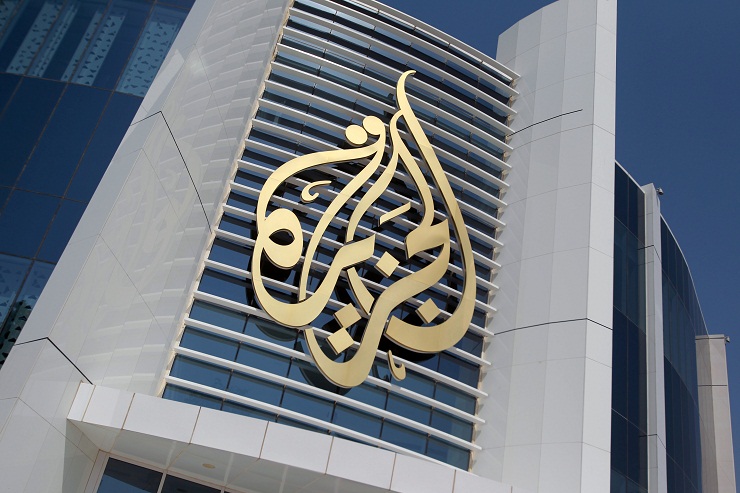
ISLAMABAD - Pakistan has officially banned the Qatari news network Al Jazeera for spreading propaganda in support of terrorist groups, including the Balochistan Liberation Army (BLA) and Tehreek-e-Taliban Pakistan (TTP), as well as peddling scripted anti-Pakistan narratives, authorities confirmed.
The government's decision follows what officials described as a "repeated pattern of biased and agenda-driven journalism" by the network, which has consistently framed militant violence as political grievances while downplaying the groups' international terrorist designations .
Pakistan has long criticized Al Jazeera for referring to designated terrorist organizations like the BLA and TTP as "separatist movements" or "armed political groups," effectively granting them symbolic legitimacy .
The BLA is formally designated as a terrorist organization by Pakistan, the United States, and the United Kingdom - yet Al Jazeera repeatedly frames its violence as political struggle rather than terrorism .
The network has been accused of:
Emphasizing political grievances while minimizing deliberate attacks on civilians
Framing militants as legitimate political actors
Euphemizing attacks on schools, markets, and innocent people
Establishing a "systematic policy tilt against Pakistan"
Pakistan's Daily Times noted that "Al Jazeera has been criticised for referring to militants from groups like the TTP or BLA simply as 'fighters' or 'separatists'... In some foreign coverage, these militants have been painted as 'freedom fighters,' a heroic gloss utterly at odds with their attacks on schools, markets and innocent people" .
The ban follows Al Jazeera's recent coverage of protests in Azad Jammu and Kashmir (AJK), which the government described as "selective reporting from handpicked polling stations" using "carefully chosen timings and scripted statements from selected individuals" .
Pakistan's Ministry of Information accused the network of "yellow journalism" aimed at delegitimizing the AJK elections and undermining the popular will of the people .
Pakistan is not alone in banning Al Jazeera. Saudi Arabia, the United Arab Emirates, Egypt, Bahrain, Jordan, and Morocco have all previously blocked or shut down Al Jazeera's operations, citing:
Support for political Islamist agendas
Coverage that destabilizes regional security
Promotion of Muslim Brotherhood narratives
According to a report from the Jerusalem Center for Public Affairs, "Al Jazeera has a long track record of being barred from operating in several Arab countries, including Saudi Arabia, Bahrain, UAE, Jordan, Egypt, and Morocco" .
Iraqi journalist Sufian Al-Samarrai has called Al Jazeera "nothing more than a platform of armed political Islamist gangs, and their ferocity and terrorism are promoted as a legitimate resistance" .
Alongside the ban on Al Jazeera, Pakistan has also tightened rules for foreign journalists, requiring No Objection Certificates (NOCs) for reporting outside Lahore, Karachi, and Islamabad .
The government has also taken action against YouTube channels spreading anti-state content and propaganda critical of state institutions .
Pakistan's Ministry of Information stated that the network's coverage reflected "the agenda of external actors with vested interests" seeking to delegitimize Pakistan and undermine its institutions .
The government has made it clear: Pakistan will not allow foreign media outlets to provide a platform for terrorist narratives or spread propaganda that threatens the country's security and stability.

No comments yet. Be the first to comment!

Your trusted source for breaking news, in-depth analysis, and comprehensive coverage of today's most important stories.
Get daily updates on breaking news, exclusive interviews, and special features delivered to your inbox.
Have a news tip or want to get in touch with our editorial team? We're here to help.
Plot C3-C Jaypee Wishtown Sector 129 Noida Uttar Pradesh 201304 India
