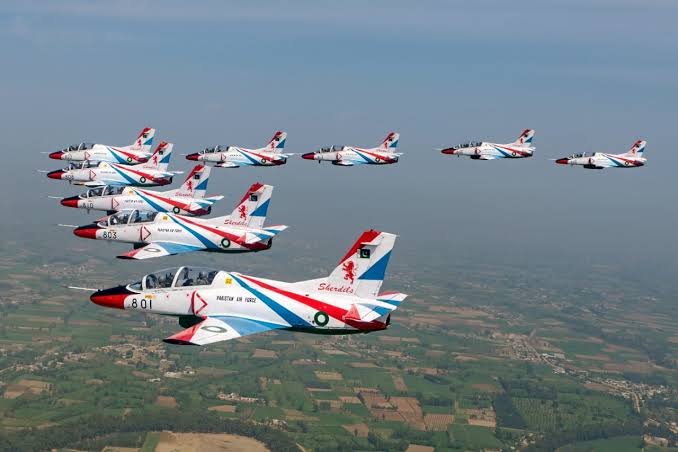
The article highlights that the Pakistan Air Force (PAF) maintains an expansive training fleet totaling approximately 275 aircraft, which accounts for about one-third of the service’s overall inventory. The breakdown is 145 MFI-17 Mushak propeller trainers, 70 T-37 B/C jet trainers, and 60 K-8P jets, with the bulk of activity concentrated at Risalpur and Mianwali. This scale signals a deliberate emphasis on domestic pilot throughput, spanning basic to advanced training phases. The Mushak family, an older but affordable trainer, has long formed the backbone of initial flight instruction, while the T-37s provide jet-transition experience. The K-8P fleet represents a newer, more capable platform that can deliver improved performance and reliability for contemporary jet training. The co-location of training units at Risalpur and Mianwali underscores the importance of centralized training hubs in sustaining a steady pipeline of qualified pilots amid evolving regional security dynamics. From a modernization perspective, the mix suggests a transition strategy rather than an abrupt overhaul—likely dictated by budget constraints, availability of platforms, and the need to maintain training capacity in the near term.
Source: Statement from @SubhanJaved911
Public Engagement: 882 views • 56 likes • 7 comments • 3 shares
Published: May 21, 2026, 3:36 am
Editorial Note: This article is based on publicly available information and official statements. We strives for accuracy and fairness in all reporting.