
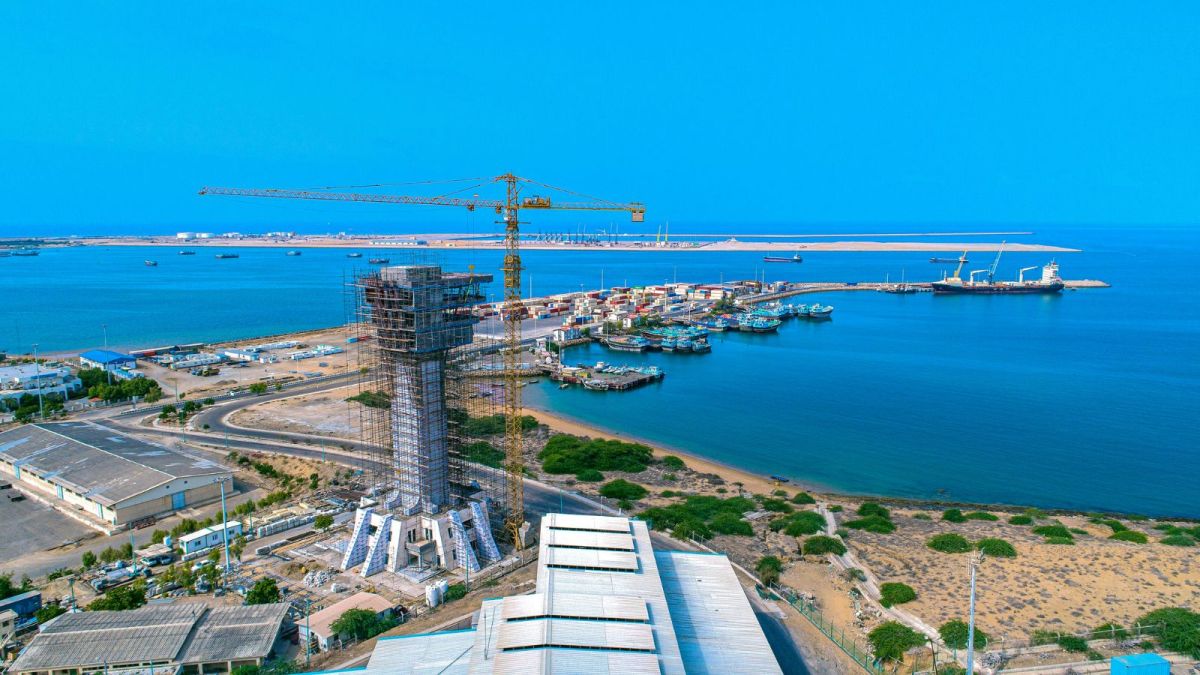
TEHRAN / WASHINGTON - The United States has launched massive airstrikes on Iran's southeastern port city of Chabahar, causing extensive damage to port infrastructure and dealing a significant blow to India's strategic investments in the region, as the fragile Pakistan-brokered ceasefire between Washington and Tehran collapsed into open conflict .
🚨🇺🇸 Massive U.S airstrikes on Iran's Chabahar Port just now!
- Zard si Gana (@ZardSi) July 8, 2026
A huge amount of damage has reportedly been caused, including to Indian investments in the Chabahar Port.
Complete SILENCE from India-Iran. pic.twitter.com/o77Nqd9mY6
The strikes, which mark the first known American operation in the Chabahar area since the April ceasefire, have expanded the geographical scope of the conflict beyond the Strait of Hormuz to Iran's Indian Ocean coastline . According to Iranian state media, the attack caused widespread power outages across parts of the city, with residents reporting multiple blasts and emergency services responding to damaged infrastructure .
U.S. military officials confirmed that the strikes specifically targeted maritime infrastructure and military facilities believed to support Iran's ability to threaten commercial shipping . According to Iranian state broadcaster IRIB, the following facilities were damaged:
Shahid Beheshti Dock - an upgraded pier recently reconstructed with Indian involvement
Police Station Dock
Maritime Traffic Control Tower
Several marine piers and port infrastructure
The strikes also targeted the Imam Ali Nesdah base, an Islamic Revolutionary Guard Corps (IRGC) facility, and caused damage to transportation links in the surrounding region .
The latest attacks come at an extraordinarily awkward time for India, which has invested heavily in Chabahar Port as a strategic gateway to Afghanistan and Central Asia, bypassing Pakistan . For nearly two decades, Chabahar occupied a unique place in India's foreign policy, offering a direct route to Afghanistan and Central Asia without relying on Pakistan .
In May 2024, India signed a landmark 10-year agreement with Iran to operate the Shahid Beheshti terminal, committing to contribute USD 120 million toward port equipment procurement and representing a broader multi-billion dollar strategic commitment .
However, renewed U.S. sanctions and now direct military strikes have thrown these ambitious plans into disarray. India had already withdrawn personnel from Chabahar and prepaid its financial commitment in recent months, adopting a sanctions-driven workaround to protect its interests . According to reports, India temporarily transferred its stake in the Chabahar Free Zone to a local Iranian entity, effectively insulating its roughly $120 million investment from sanctions while preserving the possibility of returning once the geopolitical environment improves .
Despite the massive damage to infrastructure tied to Indian investments, there has been complete silence from both India and Iran regarding the extent of the damage and the impact on Indian involvement in the port.
Analysts note that while India may have temporarily stepped back from direct operations, the attack still strikes at the heart of a project that has long been central to India's strategic vision for West and Central Asia . Every escalation involving Chabahar makes the project's future more uncertain, with the port now facing the twin challenges of sanctions and military instability .
The airstrikes followed U.S. President Donald Trump's announcement that the ceasefire negotiated earlier this year with Pakistan's help was "over," blaming Tehran for attacks on commercial vessels transiting the Strait of Hormuz . NATO Secretary General Mark Rutte defended the U.S. response, calling it "absolutely necessary" after what he described as repeated Iranian violations of the truce .
U.S. Central Command reported launching a larger wave of military strikes, with officials indicating that Washington intended to "slap them a bit so they understand we're not f****ing around" . The duration of the operation would depend on Tehran's next moves .
Iran condemned the attacks as a violation of the ceasefire and warned of a "massive" response against U.S. forces in the region . Iran's Parliament Speaker Mohammad Bagher Ghalibaf warned that the Strait of Hormuz would only reopen under Iranian conditions . Iranian state media also reported missile and drone attacks on U.S. military bases in Kuwait and Bahrain following the strikes .
The military strikes on Chabahar, coming just months after India was forced to abandon its direct investments due to U.S. pressure, represent a significant setback for New Delhi's foreign policy and its vision of "strategic autonomy" . A port that was once expected to become India's gateway to Afghanistan, Central Asia, and Russia now faces the twin challenges of sanctions and military instability .
A parliamentary committee had already cautioned that recent developments have "cast a shadow" on the future of Chabahar Port, and the latest strikes have only deepened those concerns . With the Taliban's return to power in Afghanistan further diminishing the port's utility as a gateway to Kabul, and now direct U.S. military strikes threatening its infrastructure, India's regional connectivity ambitions lie in tatters .

No comments yet. Be the first to comment!

Your trusted source for breaking news, in-depth analysis, and comprehensive coverage of today's most important stories.
Get daily updates on breaking news, exclusive interviews, and special features delivered to your inbox.
Have a news tip or want to get in touch with our editorial team? We're here to help.
Plot C3-C Jaypee Wishtown Sector 129 Noida Uttar Pradesh 201304 India
