
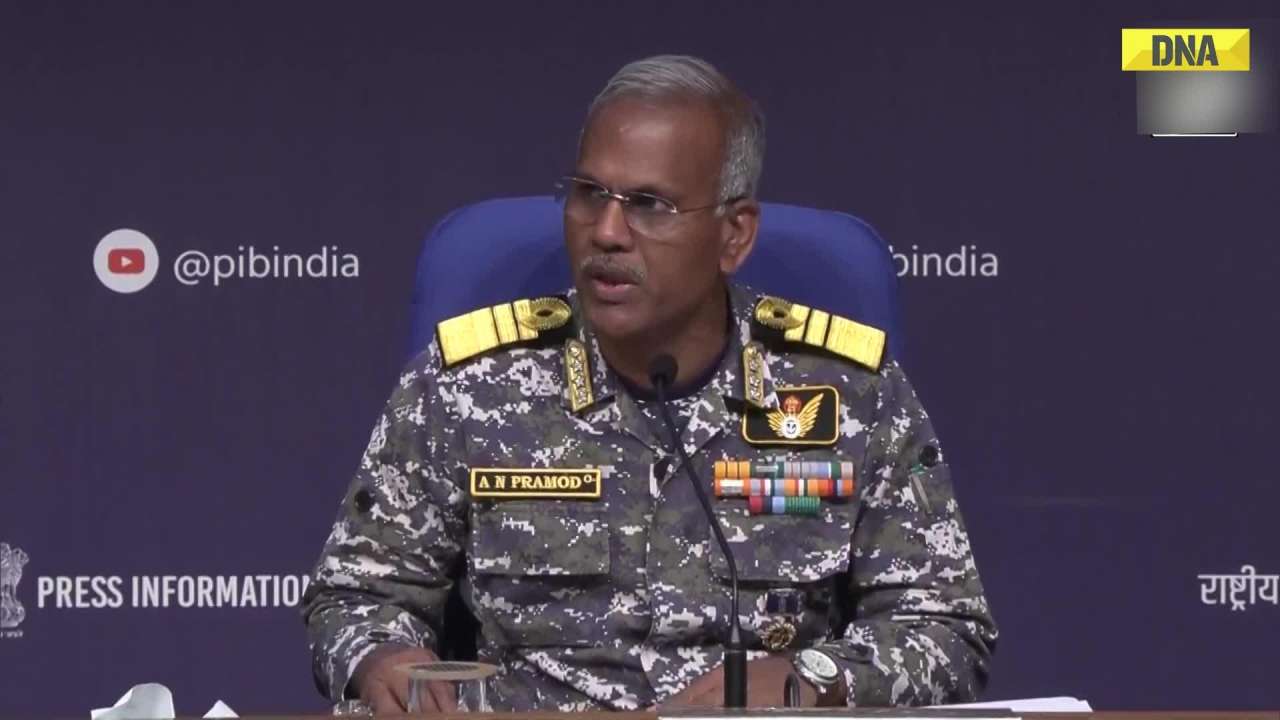
 "India Acknowledges Battlefield Losses: 'Yes, We Lost Few Jets,' Says Lt Gen Rajiv Ghai")
NEW DELHI - In a significant shift from New Delhi's earlier categorical denials, Indian military officials have now openly acknowledged that Indian forces suffered losses during the four-day conflict with Pakistan in May 2025, with Director General of Military Operations Lieutenant General Rajiv Ghai admitting that India "lost few jets" while also revealing that the ceasefire decision came under significant international pressure.
The admissions, made over several press briefings and interviews following the conflict, mark a departure from India's initial stance of denying any aircraft losses despite mounting evidence presented by Pakistan and corroborated by international sources.
India has now openly acknowledged battlefield losses during the conflict. 🇵🇰🇮🇳🚨
- Schlangenjäger (@Shadowfox_11) May 8, 2026
Yes, we lost few jets,” Lt Gen Rajiv Ghai admitted, while also revealing that the ceasefire decision came under significant international pressure. pic.twitter.com/aXycYJmmni
'Losses Are a Part of Combat'
The first indication of Indian losses came on May 11, 2025, when Air Marshal A.K. Bharti, Director General of Air Operations, responded to a journalist's question about downed Indian aircraft by stating: "Losses are a part of combat... All our pilots are back home."
While he did not confirm specific numbers, it marked the first public admission from Indian military officials that losses had occurred.
In a separate briefing, Lieutenant General Rajiv Ghai, India's Director General of Military Operations, when repeatedly questioned about reports of downed Rafale aircraft, stated: "Yes, we lost few jets," while also confirming that all Indian pilots had returned safely.
He added, however: "We are in a state of conflict and cannot disclose specifics."
India's Chief of Defence Staff Acknowledges Losses
General Anil Chauhan, India's Chief of Defence Staff, provided further confirmation during an interview with Reuters at the Shangri-La Dialogue security forum in Singapore on May 31, 2025.
Dismissing reports that six Indian jets had been downed, he remarked: "What is important is not the jet being down, but why they were being down... That is more important for us. And what did we do after that."
General Chauhan also acknowledged that the Indian Air Force was "handicapped" in its flying operations for the next two days following initial losses - a significant revelation from India's top military official.
Indian Defence Attaché's Candid Admission
A particularly candid admission came on June 10, 2025, from Captain (IN) Shiv Kumar, India's Defence Attaché to Indonesia, while speaking at a university seminar in Jakarta.
"I may not agree that we lost so many aircraft, but I do agree we did lose some aircraft," Captain Kumar stated. "The Indian Air Force lost fighter jets to Pakistan on the night of May 7, 2025, only because of the constraint given by the political leadership to not attack the military establishment or their air defences."
His statement was notable not only for confirming IAF losses but also for attributing them directly to political limitations imposed by New Delhi.
Ceasefire Decision Under International Pressure
Lieutenant General Ghai also revealed during his briefings that the decision to agree to a ceasefire came under significant international pressure. According to his account, his Pakistani counterpart called him on the afternoon of May 10, proposing that the two countries "cease hostilities" and urgently requesting a ceasefire.
The truce announcement was subsequently made by then-US President Donald Trump, who said it was reached after talks mediated by Washington. US Secretary of State Marco Rubio confirmed that India and Pakistan had also agreed to start "discussions on a broad set of issues at a neutral site."
While Pakistan publicly thanked Washington for facilitating the ceasefire, India has maintained a more guarded position, reiterating that disputes with Pakistan must be resolved bilaterally without third-party involvement.
Divergent Claims Remain
Despite acknowledging losses, Indian officials have continued to dispute the scale of Pakistan's claims. While Pakistan maintains that its air force shot down eight Indian aircraft - including three to four Rafale jets, Su-30MKIs, MiG-29s, and drones - Indian officials have declined to provide specific numbers.
General Chauhan told Reuters that after initial losses, India "rectified tactics and then went back on the 7th, 8th and 10th in large numbers to hit air bases deep inside Pakistan, penetrated all their air defences with impunity, carried out precision strikes."
Pakistan has consistently denied suffering any fighter jet losses during the conflict, though it has acknowledged damage to some ground installations.
A Shift in Narrative
The series of admissions from senior Indian military officials - including the DGMO, Chief of Defence Staff, Air Marshal, and Defence Attaché - represents a significant evolution in India's official narrative regarding the conflict.
From initial categorical denials of any losses, Indian officials have moved to acknowledging that losses did occur, that Indian air operations were temporarily restricted, and that international pressure played a role in the ceasefire decision.
Defence Secretary RK Singh, in a July 2025 interview with CNBC-TV18, added to these acknowledgements when responding to speculation about the loss of multiple Rafale aircraft: "You have used the term Rafales in the plural, I can assure you that is absolutely not correct."
While aimed at denying the scale of losses claimed by Pakistan, his remark effectively confirmed that at least one Rafale may have been downed.
Looking Ahead
As both nations mark the first anniversary of the conflict, the divergent narratives persist. However, the gradual acknowledgment by Indian military officials of battlefield losses - and the role of international pressure in securing a ceasefire - has provided a more complete picture of the 88-hour war that brought two nuclear-armed neighbours to the brink.

No comments yet. Be the first to comment!

Your trusted source for breaking news, in-depth analysis, and comprehensive coverage of today's most important stories.
Get daily updates on breaking news, exclusive interviews, and special features delivered to your inbox.
Have a news tip or want to get in touch with our editorial team? We're here to help.
Plot C3-C Jaypee Wishtown Sector 129 Noida Uttar Pradesh 201304 India
