
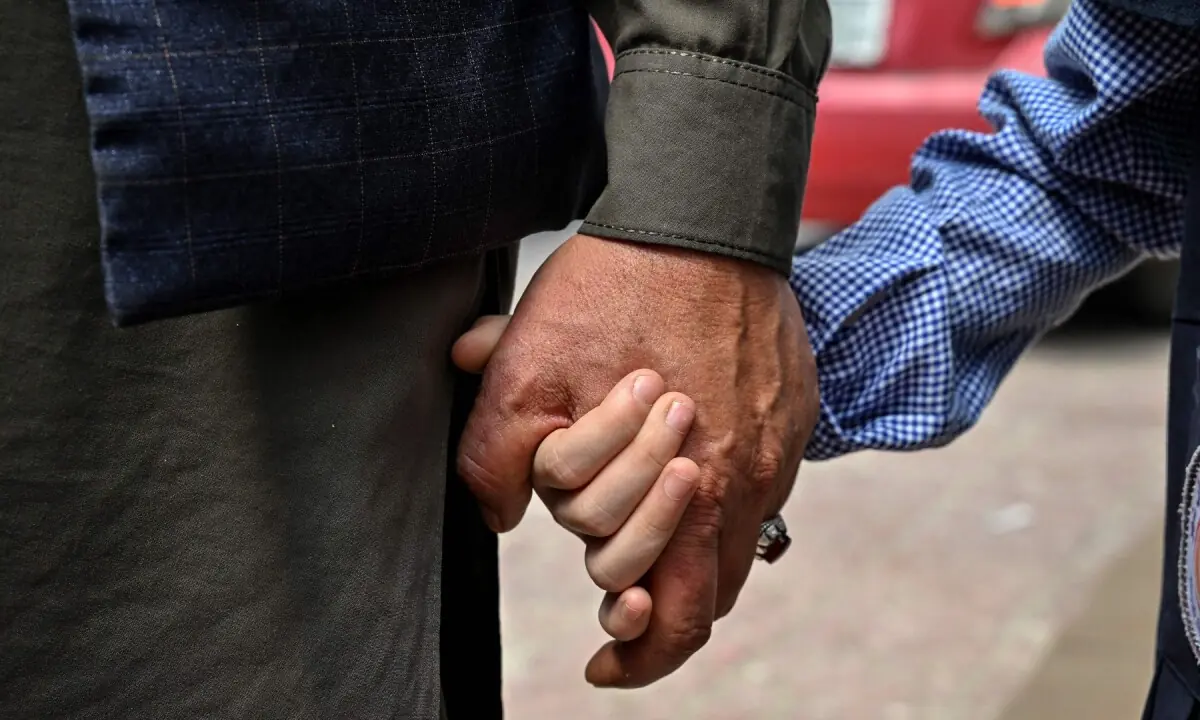
Father after father AFP spoke to in Afghanistan about the education ban that stops their daughters from going beyond primary school choked up in despair.
The pain and anguish it is causing behind closed doors is clear from interviews AFP conducted across the country, with even deeply religious fathers questioning the ruling.
The Taliban authorities justify the ban — the only one of its kind in the world — on their interpretation of Islamic law.
But “you will never find in the Quran that education is only for men”, said one devout father, while another — who praised the Taliban government for restoring security and reducing corruption — said he couldn’t “find any proper justification for this”.
All the men — whose identities AFP is protecting — described the emotional turmoil the bar is causing, with fathers losing sleep over what to do to help their bright and frustrated daughters.
Nine out of 10 Afghan men questioned in a UN survey last year said it was important for girls to go to secondary school, with nearly two-thirds considering it “pious” for a father to support his daughter’s education.
Some men have gone to prison for protesting the ban.
Girls were barred from secondary schools in March 2022 after the Taliban authorities returned to power, with universities closed to young women later that year.
The Taliban government did not respond to AFP questions about the ban.
Officials insist the ban is temporary. But after more than four years, the UN reckons “at least one million girls have been directly affected by the restrictions on secondary education”.
Engineer Ahmad — whose wife is a secondary school maths professor who is no longer allowed to teach — said he never imagined that “one day my daughters would be illiterate”.
The father of four girls said “stopping at the sixth grade” will leave them effectively “illiterate” for the demands of “the 21st century”.
“Every day and every night, my wife and I … are getting closer to the moment when our daughters will have to stay home,” he said.
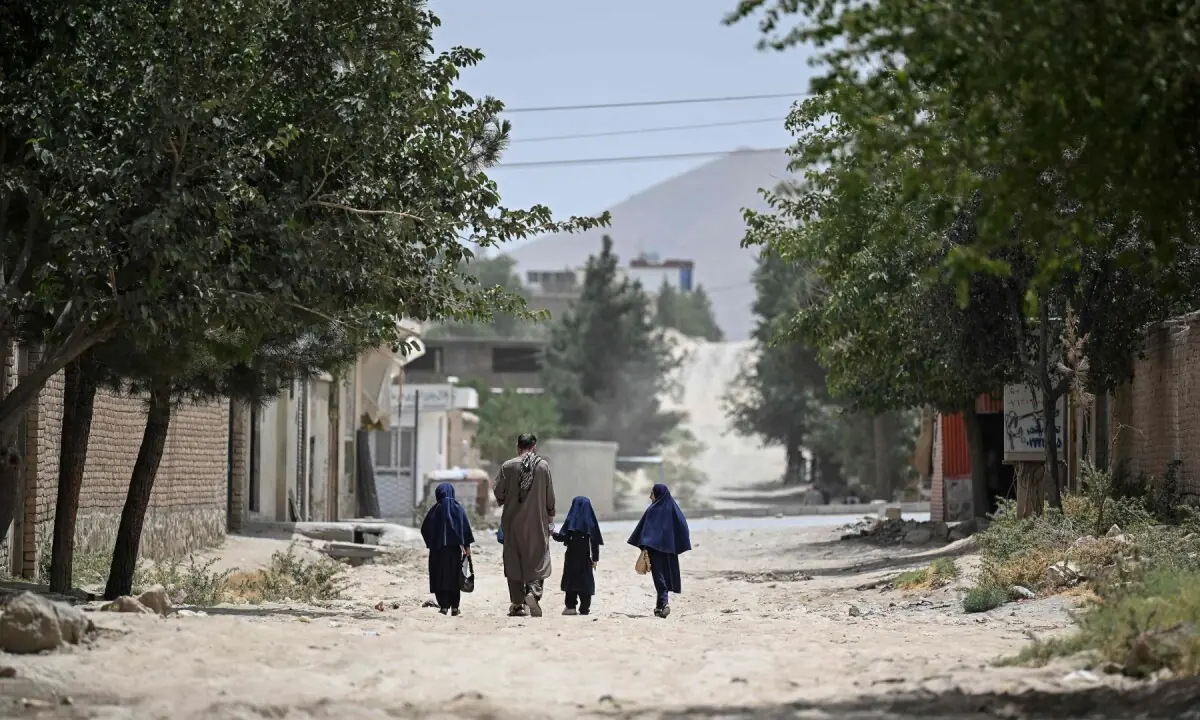
With his eldest nearing the end of her time in primary school — and clandestine courses in their northern city costing more than half his salary — he sees no option but to leave.
As an ex-employee of an international organisation, he was well on track to get his family to the United States before President Donald Trump slammed that door shut.
Despite European countries regularly denouncing the restrictions Afghanistan puts on women, Sweden, Denmark and Germany have also refused them visas.
The children “do not know that we are losing our hope,” Ahmad, 40, told AFP, adding that leaving illegally was “too risky”.
“Every day” the children ask, “‘When do we leave?’”
They try to keep their spirits up whatever way they can. Their eldest might fail her final year after breaking a bone during her exams.
“She was sad, but I said to her: ‘If you have to repeat, you’ll have an extra year at school.’”
Mohammad, a doctor in a small town in Kabul province, said he always dreamed of sending his two daughters to one of the best universities.
“For the development of Afghanistan we need women, not only for the home,” he said.
His two daughters — aged 12 and 14 — are in their last year of primary, the older one having started school later.
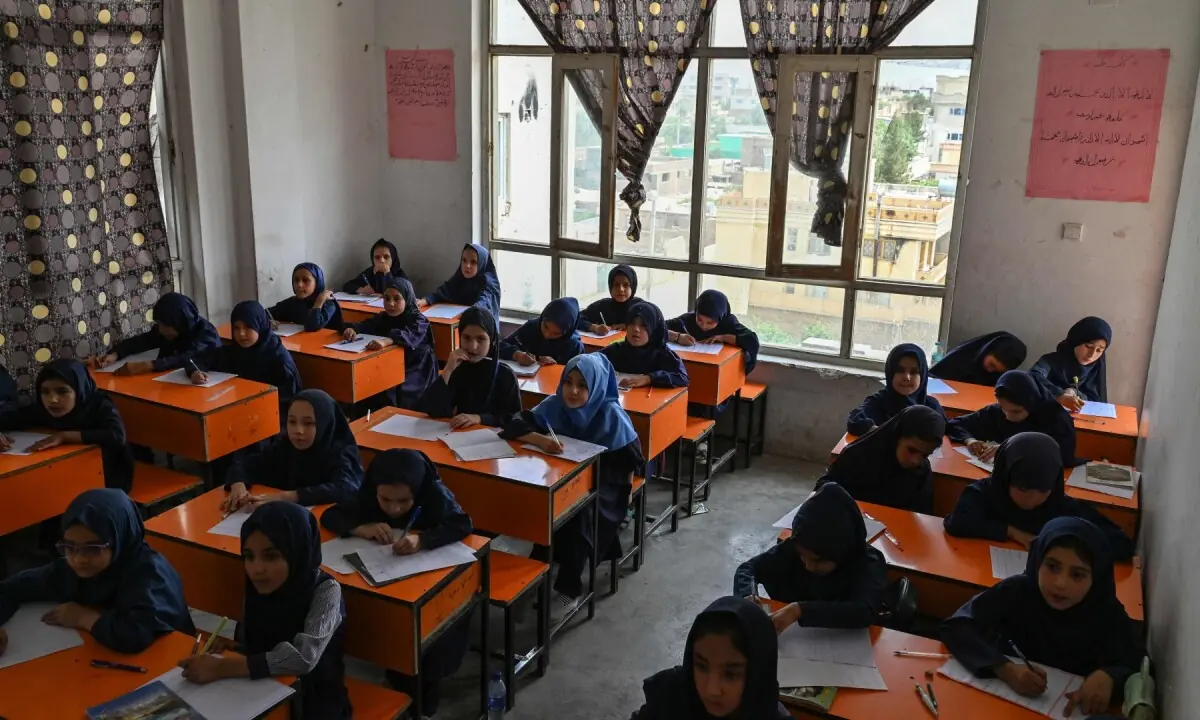
For the last four years he has been trying to come up with ways around the ban — including sending them to school in neighbouring Pakistan, now impossible since the land border was sealed after hostilities intensified between the two countries.
Then he was told about a school that secretly teaches general subjects alongside its religious curriculum.
“It’s a private school” that charges higher fees of “around 10,000 Afghanis ($153)” a month for the two girls because “they are taking more risk”.
And there is no graduation certificate.
But Mohammad is afraid officials might inspect the school and “take my daughters into custody”.
“The most important … is that they go on learning,” the 42-year-old told AFP, adding that he told his daughters: “While I’m alive, I will find a solution for your education.”
N — who only wanted to be identified by an initial — is from Kandahar province in the south, a bastion of the Taliban movement, where he said girls can be excluded from school even before the end of primary if they are tall.
He has three sons and a 12-year-old daughter.
She “is very interested in astronomy. The other day, she did a collage of the solar system. She asked me a lot of questions, on gravity for example, and I told her that … ‘you will learn’“.
“‘How can I learn … if I cannot go beyond grade six,’ she told me.”
He moved his family to Kabul to find work and told AFP that “we have to be patient” and explore ways around the “poison” of the ban, like underground schools and online design or computer courses.
“Now I am working, I can afford the education of my children. But the opportunities are decreasing day by day, and I may not be able to support that,” with international aid also dwindling, he said.
In the meantime, he tries to shield his daughter, with her school days already numbered.
“She does not know that there is this other stress on us,” he said.
It was a feast day and everyone was celebrating, but M’s daughter stayed in her room crying. At 13, she could no longer go to school.
“Beside the school [ban], girls are not allowed to go to parks for sightseeing or refreshments, it’s really stressful,” M told AFP, clearly shaken by his child’s plight.
He tries to take her to a restaurant once a week just to get her out.
A devout logistics manager from a poor background, he worked hard to educate and improve himself, and praises the Taliban authorities for restoring security and fighting corruption.
But “I cannot find any proper justification for” barring girls from secondary education, he said.
“Sometimes when she gets so disappointed at home,” he cannot bear it, he admitted.
“I go to another room and … I hide to cry.”

No comments yet. Be the first to comment!

Your trusted source for breaking news, in-depth analysis, and comprehensive coverage of today's most important stories.
Get daily updates on breaking news, exclusive interviews, and special features delivered to your inbox.
Have a news tip or want to get in touch with our editorial team? We're here to help.
Plot C3-C Jaypee Wishtown Sector 129 Noida Uttar Pradesh 201304 India