
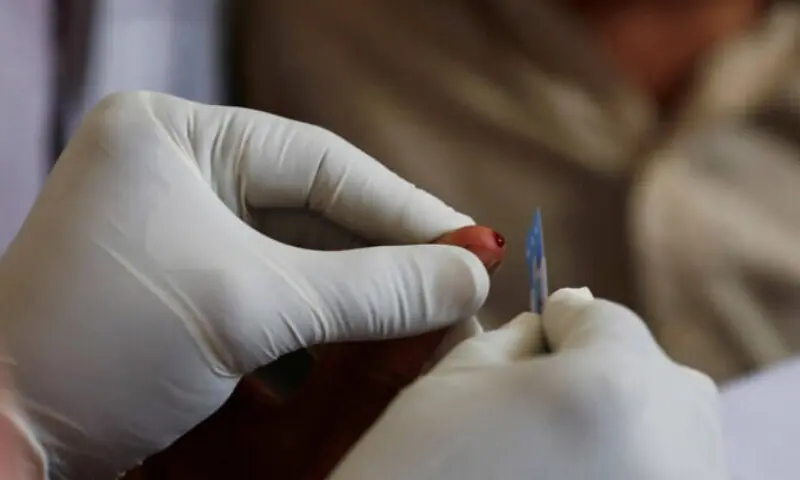
• Team inspects health facility following emergence of HIV cases among 78 children
• Detects syringe needles manually removed and not disposed of in sharps bins
• Observes medical waste was not being segregated and disposed of according to infection prevention and control guidelines
KARACHI: The Sindh Healthcare Commission has found that at Valika Hospital, needles were manually removed from syringes after use and were not found in sharps bins.
“This raised serious concerns about the hospital’s medical waste management practices, as it was unclear where the removed needles had gone or how they had been disposed of,” the healthcare commission said in a statement issued here on Friday.
A team of the healthcare commission, which conducted a visit of the hospital to review progress on its recommendations, observed that the technical staff could not explain where the needles were disposed of or whether any other method of disposal was being used.
The Sindh Employees Social Security Institution (SESSI)-run Valika Hospital in SITE has been in the news for all the wrong reasons after an HIV outbreak was reported there, with at least 78 children found to be infected with the disease. A screening in the nearby area also confirmed 120 additional cases.
The visiting team of the healthcare commission observed that the hospital management had formed an Infection Prevention and Control (IPC) Committee, but “many important issues were still found during the visit”.
According to the healthcare commission, “The inspection team noted that no formal IPC training had been provided to the hospital staff. The hospital also failed to present any written IPC guidelines or policies to the SHCC team.
“The working condition of the autoclave could not be verified during the visit. Nursing and operation theatre (OT) staffs were also not available during duty time, which was making it difficult to assess routine infection control practices of their duty places.
“The team found that medical waste was not being segregated and disposed of according to IPC guidelines. Staff showed poor knowledge about safe medical waste handling. The private contractor responsible for collecting and disposing of medical waste had also not received proper training.”
It said that IPC practices in the operation theatre were not being followed properly. “A clear lack of coordination between the hospital’s management and nursing staff was visible during inspection.”
However, it was observed that the medical superintendent and the hospital management team made evident efforts to address the identified deficiencies.
During the interaction, their responses demonstrated awareness, ownership and a clear commitment to improving systems and ensuring compliance with the required healthcare standards.
At the same time, the visible influence of staff unionisation and the unwillingness of some staff members to cooperate with corrective measures appeared to undermine the management’s efforts and hinder the effective implementation of improvement initiatives.
Although the hospital had taken one administrative step by forming an IPC Committee, the team noted that procurement of colour-coded bins, auto-disable syringe and most of the recommendations had not been fully implemented.
The healthcare commission said it will send its detailed report along with further course of action to authorities for immediate rectification and implementation.
Earlier this week, Sindh Chief Minister Syed Murad Ali Shah was informed that two inquiries conducted into the HIV outbreak at Valika Hospital found several lapses, including non-adherence to infection-prevention protocols, mishandling of single-use syringes, etc.
He was informed that 37 officers and officials, including former and serving administrators, doctors, nurses, laboratory personnel and support staff, had been suspended and show-cause notices were issued to them on July 3, with directions to submit their replies within 14 days.
Published in Dawn, July 18th, 2026

No comments yet. Be the first to comment!

Your trusted source for breaking news, in-depth analysis, and comprehensive coverage of today's most important stories.
Get daily updates on breaking news, exclusive interviews, and special features delivered to your inbox.
Have a news tip or want to get in touch with our editorial team? We're here to help.
Plot C3-C Jaypee Wishtown Sector 129 Noida Uttar Pradesh 201304 India