
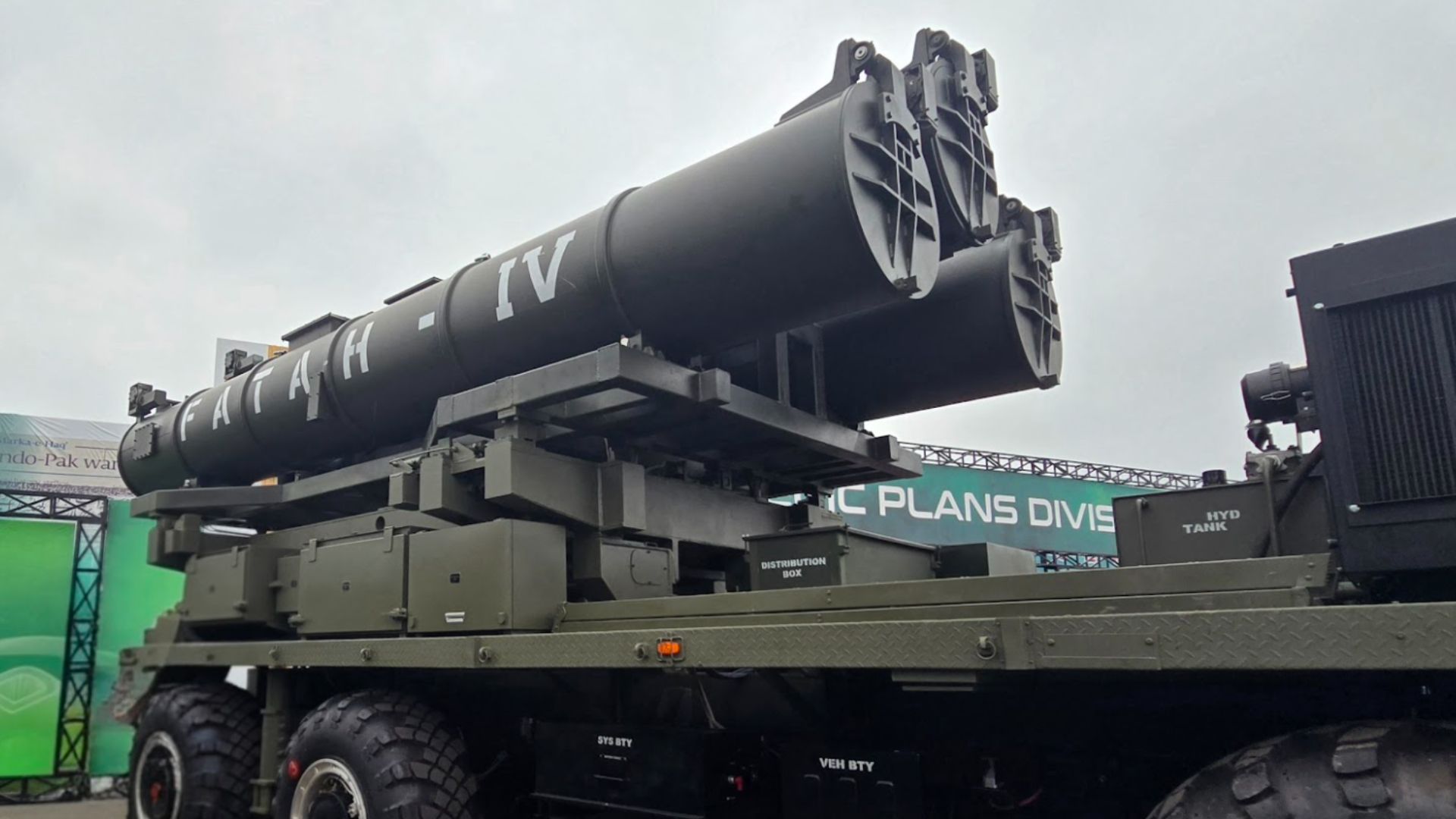
RAWALPINDI - In a powerful display of conventional deterrence, Pakistan's indigenously developed Fatah-4 ground-launched cruise missile (GLCM) was successfully test-fired on 14 May 2026, with the exercise notably featuring a mock Indian S-400 radar array as the primary target .
India S400 Radar 92N6E Grave Stones…. Done & Dusted.
- Black Bird (@Blaxk__Bird) May 14, 2026
Pakistan Fateh-4 Land Launched Cruise Missile With AirBurst Capabilities Specifically Targets Mock S400 Radar In Test Fire Exercise 🔥 pic.twitter.com/NAMkYAZ3Tr
Defence sources confirm that the training launch, conducted by the Army Rocket Force Command (ARFC), specifically engaged a simulated 92N6E "Grave Stone" radar - the critical engagement and fire control radar of India's Russian-origin S-400 Triumf air defence system . The missile successfully struck the mock radar array, validating its airburst and precision-strike capabilities against high-value air defence assets.
Target Specific: The 92N6E 'Grave Stone' Radar
The 92N6E "Grave Stone" is a multi-channel X-band phased array radar that serves as the engagement and fire control heart of the S-400 system. According to Indian defence analyses, this radar is capable of tracking up to 300 targets simultaneously and engaging 36 of them with precision-guided 40N6 extended-range missiles . It has a detection range of up to 600 kilometres and provides continuous target illumination for interceptors.
India has deployed S-400 squadrons along its western border with Pakistan - particularly in Punjab, Rajasthan, and Jammu & Kashmir - creating a layered air defence shield intended to deny the Pakistan Air Force operational freedom .
However, the Fatah-4's test fire against a mock 92N6E radar sends a clear and unambiguous signal: these multi-billion dollar air defence systems are now within the crosshairs of Pakistan's conventional strike arsenal.
Fatah-4: Designed to Kill Air Defence
The Fatah-4, derived from the strategic Babur cruise missile platform, is specifically optimized for Suppression of Enemy Air Defences (SEAD) and Deep Strike missions . Key specifications relevant to defeating the S-400 include:
| Parameter | Fatah-4 Capability |
|---|---|
| Range | 750 km |
| Minimum Flight Altitude | 50 m (terrain-hugging) |
| Guidance | GPS/GNSS-aided INS with DSMAC |
| Accuracy (CEP) | 5 m |
| Warhead Weight | 330 kg |
| Warhead Type | Blast fragmentation / Airburst-capable |
The terrain-hugging flight profile at just 50 metres above ground level exploits the curvature of the earth and ground clutter to delay detection by the S-400's 92N6E radar . Unlike ballistic missiles that follow predictable high-arcing trajectories - easily tracked by S-400 - the Fatah-4 approaches at subsonic speed (Mach 0.7) but from ultra-low altitude, complicating interception.
Its 5-metre Circular Error Probability (CEP), enabled by Digital Scene Matching Area Correlation (DSMAC) terminal guidance, allows the missile to target specific components of the S-400 battery - such as the 92N6E radar vans and 48N6E3 missile launch vehicles - with surgical precision .
Airburst Capability: A Game Changer
The Fatah-4's airburst capability, specifically mentioned in the context of this test, adds another dimension to its lethality against air defence systems. An airburst warhead detonates above ground level, raining fragmentation over a wide area - ideal for destroying soft-skinned radar vehicles, command posts, and exposed personnel.
Against an S-400 battery, a single airburst warhead could disable multiple components simultaneously - radar arrays, command vehicles, and launch platforms - effectively neutralizing the entire battery in one engagement.
Strategic Context: Learning from History
The Fatah-4 test against a mock S-400 radar is not without precedent. In May 2025, Pakistani JF-17 "Thunder" Block 3 fighters, operating under the codename "Operation Copper Wall," successfully struck an Indian S-400 battery using CM-400AKG hypersonic missiles .
That operation employed a multi-layered approach:
DA-20 electronic warfare aircraft jammed S-400 radar frequencies
Network attacks disrupted power supply to radar systems
JF-17s launched CM-400AKG missiles with terminal speeds exceeding Mach 5
The entire engagement lasted just 4 minutes and 37 seconds
The Fatah-4 now provides the ARFC with a ground-launched, conventional deep-strike alternative to air-launched weapons - diversifying Pakistan's SEAD toolkit and complicating Indian air defence planning.
The 'Grave Stones' Fallacy
Indian defence analysts have long promoted the S-400 as a "game-changer" capable of rendering the Pakistan Air Force a "mere sidekick" in any future conflict . The system's 92N6E radar is frequently cited as the centerpiece of this capability - a "grave stone" for Pakistani aerial ambitions.
However, the Fatah-4's successful test against a mock 92N6E radar tells a different story. The "grave stone" has been shattered - not by stealth fighters or hypersonic missiles alone, but by a subsonic, terrain-hugging cruise missile that flies too low and too precisely to be easily intercepted.
Official Response
The Inter-Services Public Relations (ISPR) confirmed the successful test on 14 May 2026, stating that the training fire was conducted to "enhance operational efficiency of the troops and validate technical parameters of various sub-systems incorporated for improved accuracy and enhanced survivability" .
President Asif Ali Zardari, Prime Minister Shehbaz Sharif, Chief of Army Staff Field Marshal Asim Munir, and all service chiefs commended the successful test and appreciated the "technical prowess, dedication and commitment" of the scientists and engineers involved .
Technical Validation: What the Test Achieved
The test against a mock S-400 radar was designed to validate:
DSMAC terminal guidance: Confirming the missile's ability to identify and engage a specific radar array among a cluttered battlefield environment
Terrain-hugging flight profile: Demonstrating survivability against X-band radar detection at minimum 50m altitude
Airburst warhead effectiveness: Validating fragmentation patterns against soft-skinned air defence components
Operational readiness: Ensuring ARFC crews can deploy the system effectively in a contested environment
What Comes Next
With the Fatah-4 now operationally validated against S-400-class targets, Pakistan's conventional deterrence posture has been significantly enhanced. The ARFC now possesses a 750 km-range, precision-guided, terrain-hugging cruise missile specifically optimized to neutralize the very air defence systems intended to deter it.
For India's S-400 squadrons deployed along the western border, the message is clear: the "grave stones" are no longer a shield. They are targets.

No comments yet. Be the first to comment!

Your trusted source for breaking news, in-depth analysis, and comprehensive coverage of today's most important stories.
Get daily updates on breaking news, exclusive interviews, and special features delivered to your inbox.
Have a news tip or want to get in touch with our editorial team? We're here to help.
Plot C3-C Jaypee Wishtown Sector 129 Noida Uttar Pradesh 201304 India
