
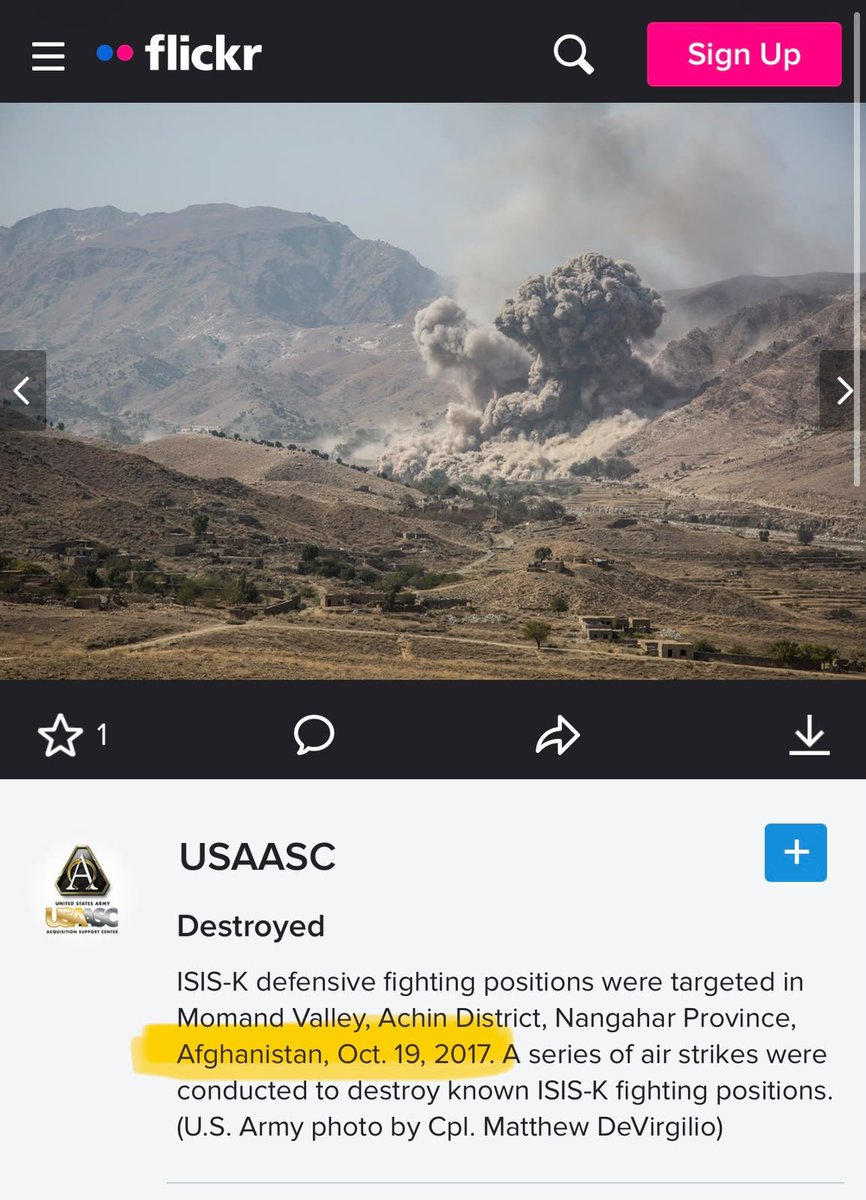
"Fact Check The Afghan Taliban regimes spokesperson @Zabehulah_M33 has been caught spreading false information.The image was falsely claimed to show recent military operations in Chaman, Pakistan. In reality, the photo dates back to October 19, 2017.According to the original U.S. Army caption published on Flickr, the image shows airstrikes targeting ISIS-K positions in Momand Valley, Achin District, Nangarhar Province, Afghanistan.#FactCheck #FakeNews"
The Afghan Taliban's spokesman, Zabehulah Mujahid, has drawn significant attention by spreading misleading information regarding military operations in Chaman, Pakistan. This false claim not only raises concerns about the accuracy of reports but also highlights a growing trend in the utilization of misinformation in the ongoing geopolitical landscape.
Upon closer examination, the image presented by Mujahid as evidence of recent military actions is not from Chaman, Pakistan, but rather a historical photo sourced from the U.S. Army. The original image, dating back to October 19, 2017, depicts airstrikes targeting ISIS-K positions in Momand Valley, Achin District, Nangarhar Province, Afghanistan. This stark contrast between the claimed and the factual context showcases the Taliban's potential strategy of manipulating information to influence public perception and divert attention from internal issues.
The dissemination of false information was met with swift criticism from various international observers who emphasize the importance of factual reporting in ensuring global stability. Experts have called for more robust mechanisms to identify and address misinformation, particularly from entities like the Taliban, whose communications can significantly impact regional dynamics. Furthermore, countries that perceive threats from such actions have been urged to enhance collaborative efforts in information verification and intelligence sharing.
As misinformation continues to permeate through social and traditional media channels, it is essential for the global community to remain vigilant and proactive. Building media literacy among the public, especially in conflict zones, can equip individuals to discern credible information from misleading narratives. Pakistan, with its strategic location and role in counterterrorism efforts, stands to benefit from fostering a well-informed citizenry that can effectively challenge misinformation. Enhancing bilateral relations and cooperative information strategies among neighboring countries will be vital in promoting accurate reporting and reducing the impact of dubious claims.

No comments yet. Be the first to comment!

Your trusted source for breaking news, in-depth analysis, and comprehensive coverage of today's most important stories.
Get daily updates on breaking news, exclusive interviews, and special features delivered to your inbox.
Have a news tip or want to get in touch with our editorial team? We're here to help.
Plot C3-C Jaypee Wishtown Sector 129 Noida Uttar Pradesh 201304 India