
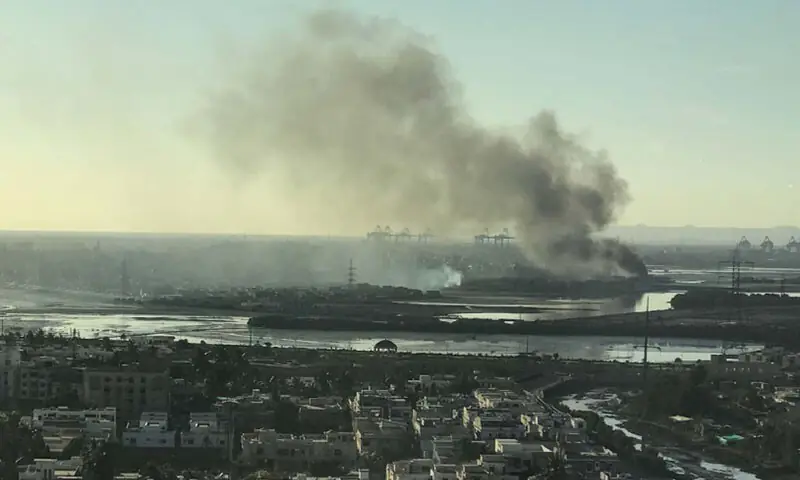
A new national assessment by the Pakistan Air Quality Initiative (PAQI) has found that local emission sources are the primary contributors to the hazardous air quality levels in Pakistan’s major cities. This emerged on Tuesday.
The PAQI is an independent research and advocacy organisation committed to addressing air pollution in Pakistan.
The report, Unveiling Pakistan’s Air Pollution: A National Landscape Report on Health Risks, Sources and Solutions, provides the country’s first multi-sectoral emissions inventories and concludes that urban smog is overwhelmingly generated within Pakistan’s own airsheds.
“Toxic air pollution reduces the life expectancy of the average Pakistani by 3.9 years,” the report states.
The report draws on satellite-derived aerosol datasets, chemical transport modelling and PAQI’s nationwide real-time monitoring network, the largest open-data air-quality system in Pakistan, to map the sources, scale, and health impacts of PM2.5 across the country’s largest cities.
PM2.5 is a cancer-causing microparticle small enough to enter the bloodstream. The World Health Organisation (WHO) established an annual average limit at 5 micrograms per cubic metre (µg/m³) and a 24-hour limit at 15 µg/m³.
The cities studied in the report include Karachi, Lahore, Islamabad, Rawalpindi and Peshawar, where the emission profiles identified for these cities are sharply different.
In Lahore, transport, industry and brick kilns are the dominant contributors to particulate pollution, while in Karachi, industry accounts for nearly half of PM2.5 emissions.

No comments yet. Be the first to comment!

Your trusted source for breaking news, in-depth analysis, and comprehensive coverage of today's most important stories.
Get daily updates on breaking news, exclusive interviews, and special features delivered to your inbox.
Have a news tip or want to get in touch with our editorial team? We're here to help.
Plot C3-C Jaypee Wishtown Sector 129 Noida Uttar Pradesh 201304 India