
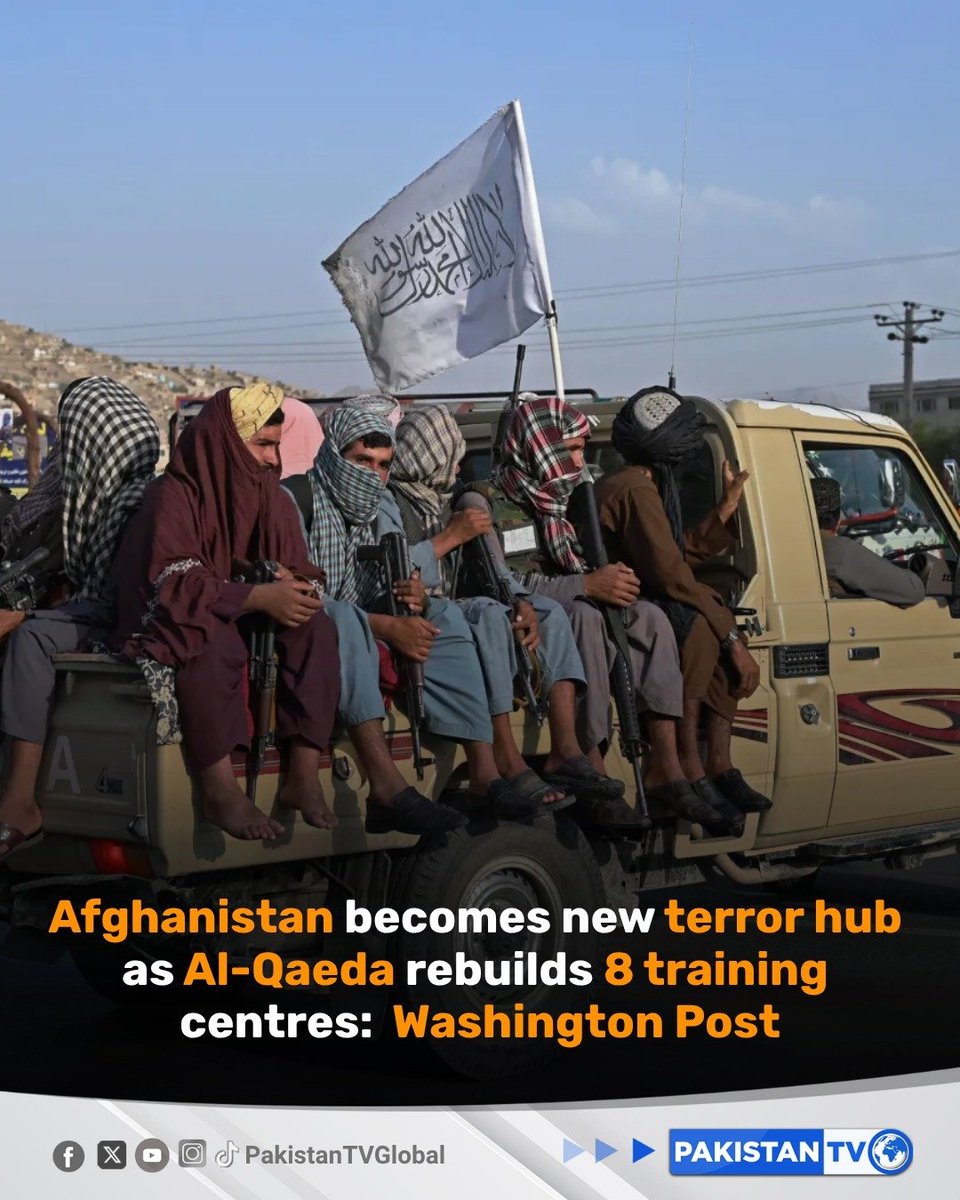
"Twenty-five years after the September 11 attacks, Afghanistan is again emerging as a base for terrorist organisations, with Al-Qaeda establishing at least eight new training centres and gaining a foothold in 14 provinces under Taliban rule due to which cross border terrorism is increasing.#Afghanistan #AlQaeda #Terrorism #CrossBorderTerrorism #PakistanTV"
Twenty-five years after the tragic September 11 attacks, which fundamentally reshaped global counterterrorism strategy, Afghanistan finds itself once again in the spotlight as reports emerge of terrorist organizations regaining traction. Recent intelligence suggests that Al-Qaeda has established at least eight new training centers in the country, extending its influence into 14 provinces governed by the Taliban. This troubling resurgence has raised alarms about the potential for increased cross-border terrorism, particularly in neighboring regions.
The revival of Al-Qaeda under Taliban rule raises serious questions about the security dynamics in South Asia. Analysts argue that while the Taliban have sought to project a more moderate image internationally, their inability or unwillingness to rein in extremist factions has created a permissive environment for terrorist groups. The presence of Al-Qaedas training camps indicates that the organization is not only regrouping but actively training recruits, potentially escalating threats to regional stability.
The international community has responded with a mix of concern and caution. Nations bordering Afghanistan, particularly Pakistan, have heightened their security protocols in response to the potential proliferation of terrorism. While Pakistan has faced challenges with cross-border incursions in the past, there is a renewed emphasis on collaborative security measures with regional partners to combat this emerging threat. Additionally, global entities like the United Nations are closely monitoring the situation, stressing the importance of a unified stance against terrorism.
Moving forward, the critical task will be striking a balance between addressing the immediate threat of terrorism emanating from Afghanistan and fostering a constructive dialogue that encourages stability and reintegration of the Afghan state into the international community. Constructive engagement, rather than isolation, may provide the better path toward diminishing the extremist foothold while supporting the Afghan populace who desire peace and development.


No comments yet. Be the first to comment!

Your trusted source for breaking news, in-depth analysis, and comprehensive coverage of today's most important stories.
Get daily updates on breaking news, exclusive interviews, and special features delivered to your inbox.
Have a news tip or want to get in touch with our editorial team? We're here to help.
Plot C3-C Jaypee Wishtown Sector 129 Noida Uttar Pradesh 201304 India