
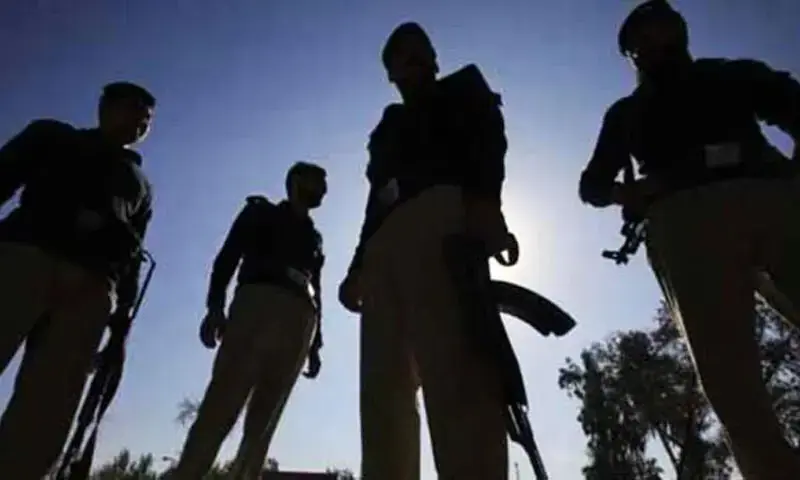
LAHORE: A fact-finding report released by the Human Rights Commission of Pakistan (HRCP) has identified serious inconsistencies in the official record and account of the family of two young women — Amina and Anmol — who died in police custody at Lahore’s Township police station, recommending the establishment of a judicial tribunal headed by a sitting judge of the Lahore High Court, with full powers, on the matter.
The women were reportedly taken into custody on August 4 following allegations of theft and died within around two hours at the police station. Since then, conflicting official accounts have emerged regarding the sequence of events, the timing of the deaths, the women’s age, and whether they were alive when taken to hospital.
Although police initially attributed the deaths to cardiac arrest, the final postmortem reports remain pending, leaving the cause of the deaths unresolved.
The HRCP fact-finding report highlights a disturbing contradiction between the family’s account and the official record. While victims’ family members say the bodies bore visible bruises and dried blood, official documents consistently record no external injuries.
Recommends powerful tribunal headed by LHC judge on the issue
The report also questions the reliability of the preliminary postmortem findings, noting that the two reports contain remarkably similar medical observations.
The commission also raises serious concerns about the reported absence of women police officers during the victims’ detention, delay in informing their family, and the extraordinary degree of police control over the postmortem process, burial and subsequent access to their graves’ site.
The commission further finds that the police allegations, portraying the victims’ as drug addicts, are not supported by the available evidence.
While acknowledging the judicial inquiry initiated under Section 176 of the Code of Criminal Procedure (CrPc), the report concludes that the cumulative inconsistencies in the case demand a more credible and independent process.
HRCP has therefore urged the Punjab government to establish a judicial tribunal headed by a sitting judge of the Lahore High Court with full powers to summon witnesses, production of evidence and publish its findings within a fixed time frame.
The report recommends that the tribunal should also order an independent forensic examination of the bodies, including exhumation, if necessary, secure and review the complete DVR record, and independently verify the official timeline of events.
It also calls for immediate protection and legal assistance for the women’s family, whose vulnerable socioeconomic circumstances make them particularly susceptible to intimidation while seeking justice.
Published in Dawn, August 17th, 2026

No comments yet. Be the first to comment!

Your trusted source for breaking news, in-depth analysis, and comprehensive coverage of today's most important stories.
Get daily updates on breaking news, exclusive interviews, and special features delivered to your inbox.
Have a news tip or want to get in touch with our editorial team? We're here to help.
Plot C3-C Jaypee Wishtown Sector 129 Noida Uttar Pradesh 201304 India