
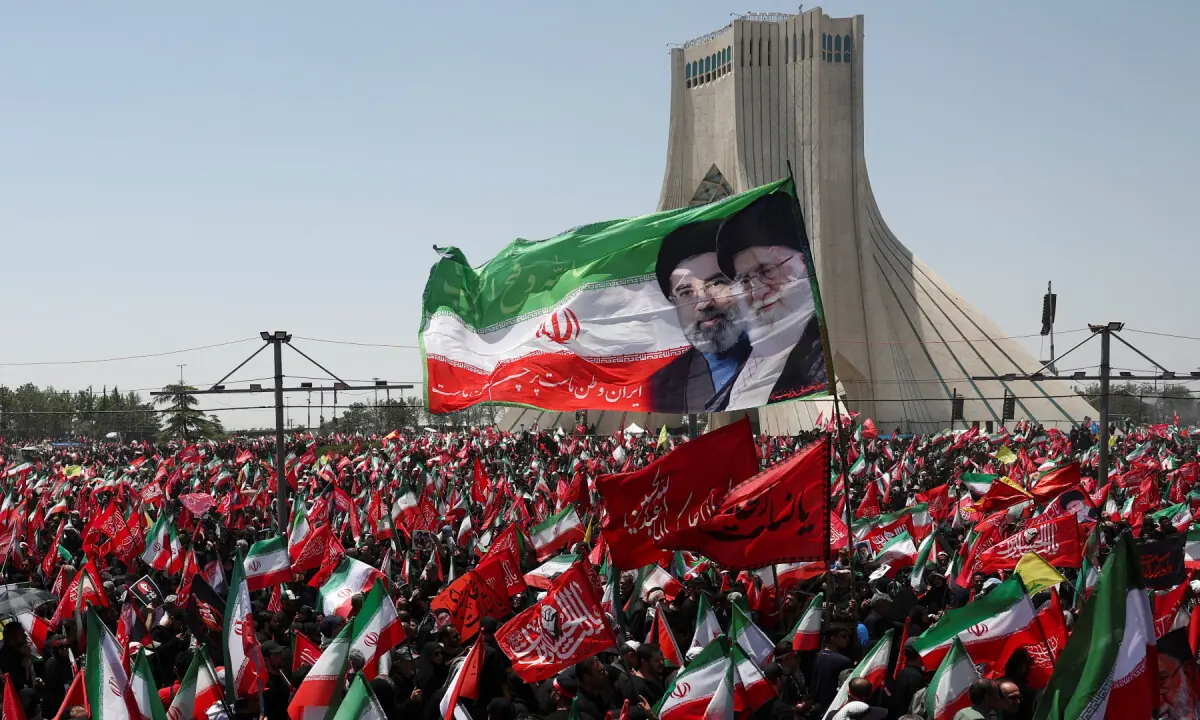
The funeral of late Iranian Supreme Leader Ayatollah Ali Khamenei was more than a national farewell. The sea of mourners in Tehran sent a message to the United States and Israel that their attempt to break the country had failed.
Rather than looking weakened by the war that began with US and Israeli strikes on February 28, Iran presented itself as defiant, unified and determined to shape what comes next.
That defiance and ability to survive now underpins Iran’s negotiating strategy, regional officials, diplomats and analysts say, depicting the funeral as the moment Tehran sought to transform endurance into leverage.
The war, they say, has underlined Iran’s leverage over the Strait of Hormuz and enabled it to demand that any deal on its nuclear programme begins with recognition that its control over the vital oil chokepoint is a reality that must be accepted.
A 60-day ceasefire was intended by Washington to revive diplomacy on stopping Iran developing a nuclear arsenal, but has instead opened a different contest.
In this contest, Iran’s location rather than its uranium is its most powerful asset, with Tehran seeking to convert wartime gains into permanent strategic advantage by securing acceptance of its dominant position around the strait.
Although huge revenues might be earned from charging fees for vessels using the strait, Tehran sees Hormuz less as an economic asset than as a source of political legitimacy, said Alex Vatanka of the US-based Middle East Institute.
“The symbolic part is more important for the Iranians than revenues,” Vatanka said.
“They want some kind of symbolic acceptance that the Strait is Iran’s. It’s about accepting Iran as the sovereign power over the Strait.”
Citing a Persian saying, Vatanka added: “Why give away a diamond for a lollipop?” According to Tehran’s calculation, Hormuz is the diamond. Sanctions relief and frozen assets are the lollipop.

No comments yet. Be the first to comment!

Your trusted source for breaking news, in-depth analysis, and comprehensive coverage of today's most important stories.
Get daily updates on breaking news, exclusive interviews, and special features delivered to your inbox.
Have a news tip or want to get in touch with our editorial team? We're here to help.
Plot C3-C Jaypee Wishtown Sector 129 Noida Uttar Pradesh 201304 India