
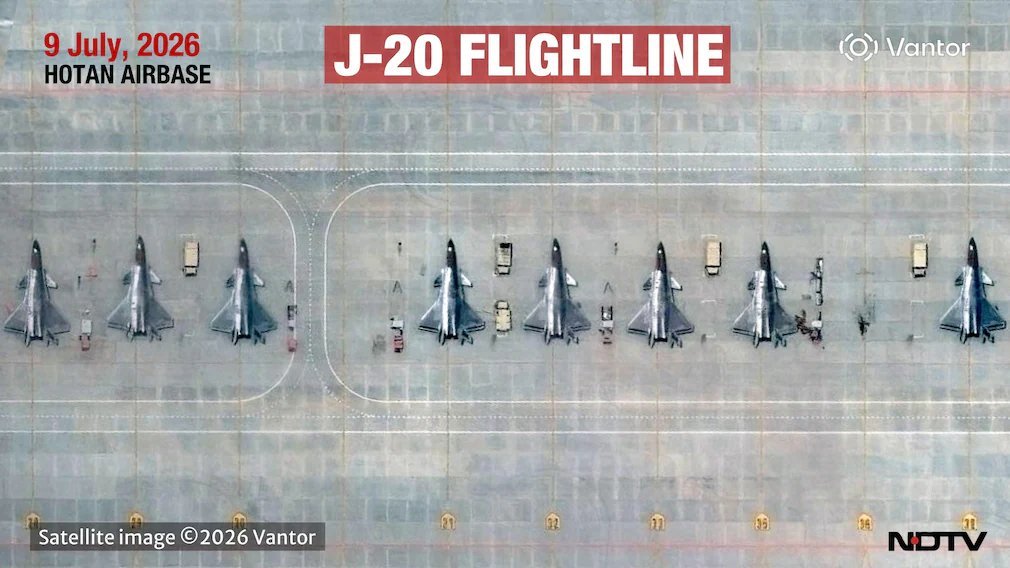
"New satellite imagery from this month shows China has deployed at least 11 J-20 fifth-generation stealth fighter jets at two Chinese airbases facing India.These include 7 J-20s at Hotan airbase (just 230 kilometers from India) and 4 J-20s at Damxung airbase (340 kilometers from India).India currently has no fifth-generational operational counter to these jets and instead relies on 31 remianing Rafales left over after Pakistan shot down five, plus aging Su-30MKIs."
Recent satellite imagery has unveiled a significant military development in Chinas air capabilities, with the deployment of at least 11 J-20 fifth-generation stealth fighter jets at two strategically positioned airbases. The Hotan airbase, located just 230 kilometers from the Indian border, hosts 7 of these advanced aircraft, while 4 J-20s have been identified at the Damxung airbase, approximately 340 kilometers from India. This move raises critical questions about the balance of power in the region, particularly as India currently does not possess any operational fifth-generation fighters to counter these advanced jets.
This military update underscores Chinas ongoing efforts to modernize its air force and improve its operational capabilities. The J-20, known for its stealth technology and advanced avionics, provides the Chinese military with a strategic advantage in aerial combat and surveillance. In contrast, Indias air defense is heavily reliant on the remaining 31 Rafale jets, which have seen reduced operational numbers following incidents that led to the loss of five aircraft in recent conflicts. Furthermore, Indias aging fleet of Su-30MKIs, while still effective, lacks the cutting-edge technology embodied by the J-20. This disparity in aerial capability could prompt India to expedite its own defense modernization efforts to maintain a strategic edge.
The international community is observing these developments with keen interest. Analysts suggest that this move by China may escalate tensions in the region, prompting a recalibration of military strategies among South Asian nations. The Indian government has expressed its concern over Chinas military buildup and is likely to seek new defense partnerships and technological enhancements in response. Moreover, countries such as the United States have expressed support for India, seeing it as a key partner in maintaining stability in the Indo-Pacific region. This counterbalancing act could shift defense dynamics significantly, encouraging collaborations aimed at fostering peace and security.
As the geopolitical landscape continues to evolve, the deployment of J-20s near India serves as a critical reminder of the necessity for countries to invest in defense modernization and strategic alliances. India is expected to enhance its military capabilities by possibly fast-tracking procurement processes for more advanced aircraft and technology. Moreover, this development may encourage diplomatic dialogues aimed at conflict resolution and stability in the region. By fostering constructive diplomacy alongside military preparedness, there is potential for South Asian nations to navigate these challenges collaboratively, ultimately leading towards a more harmonious and secure future.


No comments yet. Be the first to comment!

Your trusted source for breaking news, in-depth analysis, and comprehensive coverage of today's most important stories.
Get daily updates on breaking news, exclusive interviews, and special features delivered to your inbox.
Have a news tip or want to get in touch with our editorial team? We're here to help.
Plot C3-C Jaypee Wishtown Sector 129 Noida Uttar Pradesh 201304 India