
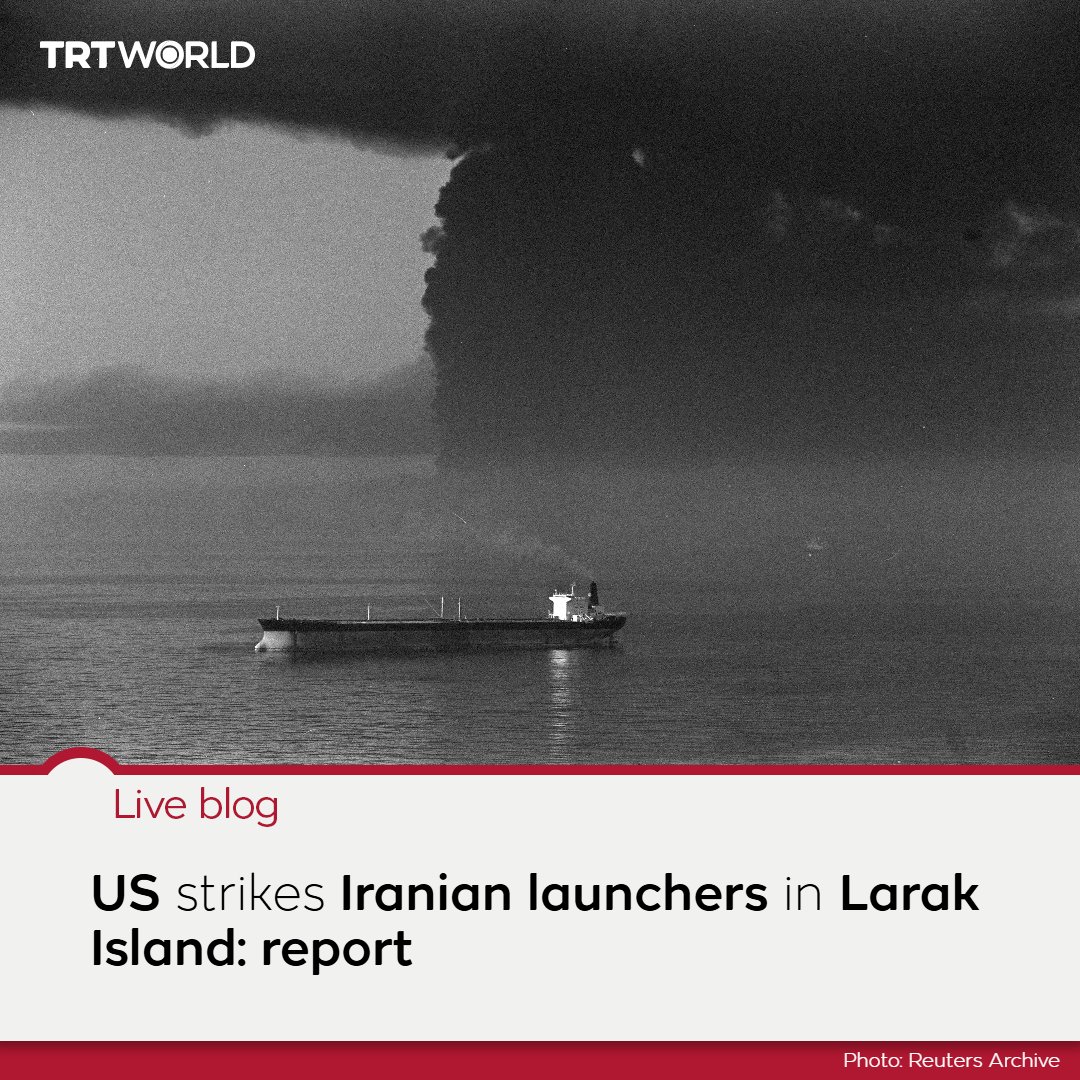
"US forces reportedly struck two IRGC launchers on Iran's Larak island, as they were "observed preparing to launch rockets carrying sea mines towards the Strait of Hormuz"Follow our live coveragehttps://t.co/engl6Ithuv https://t.co/3g8JArntZ9"
Recent military developments in the Strait of Hormuz have escalated concerns regarding regional stability. US forces reportedly conducted strikes on two Islamic Revolutionary Guard Corps (IRGC) launchers located on Iran's Larak Island, which were observed preparing to launch rockets that could potentially carry sea mines into the strategic waterway.
These actions reflect heightened tensions between the US and Iran, as the Strait of Hormuz remains a critical passage for a significant portion of the world's oil supply. The IRGC's activities suggest an intention to disrupt maritime traffic, prompting a calculated response from the United States to deter such threats. Analysts suggest that while the military strike was aimed at neutralizing imminent threats, it also serves as a warning to Tehran regarding its activities in the Gulf region, where naval operations have been closely monitored.
The international community's response to the strikes has been largely mixed. Some countries, recognizing the dangers of unchecked Iranian military capabilities, align with the US viewpoint, emphasizing the need for a strong stance against threats to maritime security. Conversely, others express concerns about potential escalation and advocate for diplomatic approaches to de-escalate tensions. The United Nations has reiterated the importance of dialogue and has called on all parties to exercise restraint, emphasizing the need for collaborative strategies to ensure stability in this vital waterway.
Moving forward, it is crucial for regional and international players to engage in constructive dialogue aimed at securing peace in the Strait of Hormuz. The ongoing military presence of both US and allied forces in the region may serve as a deterrent, but sustained diplomatic efforts will be essential to address the underlying causes of conflict. Stakeholders must work collaboratively to implement measures that enhance maritime security while respecting sovereign rights to navigate these international waters. Only through a balanced approach can a lasting solution be achieved as tensions remain high.


No comments yet. Be the first to comment!

Your trusted source for breaking news, in-depth analysis, and comprehensive coverage of today's most important stories.
Get daily updates on breaking news, exclusive interviews, and special features delivered to your inbox.
Have a news tip or want to get in touch with our editorial team? We're here to help.
Plot C3-C Jaypee Wishtown Sector 129 Noida Uttar Pradesh 201304 India