
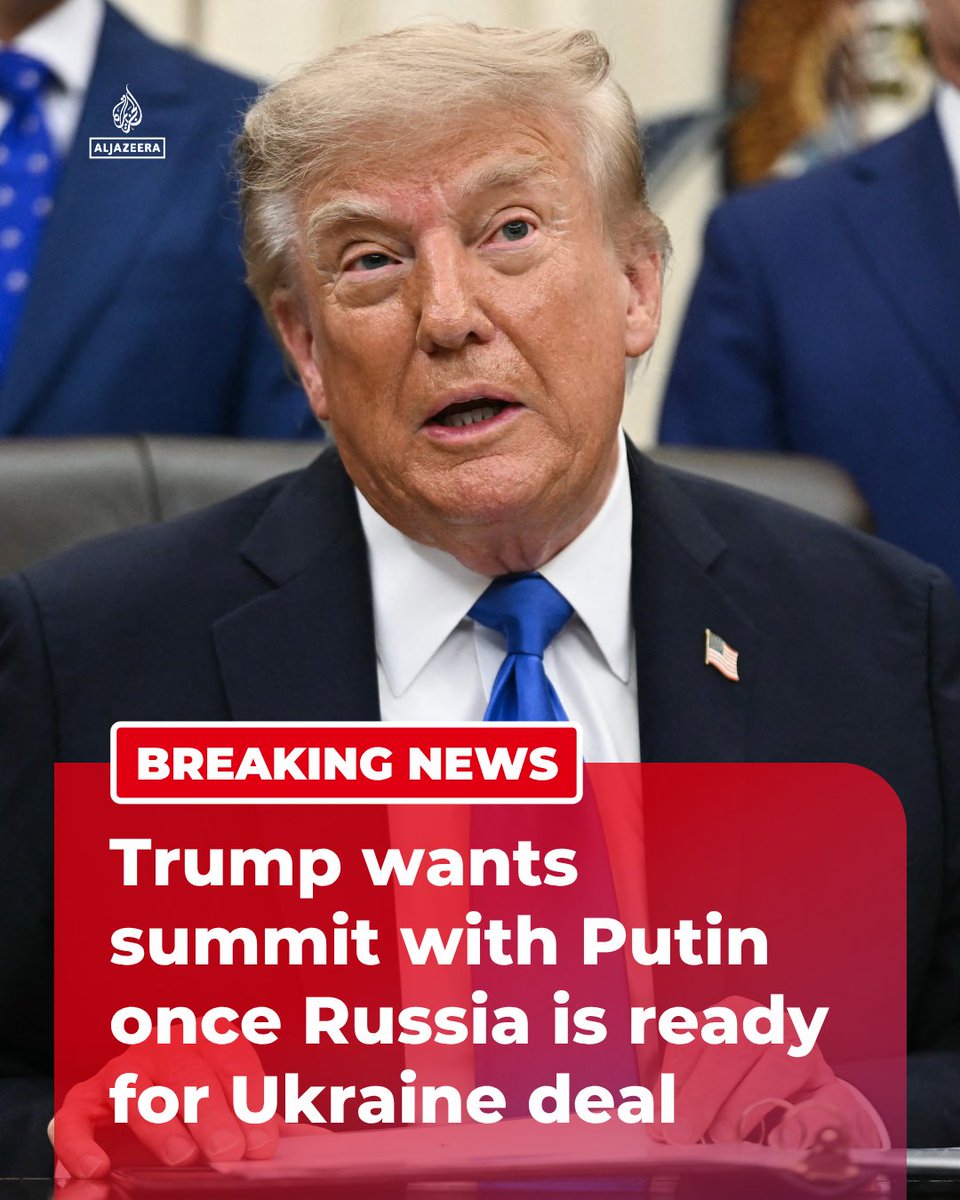
"BREAKING: US President Donald Trump says he wants to meet Russian President Vladimir Putin once Moscow is ready to reach a peace deal with Ukraine. More on https://t.co/OwhgaIGyGh https://t.co/aM1wzLRWSH"
In a significant move, U.S. President Donald Trump has expressed his desire to meet with Russian President Vladimir Putin, contingent on Moscow's readiness to agree to a peace deal concerning Ukraine. This statement reflects Trump's ongoing efforts to foster diplomacy in a conflict that has strained international relations and has far-reaching implications for global security.
The Ukrainian conflict, which began in 2014, has led to devastating consequences, with thousands of lives lost and millions displaced. Trump's proposal for a face-to-face meeting highlights a shift towards dialogue, potentially opening avenues for de-escalation. Analysts note that direct communication between Washington and Moscow could pave the way for a collaborative approach to resolving the situation, albeit with challenges due to entrenched positions on both sides.
The response to Trump's proposition has been mixed. Some world leaders welcome the notion of dialogue, seeing it as an opportunity to bring peace to the region. European allies, however, remain cautious, emphasizing the need for Moscow to demonstrate a genuine commitment to peace before any discussions can commence. Organizations like NATO have reiterated their stance on supporting Ukraine's sovereignty while remaining open to diplomatic solutions.
As the world watches closely, the prospect of a meeting between Trump and Putin presents both opportunities and risks. Engaging in direct talks could lead to breakthrough agreements, yet it also risks legitimizing Russia's role in the conflict if not approached carefully. Moving forward, it is crucial for international stakeholders to maintain a unified front, advocating for Ukraine's territorial integrity while encouraging constructive dialogue to resolve tensions.


No comments yet. Be the first to comment!

Your trusted source for breaking news, in-depth analysis, and comprehensive coverage of today's most important stories.
Get daily updates on breaking news, exclusive interviews, and special features delivered to your inbox.
Have a news tip or want to get in touch with our editorial team? We're here to help.
Plot C3-C Jaypee Wishtown Sector 129 Noida Uttar Pradesh 201304 India