
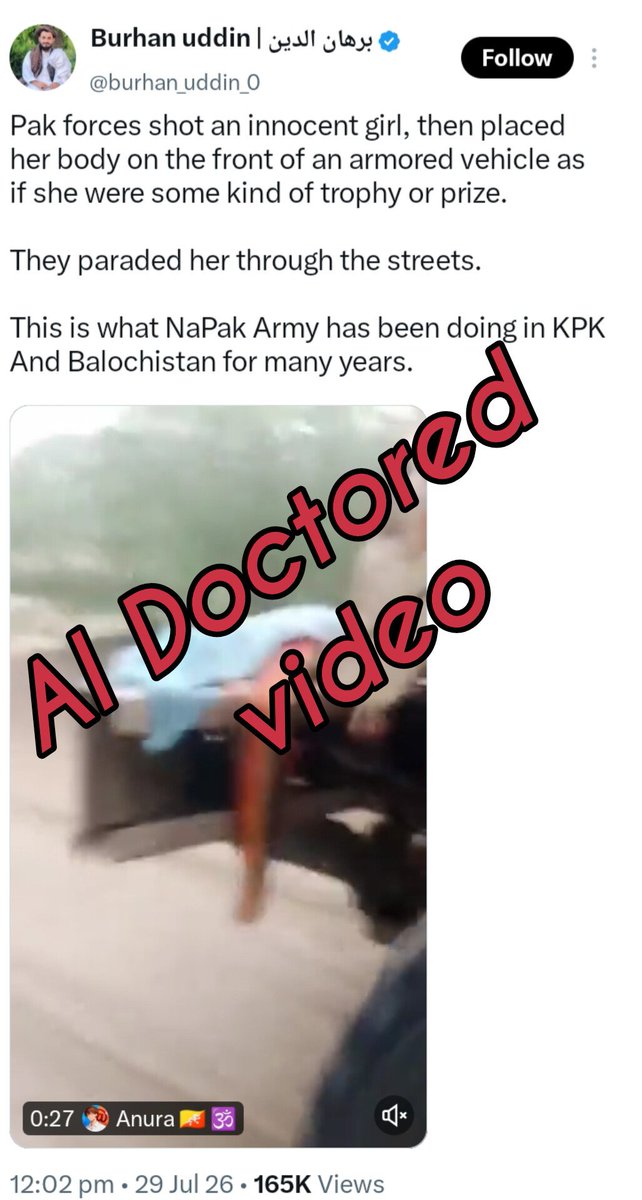
"Fact Check:An Afghan Taliban regime propaganda account is once again recirculating an 18-month-old video, falsely presenting it as a recent incident to mislead audiences.Fact:The video was first uploaded by an Indian RAW troll account in November 2025, which was also posted using an old doctored AI video. The same old AI footage is now being recycled out of context to manufacture a false record and spread disinformation."
In an alarming incident concerning the dissemination of false information, a video that was initially released over 18 months ago has resurfaced. This particular video, originally uploaded by an Indian RAW troll account in November 2025, has been manipulated with doctored AI footage. The Afghan Taliban regimes propaganda wing is now circulating this outdated content, presenting it as if it were a recent event to mislead public perception.
The tactics employed by the Taliban in this instance highlight a growing trend of misinformation within geopolitical conflicts. By repurposing old footage, they aim to evoke emotional responses and assert their dominance in the public record. The use of AI-enhanced videos also raises critical ethical questions about the authenticity of visual media in the age of technology. It is vital for viewers to critically assess the source and context of such videos to prevent the manipulation of public opinion.
International bodies and fact-checkers have begun to take note of such disinformation campaigns. While many governments and organizations remain vigilant, the challenge remains significant as propaganda through social media can quickly spread. The ability of regimes to manipulate information showcases a broader issue of media literacy in todays digital age, emphasizing the need for active public engagement and awareness. The international community should continue to promote fact-checking and support programs aimed at educating individuals about media literacy, especially in volatile regions.
Looking ahead, there is a pressing need for more robust mechanisms to combat the spread of misinformation. Initiatives aimed at promoting transparency, credible information sharing, and educational programs on digital literacy will be critical. Emphasizing the importance of truthful narratives will empower societies, particularly in conflict regions, to foster resilience against propaganda tactics. As citizens become more media-savvy, they can contribute to a more informed and truthful discourse, mitigating the effects of malicious disinformation.

No comments yet. Be the first to comment!

Your trusted source for breaking news, in-depth analysis, and comprehensive coverage of today's most important stories.
Get daily updates on breaking news, exclusive interviews, and special features delivered to your inbox.
Have a news tip or want to get in touch with our editorial team? We're here to help.
Plot C3-C Jaypee Wishtown Sector 129 Noida Uttar Pradesh 201304 India