
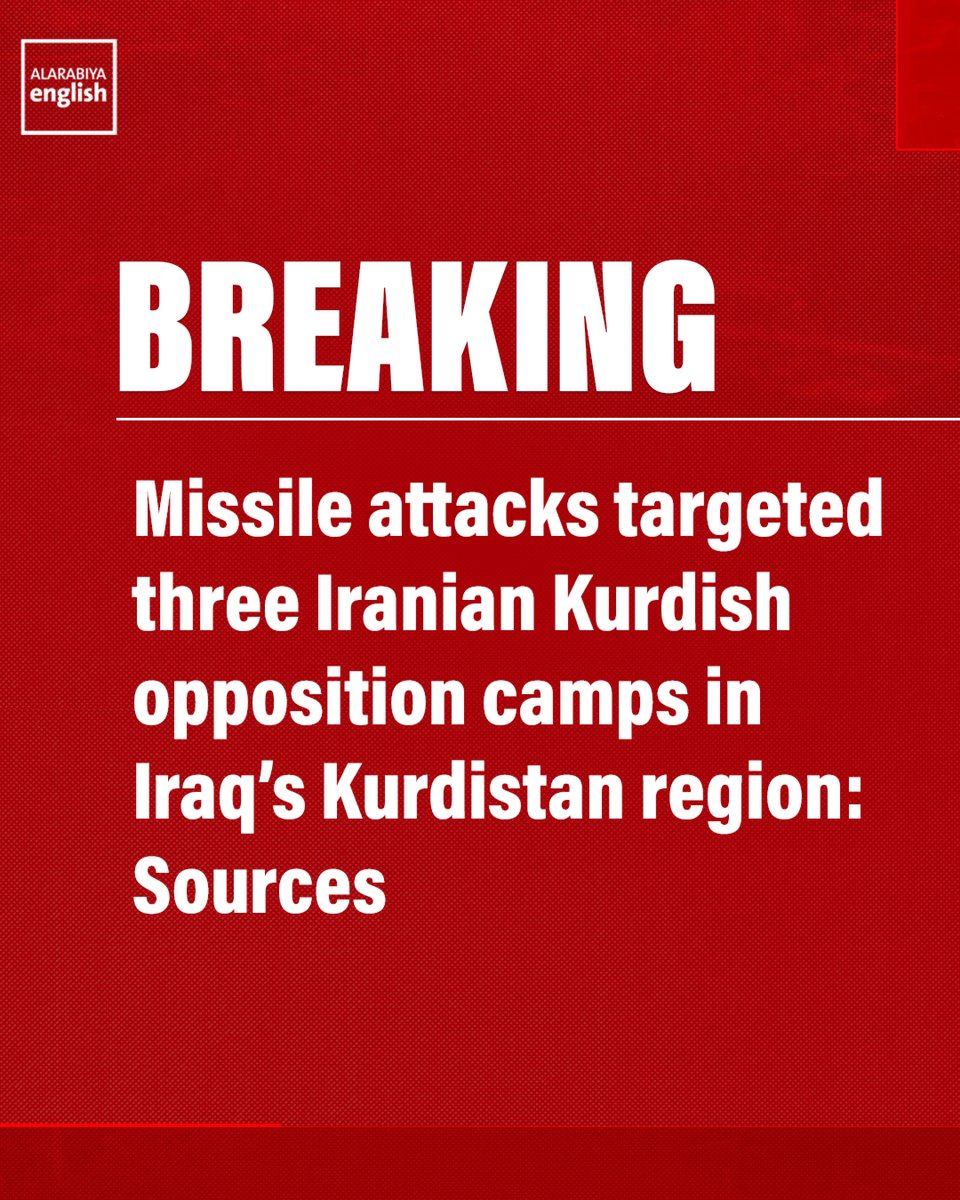
"BREAKING: Missile attacks targeted three Iranian Kurdish opposition camps in Iraqs Kurdistan region, with no injuries recorded, Reuters reports citing two security sources. https://t.co/kudkHvxX8n"
In a dramatic escalation of regional tensions, missile attacks were launched against three Iranian Kurdish opposition camps situated within the Kurdistan region of Iraq. These strikes, reported by Reuters citing two security sources, have fortunately resulted in no recorded injuries. This incident underscores the complex web of geopolitical conflicts affecting the Middle East, particularly those involving Iran and its Kurdish population fleeing across borders.
The Kurdish opposition has been a longstanding thorn in the side of the Iranian government. Historically, these groups have sought autonomy and rights for the Kurdish ethnic minority within Iran. The recent missile strikes can be viewed as part of Iran's broader strategy to undermine Kurdish opposition movements, particularly those operating outside its borders in Iraq and Syria. Nevertheless, the fact that there were no injuries reported should prompt analysts to consider the intentions behind the attacks. Were they aimed at sending a message without escalating violence, or merely a security of military capability?
The international community has been increasingly attentive to the activities occurring in the Kurdish regions of Iraq and their implications for regional stability. The absence of reported casualties may lead to a calmer diplomatic approach, as stakeholders assess the situation without immediate humanitarian concerns. However, various human rights organizations have called on Iran to cease its military operations that harm minorities seeking refuge. The Kurdish Regional Government (KRG) has also expressed concerns regarding the safety of its borders and the implications for regional peace, advocating for a dialogue-focused approach to address Kurdish autonomy demands.
The future landscape for Kurdish opposition groups remains fraught with uncertainty. With Iran demonstrating its willingness to use military power against perceived threats, Kurdish factions may need to recalibrate their strategies. Enhanced dialogue with regional governments, including Iraq's KRG, could provide a pathway toward more peaceful solutions. Furthermore, building international coalitions advocating for Kurdish rights could bolster their position against oppressive measures. Overall, this incident highlights the importance of diplomatic engagement and the need for a constructive international framework to ensure peaceful resolutions in a volatile region.


No comments yet. Be the first to comment!

Your trusted source for breaking news, in-depth analysis, and comprehensive coverage of today's most important stories.
Get daily updates on breaking news, exclusive interviews, and special features delivered to your inbox.
Have a news tip or want to get in touch with our editorial team? We're here to help.
Plot C3-C Jaypee Wishtown Sector 129 Noida Uttar Pradesh 201304 India