📰 News Analysis & Summary
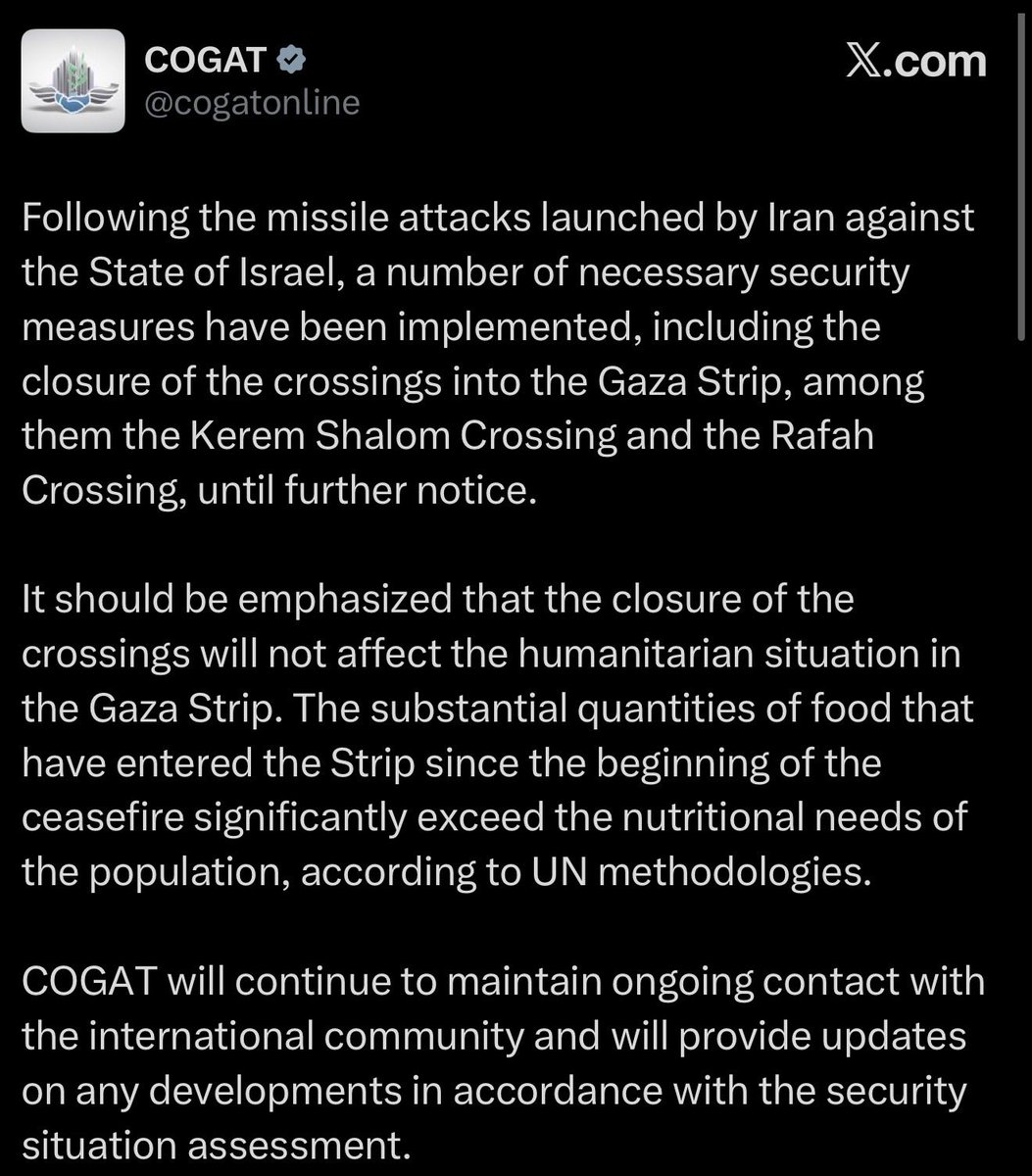
A developing crisis unfolds as Israel closes all crossings into Gaza and halts humanitarian aid in response to retaliatory strikes attributed to Iran. Officials say Kerem Shalom and Rafah crossings are shut until further notice, threatening to cut off food, medicine, fuel, and other essentials for roughly two million Palestinians. Pro-Israel sources argue the measures are necessary for security and to prevent weapons smuggling or attacks, while critics accuse the move of amounting to collective punishment of civilians. The claim from COGAT that Gaza has sufficient food stockpiles because aid during a ceasefire surpassed nutritional needs is contested by humanitarian groups, who warn that stockpiles and averages can be misleading in a blockade that cripples distribution, storage, and access to reliable supplies. Historically, blanket closures during escalations have caused acute humanitarian distress, undermining health systems and civilian resilience. The current situation is set against a broader regional backdrop: Iran’s strikes on Israel and the ensuing regional tension, which complicates diplomacy and heightens the risk of further escalation. International responses are expected to focus on humanitarian corridors, independent verification of aid deliveries, and calls for proportional, targeted security measures that minimize civilian suffering. If the closures persist, hospitals may face shortages of essential medicines and electricity, water systems could falter, and vulnerable populations—pregnant people, children, the elderly, and those with chronic illnesses—will bear the brunt of disrupted supply chains. While security concerns are legitimate, the humanitarian obligation to protect civilians remains paramount, and the international community is likely to pressure for temporary exemptions, monitored aid flows, and a renewed push for de-escalation and negotiated access. In my view, while security must be prioritized, blanket punishments against civilians risk deepening the humanitarian catastrophe and fueling further violence. A measured approach that preserves life-saving aid, creates transparent monitoring, and pursues diplomatic avenues should be the priority to avert a broader disaster.
Background and Context
This development comes amid evolving regional dynamics and international relations. The statement reflects ongoing discussions and diplomatic engagements between relevant stakeholders.
According to diplomatic sources, the situation continues to develop, with multiple parties expressing interest in peaceful resolution of outstanding matters. Regional stability remains a priority for all involved parties.
Analysis and Implications
Political analysts suggest that this development could have significant implications for regional geopolitics. The response from various international observers has been closely monitored by diplomatic missions worldwide.
Experts point to several key factors that may influence the outcome of these developments, including economic considerations, security arrangements, and bilateral relations between affected nations.
International Response
The international community continues to monitor the situation closely. Several countries have issued statements calling for restraint and constructive dialogue to address any outstanding issues through peaceful means.
Looking Forward
As the situation continues to develop, Newsin.online will provide continued coverage of this important report. Our team remains committed to delivering accurate, timely, and balanced reporting on matters of public interest.