
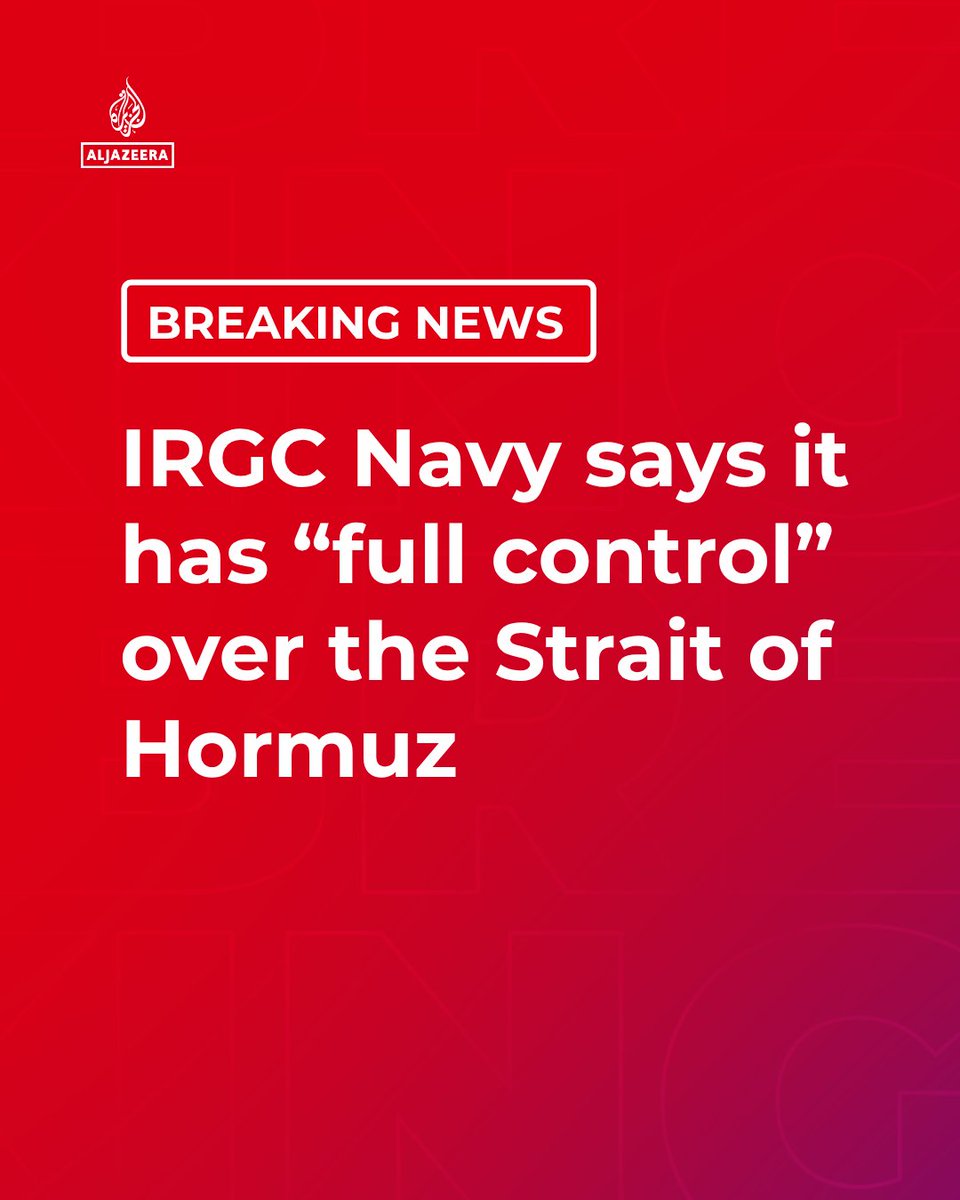
"BREAKING: The IRGC Navy says it has full control over the Strait of Hormuz and that ships cannot transit the waterway without coordinating with Tehran. More on https://t.co/OwhgaIH6vP https://t.co/YzzKv4OlYX"
The Strait of Hormuz, a vital corridor for international maritime trade, has been under the scrutiny of regional and global powers for decades. This narrow passageway, which connects the Persian Gulf to the Arabian Sea, sees approximately 20% of the world's oil trade flow through its waters. The Iranian Revolutionary Guard Corps (IRGC) Navy's recent declaration of control over this critical waterway marks a significant escalation in regional tensions. By stating that no ships can transit without coordinating with Tehran, the IRGC has underscored Iran's assertive maritime strategy in the face of international scrutiny.
The declaration by the IRGC Navy can be interpreted from multiple angles. On one hand, it reflects Iran's ongoing efforts to establish sovereignty over its territorial waters; on the other, it raises alarms about potential disruptions in global trade routes. Analysts suggest that this move may be a strategic attempt by Iran to leverage its geographical position as a bargaining chip in its negotiations with Western nations regarding nuclear limitations. Moreover, there is concern that this could lead to increased military presence from various nations in the region, potentially escalating confrontation.
Reactions to the IRGC's claim have been swift, with various countries voicing their concerns about the implications for free navigation. The United States has reiterated its commitment to ensuring freedom of navigation in the region, often deploying naval assets to monitor the situation. European allies have expressed a mix of concern and caution, urging Iran to adhere to international maritime laws while also advocating for diplomatic resolutions to ongoing tensions. Furthermore, regional players such as Saudi Arabia and the UAE are closely monitoring the situation, emphasizing the need for a stable shipping environment, given their reliance on oil exports through this route.
As the situation develops, the key question remains: how will Iran's assertion of control impact international shipping norms? While some observers predict an escalation of military engagements, others believe that the complexities of global interdependence may encourage diplomatic channels to prevail. Engaging with Iran through constructive dialogue could yield positive outcomes, emphasizing mutual interests in maritime security and trade stability. Active collaboration among nations may not only stabilize the Strait of Hormuz but may also foster more extensive discussions on regional security dynamics.


No comments yet. Be the first to comment!

Your trusted source for breaking news, in-depth analysis, and comprehensive coverage of today's most important stories.
Get daily updates on breaking news, exclusive interviews, and special features delivered to your inbox.
Have a news tip or want to get in touch with our editorial team? We're here to help.
Plot C3-C Jaypee Wishtown Sector 129 Noida Uttar Pradesh 201304 India