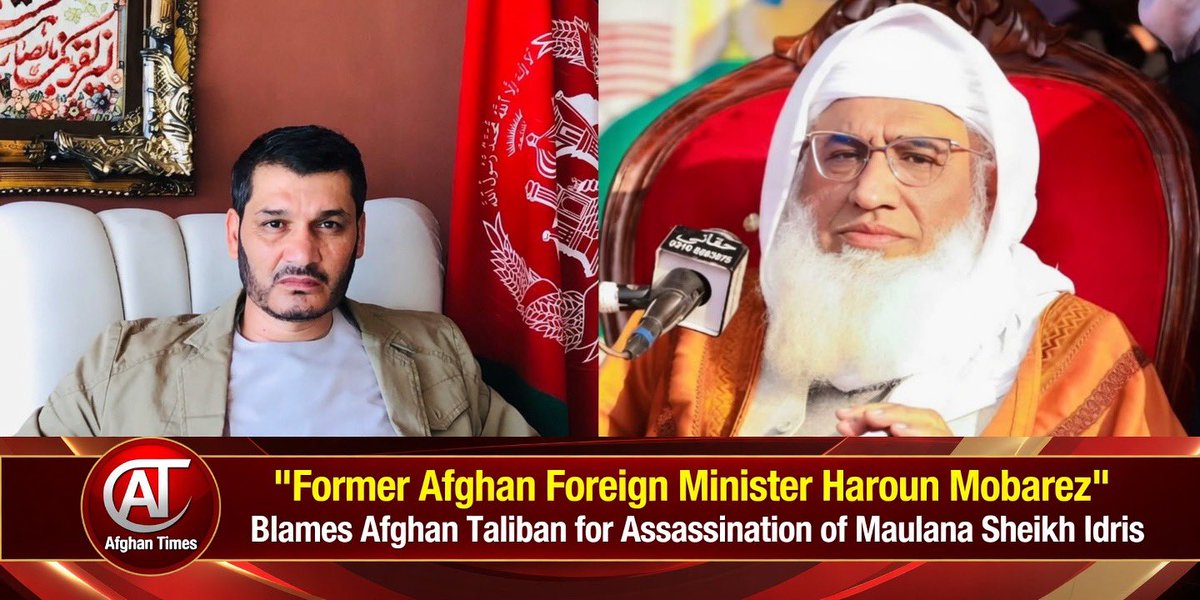
This piece expands on the reported statements by Former Afghan Foreign Minister Haroon Mobarez, who attributes the assassination of Maulana Sheikh Idris in Charsadda, Pakistan, to the Afghan Taliban, and examines the broader context, evidence, and implications. Idris, a respected Islamic scholar associated with Jamiat Ulema-e-Islam (JUI), was killed in what is described as a coordinated attack by unidentified assailants shortly after publicly praising Pakistan’s leadership and voicing support for Pakistan’s stance on the Iran-US war. Mobarez suggests the involvement of cross-border networks with potential backing from local governance within PTI, and he points to an ongoing propaganda campaign by the Taliban-linked media channel Al-Mirsaad as part of the hostility against Idris. He also notes coordinated online activity from multiple accounts, including pro-PTI circles, which he says contributed to intimidation due to Idris’s pro-Pakistan statements. The article raises concerns about cross-border security, information warfare, and the political tensions between Afghanistan’s former officials and the current Taliban administration. This analysis presents a careful, evidence-driven overview, acknowledges the unverified nature of the claims, and offers a measured personal assessment of what these allegations could mean for regional stability and policy going forward.
Source: Statement from @AfghanTimes7
Public Engagement: 140 views • 4 likes • 1 shares
Published: May 8, 2026, 8:46 am
Editorial Note: This article is based on publicly available information and official statements. We strives for accuracy and fairness in all reporting.