
NEW DELHI/ISLAMABAD - As the first anniversary of the deadly 4-day India-Pakistan war approaches, India has begun moving key military assets towards its western border with Pakistan, officials familiar with the matter have confirmed, marking a significant escalation in posture.
The military buildup comes amid heightened rhetoric from both sides. Pakistan's Defence Minister Khawaja Asif recently issued a fresh warning, suggesting that any future conflict with India would not remain confined to border areas, explicitly naming Kolkata as a potential target . He further declared that Pakistani forces would "enter their territory and strike them inside their own homes" .
The S-400 Deployment
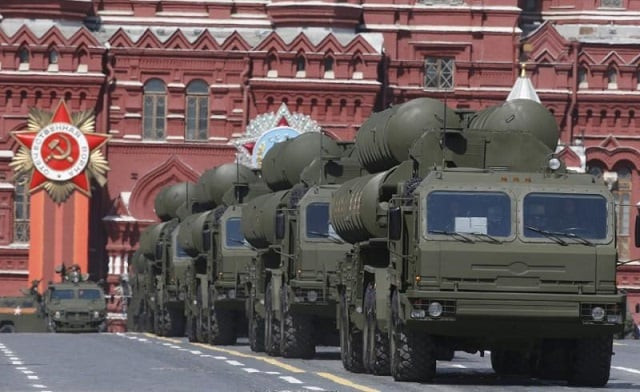
India's air defence capabilities are set for a major boost as the fourth S-400 Triumf air defence system is on its way from Russia and is expected to arrive by mid-May, just days after the anniversary of the conflict . The advanced system, whose pre-dispatch inspection was completed in April, is likely to be deployed in the Rajasthan sector, strengthening India's preparedness against potential threats from Pakistan .
According to sources, India is also replenishing its missile inventory, with plans to procure 280 S-400 missiles following their reported use during Operation Sindoor last May .
Strategic Importance of the Western Border
The deployment of a full squadron of the S-400 to the western border is a decisive move to strengthen India's western defences amid heightened security concerns, as recent intelligence inputs suggest that major cross-border infiltration attempts are expected across the western frontier .
"The introduction of the S-400 system is specifically engineered to address vulnerabilities in the western border," a News18 report noted, explaining that unlike the formidable Himalayan terrain in the north, the western border is characterised by flat or semi-desert landscapes . This geography creates a tactical challenge, as terror training camps and launch pads in regions such as Bahawalpur, Muridke, Sialkot, Kasur, and Shakargarh in Pakistan are located within a mere 50 to 150 km of the International Border .
The S-400's advanced radar systems and diverse missile types provide the Indian armed forces with the ability to simultaneously track and engage multiple targets, including high-altitude aircraft, cruise missiles, ballistic missiles, and even sophisticated swarms of drones . The system has already demonstrated its strategic value in real-world conflict - it was successfully used during 'Operation Sindoor' last year to intercept Pakistani missiles .
Punjab: The Overlooked Front
Military analysts warn that while Jammu & Kashmir remains a flashpoint, Punjab represents an even more consequential strategic frontier. A dedicated analysis in The Week notes that Punjab is "one of India's most exposed and consequential frontiers," serving as the rear logistics artery for India's northern military posture .
"Destabilising Punjab will adversely impact the security of J&K and India's wider military reinforcement, economic and water-security architecture," warned Major General Rambir Singh Mann .
Alarming Border Seizures
BSF Punjab Frontier seizure data for 2025 paints a concerning picture:
272 drones intercepted
Over 367 kg heroin seized
More than 10 kg RDX/IED material recovered
Approximately 200 weapons captured
A five-fold jump in arms recoveries
"These are not mere law-and-order figures," the analysis cautioned, "they signal deep social corrosion and national-security stress" .
Pakistan's Perspective
Reacting to India's military build-up, Radio Pakistan, citing official sources, stated that "Pakistan believes in the minimum deterrence policy but we cannot ignore Indian military modernization, India's belligerent posture, irrational defense buildup and import of massive military equipment" .
The Pakistani statement alleged that "India has been involved in subversive activities to destabilize peace in Pakistan" and that "the international community is silent on Indian aggressive posture in the region for their economic interests" .
Regional Concerns
The United Nations Security Council has called for dialogue to defuse tensions between the two nuclear-armed neighbours . Council members expressed deep concern over the growing risk of escalation and emphasized the urgent need for restraint and de-escalation, urging both sides to peacefully resolve issues through dialogue and diplomacy .
The warning over water remains a particular flashpoint. Pakistan has previously warned that any Indian attempt to stop or divert the natural flow of its share of river waters "would constitute an act of war" .
Chinese Angle
The first anniversary of the conflict comes as China's AVIC Chengdu Aircraft Corporation, the manufacturer of the J-10C fighter aircraft used by Pakistan, has reported record revenue and profit figures . The company's revenue rose 15.8% to 75.4 billion yuan ($11 billion) in 2025, while profit increased 6.5% to 3.4 billion yuan - the highest results in Chengdu's history .
The J-10C was used in combat for the first time during the May 2025 conflict, with Pakistan claiming it brought down seven Indian fighter aircraft, including French-made Rafale jets, as well as dozens of drones .

No comments yet. Be the first to comment!

Your trusted source for breaking news, in-depth analysis, and comprehensive coverage of today's most important stories.
Get daily updates on breaking news, exclusive interviews, and special features delivered to your inbox.
Have a news tip or want to get in touch with our editorial team? We're here to help.
Plot C3-C Jaypee Wishtown Sector 129 Noida Uttar Pradesh 201304 India
